Showing posts with label children's books. Show all posts

Tuesday, June 20, 2023

Children's Books Explorations: Concept Books

What is a Concept Book?

A type of picture book made to explain or introduce an idea or activity. This includes the alphabet, counting, colors, times, and shapes.

(Quote Source

The Concept Books I read: 

  1. Mouse Paint by Ellen Stoll Walsh
  2. I Feel! A book of Emotions by Juana Medina
  3. Mouse Magic by Ellen Stoll Walsh
  4. Let's Say Hi to Friends Who Fly! by Mo Willems
  5. What's Your Sound, Hound the Hound? by Mo Willems

What I learned: 

I have taken fine art courses at undergraduate programs, and I still struggle with the color wheel when it comes to tertiary colors. I was impressed by how Mouse Paint and Mouse Magic by Ellen Stoll Walsh introduced art concepts of colors. I even learned something! I'm rather sad that I did not read them as a child.

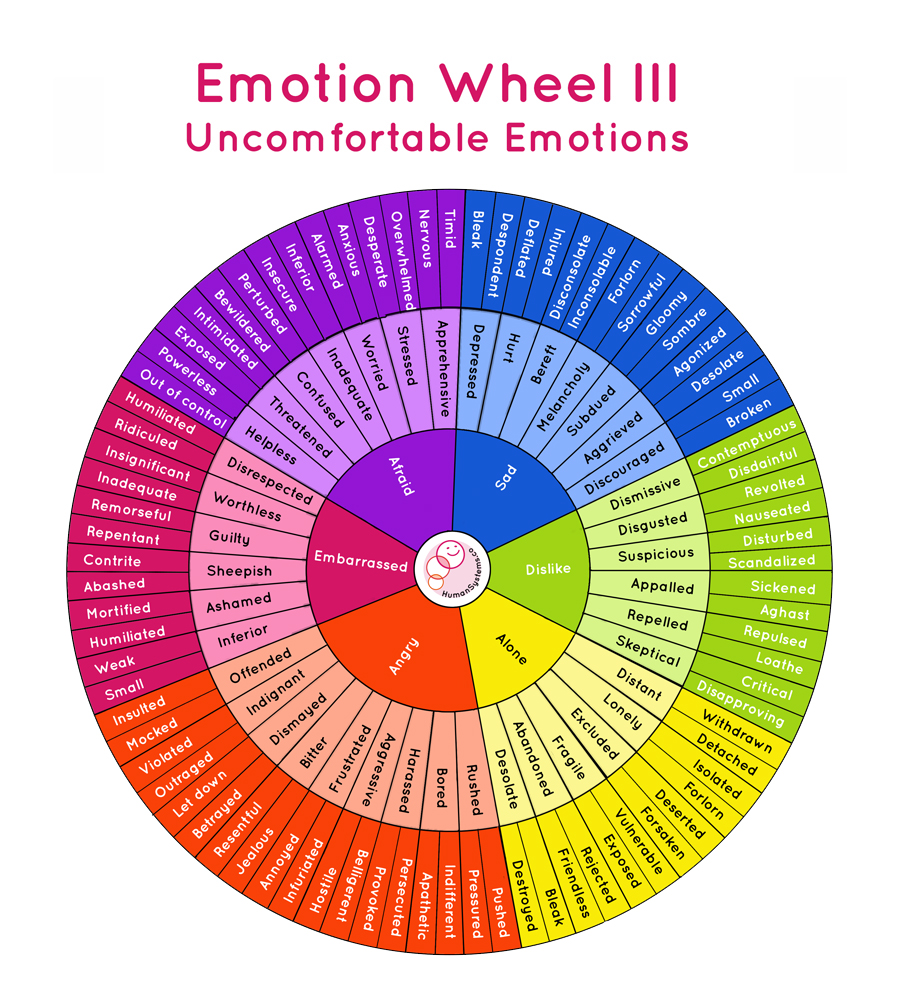
I Feel! A book of Emotions by Juana Medina showed a variety of emotions with facial expressions and colors. I thought the order of emotions was interesting. It was fascinating to see that there are several emotion wheels. I have certain emotions that I connect to specific colors, and I really like the shades used in the following wheel. Are there certain colors that you associate with emotions? Is anger only red? Is joy only yellow? 


The work of Mo Willems was musical and lyrical. I can imagine how much fun it would be to read with a child. Friends was a concept in both Let's Say Hi to Friends Who Fly! and What's Your Sound, Hound the Hound?. It was neat to see how the characters moved on the page and interacted with each other.

Do you have a favorite Concept Book? And what colors do you associate with emotions? Comment below.

Tuesday, February 7, 2023

Children's Books Explorations: January (Board Books)

What is a Board Book?

These are usually made for newborn babies to around 2 years old. They have thick paperboard pages to combat wear and tear from baby hands and mouths. There may be more interactive elements to these books such as cloth, noise, or popups to engage a baby or allow the reader to make the story more exciting. Our Hello Genius books are favorites among toddlers because of their fun stories with familiar animals, repetitive text, and bright, energetic illustrations. Parents and caregivers love them because they are the perfect guides for a child’s first steps in social emotional learning, self-care, and manners. 

(Quote Source

The Board Books I read this month: 

  1. Jasper & Joop by Olivier Dunrea
  2. Peter Pan by Jennifer Adams, Alison Oliver
  3. Classic Lit A to Z by Jennifer Adams, Alison Oliver
  4. A Little Princess by Jennifer Adams, Alison Oliver
  5. My First Passover Board Book by Claire Lister
  6. Making Faces by Abrams Appleseed
  7. The Secret Garden by Jennifer Adams, Alison Oliver
  8. The Jungle Book by Alison Oliver, Jennifer Adams
Yes, I read more than five! I am shocked because I was behind in my other goals for January. 

What I learned: 

Of course there were illustrations, and thicker pages to withstand small fingers helping to turn pages. I learned that even subjects of Passover, emotions, and literary classics can be a board book. It broadens my scope of what I want to write when I create my own board book. Any story can be a board book.

Do you have a favorite Board Book?

Tuesday, January 17, 2023

The History of Children's Books


What is the first children's book? Who wrote it?

There is no clear answer on who wrote the very first children's book that we are familiar with today (board books, concept books, etc.) that I found in my research, but by the end of the 18th century, children's books publishing was definitely flourishing.

Prior to the children's books we know today, children, of course, learned to read with books of fables, fairy tales, and basic primers. Or by looking at a manuscript of letters and numbers. Much like we do today with teaching the next generation to read.


Early topics of the stories were about morals and manners, often told with riddles and rhymes. How to behave, to not lean against surfaces, to be seen and not heard. You know, not the fun stuff, but part of socializing and setting expectations of behavior in society. Then you get to the fun stories and characters that are more familiar today.

One of the earliest children's books cited is by Lydgate.
"Puer ad Mensam is ascribed to John Lydgate, about 1430, and is in the Lambeth Manuscripts. The Babees Book, in the Harleian Manuscripts, was written about 14th, for children of royal or noble blood then serving as pages in palace or castle. The English version is translated from the original Latin, but both author and translator are unknown."

    (Quote Source

The most common celebrated "father" of children's books is John Newbery, who wrote A Little Pretty Pocket-Book Intended for the Instruction and Amusement of Little Master Tommy and Pretty Miss Polly, published in 1744. It was accompanied by a pincushion for girls and a ball for boys. 

While there is no clear answer on who wrote the first children's book and what the first children's book was, it was fascinating to read some rhymes and themes that were common in the first "wave" of children's book publishing.

In the coming months, I'll be sharing what I learn about children's books. What burning questions do you have about children's books?


For more in depth information about the history of children's books, check out the Atlantic and British Library.

Tuesday, January 10, 2023

Why Children's Books?


There is just a certain magic children's stories. Some of my favorites are ones like Beauty and the Beast, Oh, the Places You'll Go, and The Giving Tree. I have many, many favorites, but why do I like them so much? Is it because I read them a zillion times growing up? Is it something about the characters or the story itself? Or the fact I can read it twenty times in a day?

Why are part of my 2023 goals focused on reading, and writing, children's books?

  1. Write at least one children's book in each category (board book, concept book, early reader, wordless, transition books, narrative nonfiction, etc.)  
     1. Read at least 10 children's books in each category (board book, concept book, early reader, wordless, transition books, narrative nonfiction, etc.).

It is something that I've been thinking about for a while. There is a mystery to how books so small and with so few words can be such a big part of why I read and write today. Maybe focusing on children's books will make my 50 K novel and graphic novel projects become more manageable.

Not that I want the mystery to be 100% solved, mind you. I want to explore children's books and see if I can write them. 


What are some of your favorite children's books?

Tuesday, January 3, 2023

Suzanna's Writing and Reading Goals for 2023

It is that time of year where I make some new goals. Hooray! I absolutely love making writing goals.

While I did not quite finish unpacking all of the boxes from my move, I did make significant progress. I am hopeful that in the next two-ish months, I will not have a single box in sight because they will comfortably reside in the closet or the recycling center. I found a lot of surprising things (two booklets of stamps!) and stuff that I am embarrassed to share on the internet. Cough. Needless to say, not everything survived and might be in the landfill or recycling center.

Here are my writing goals for 2023:

  1. Write 100,000 words in 30 days as part of a NaNo project (Camp in April, Camp in July, or NaNo in November)
  2. Write at least one children's book in each category (board book, concept book, early reader, wordless, transition books, narrative nonfiction, etc.)  
  3. Write at least one new short story.
  4. Edit at least one short story from my undergrad days.
  5. Write at least one new poem each week.
  6. Put together a poetry collection.
  7. Work on the draft for writing a nonfiction book about the day job.
  8. Work on the draft of the graphic novel.


Of course as a writer, I also need to read.
  1. Read at least 10 children's books in each category (board book, concept book, early reader, wordless, transition books, narrative nonfiction, etc.) and focus on one category each month and then rotate. 
  2. Read at least one book of short stories each month. 
  3. Read at least one book of poetry each month. 
  4. Read at least one literary magazine each month. 
  5. Read at least one nonfiction book regarding the day job each month.
  6. Read at least one graphic novel each month. 
  7. Read a total of 150 books in 2023. 
  8. Participate in every Kindle Reading Challenge this year and get at least 90% of the badges. (The hardest one for me is the perfect month where you read every day in the month.)
What are some of your writing and reading goals for 2023?

Wednesday, October 28, 2015

Guest Post: The Nitty Gritty on Children's Books by Nancy Fulda

Let’s get one thing straight. I’m not really a children’s book author. I usually write science fiction, generally involving space ships, often with obsessive attention to scientific accuracy. I’ve written stories about accelerated evolution, artificial intelligence, cloning, orbital habitats, extraterrestrial cultures and glasses that let you see dead people. This is not the stuff of children’s literature.

So what business do I have talking about children’s books?

Well, I sort of wrote one.


  It happened more or less by accident, and I’m not here to claim I’m an expert at it. I am here to share what I’ve learned, and what I’m still learning, and what seems to be working. I’m also going to leverage my twelve or so years of experience as a mother, which, for anyone who’s unfamiliar with the job description, involves a lot of hours spent reading to children.

The first thing I noticed (as I started writing this chapter book that was not on my schedule, that I really was not supposed to be writing) was the intriguing juxtaposition between children’s writing and fiction meant for adults. All those years I’ve spent studying the art of wordcrafting, searching for just the right image to bring a scene to life, finding the narrative beats in a conversation… It all applies in children’s literature. All of it.

I was surprised, as my project began to come together, at how easily the scenes flowed into one another. The story evolved quickly. The characters sprang to life. (Yes, even the cat. Perhaps especially the cat.) And I didn’t have to stop, not even once, to look up the specifications for a space elevator or research the nucleotide sequences of a protovirus.

In short, it went fast. And I was able to use almost every writerly tool I’ve been introduced to thus far.

Even so, the discovery left me vaguely unsettled. If the distinctive aspects of a children’s chapter book did not lie in the craft and nature of storytelling, then where were the differences? Because I think most everybody would agree there’s a clear and tangible difference between a chapter book for early readers and a 400 page fantasy novel intended for adults.

After mulling it over, I came up with four concrete differences.

Length
Generally speaking, a book for children is shorter than a comparable book for adults. For example, the next book in my children’s series is called The Cat who Ruined Thanksgiving. The cover is rather indeterminate. It could be a children’s book, but it could also be a cozy novel aimed at adults. If I were to write the same book in both styles (which I’m not! That would be insane), the adult novel would be at least twice as long as the children’s version.

This is partially related to attention span, but it has even more to do with story structure. A children’s book tends not to have subplots or secondary conflicts. There’s a very direct progression from points A-Z, with a tight focus on the thoughts and needs of the primary character.

Subject matter
Aside from the obvious – certain types of conflicts are distressing to and/or inappropriate for children – there are powerful thematic differences between an adult novel and a children’s book. The best children’s books I’ve read focus on concrete problems that are easy to identify. Challenges that will resonate with a child.

Going back to our (hypothetical) two versions of The Cat Who Ruined Thanksgiving, the variation for adults would probably focus on the cat’s mysterious behavior and rising conflicts between the various adults in the household. The children’s version will focus exclusively on the cat’s frustration with the way events begin to unfold.

In An Owl goes Trick-or-Treating, the primary conflict is one that nearly every child raised on continental America will understand: Arthur wants to ring doorbells and collect candy, but no one will let him.

Vocabulary
I’m a big believer in the power of complex words, so I don’t shy from the polysyllabic, even in a children’s manuscript. Even so, I try to keep the general tone and presentation simple. Straightforward vocabulary. Direct sentences with few or no subordinate clauses.

I was about to say that I also “tell” a bit more often than in works written for adults, especially when it comes to the character’s internal landscape – but I just flipped back through the book and that’s not actually true. I simply “show” in more concrete ways. Interesting…

Artwork
Most chapter books for early readers include interior art. For a long time, I tried to ignore this fact. How important could it be?

When the third person in a row asked whether I was planning to include interior sketches, I finally caved to peer pressure. I figured the book was fine as it was, but I might as well include pictures if everybody expected me to. So I did some pencil drawings, scanned and reworked them in Adobe Fireworks, and added them to the book.

And the book got better because of it. I hadn’t expected that. My art is not spectacular on a technical level. But having a concrete depiction of Arthur, and especially an emotional context for some of the challenges he faces, brought a vivacity to the story that hadn’t been there before. Further books in the series will definitely be including interior art.


* * *

So there I was with a children’s book. But was it any good?

I decided to put my finished project to the ultimate test. I read it to my children. Children, you see, are the ultimate arbiters of quality. They like a story, or they don’t. They don’t hedge comments, and they don’t stick around to hear the end unless the actually care how things turn out. I knew my children would not lie to me. But I did not know if they’d connect with the story.

The first few chapters had me on pins and needles. The kids listened attentively (that was good) but they didn’t laugh in the places I thought they should have (that was bad). They jostled each other to look at the pictures (good), and objected loudly when I suggested stopping for the night (good), but were they really connecting with the characters?

Then the magic happened.

“Poor Arthur,” My six-year-old said, turning towards me at the end of chapter four. Her big blue eyes sparkled with empathy. She cuddled close for the final chapter while my older children leaned in from either side.


********************************
Bio:
Nancy Fulda is a Phobos Award winner, a Jim Baen Memorial Award recipient, and a 2012 Hugo and Nebula nominee. During her graduate work at Brigham Young University she studied artificial intelligence, machine learning, and quantum computing. In the years since, she has grappled with the far more complex process of raising three small children. All these experiences sometimes infiltrate her writing.

Purchase links:

Friday, March 14, 2014

Favorite Childhood Books... Go.

From the Mixed-up Files of Middle-Grade Authors has some fabulous lists of books for children.

I'm curious today to find out which books most impacted your childhood/life. Was it If You Give a Mouse a Cookie or The Lord of the Rings, or both?


For me, it was Christopher Pike's See You Later...


Willo Davis Roberts' The Girl with the Silver Eyes...


The Chronicles of Narnia by C.S. Lewis...


and Anne of Green Gables by L.M. Montgomery.


These are not all strictly middle grade books, of course. But what kid reads only at her own "level"? I sure didn't. Whatever level these books were marketed for, I devoured them, and they remain a big part of my personal canon. If you look at the books I choose to read from today's market, you'll see some similarities, to say the least.

Paranormalcy by Kiersten White...


Shifting by Bethany Wiggins...


Across the Universe by Beth Revis...


Possession by Elana Johnson...


and The Maze Runner by James Dashner.


Heck, I even chose to work for a children's/YA publisher that specializes in speculative fiction: Month9Books. Here's some of their selection:


How have the books you loved as a child shaped you today? Are they still your favorites?

Monday, February 17, 2014

All Cons Great and Small


My last post, Conference Season Is Upon Us, mentioned some strategies for finding financial help to attend cons (conferences and conventions).

Today I'm going to list some cons, and I know for sure that I'm bound to miss some, so feel free to link to your overlooked favorite in the comments!

In no particular order, here are some venues you might want to check out:

Mysteries:

Bouchercon: Murder at the Beach, Nov. 13-16, Long Beach, CA 
Sisters in Crime have a number of regional and national events throughout the year
Crime Writers Association offers the same sort of events in the UK
Mystery Writers of America holds a full day MWA University

Romance:
Romance Writers of America has a national conference as well as regional chapter events
RT Booklovers Convention brings together romance writers and their fans

Children's, including YA:
Society of Children's Book Writers and Illustrators has national and regional events throughout the year
YA Fest, April 19, Easton, PA
UtopYA Con, June 20-22, Nashville, TN
Austin Teen Book Festival, 2014 date TBA (in Sept 2013), Austin, TX
YALLFest, 2014 date TBA (in Nov 2013),Charleston, SC

Horror:
World Horror Convention, May 8-11, Portland, OR

Science fiction/fantasy, including steampunk:
Hal-Con, Nov. 7-9, Halifax, Nova Scotia
Science Fiction & Fantasy Writers of America's events include the Nebula Awards weekend
Comic-Cons happen in virtually every big city now, but the biggest are in San Diego and NY
DragonCon, Aug. 29- Sept. 1, Atlanta, GA
CONvergence, July 3-6, Twin Cities, MN
Broad Universe promotes sff/horror writing by women and has an extensive calendar of cons*
FOGcon, March 7-9, Walnut Creek, CA
RavenCon, April 25-27, Richmond, VA
Megacon, March 21-23, Orlando, FL
Steamcon VI, Oct. 3-5, Bellevue, WA
Gaslight Gathering 4, May 2-4, San Diego, CA
The Steampunk World's Fair, May 16, Piscataway, NJ

*I seriously mean "extensive calendar of cons"--I should have just started here, and it would have saved me a lot of researching. A list of more steampunk cons can also be found here.

Online Cons:
IndieReCon, Feb. 25-27, with a focus on indie/self publishing
WriteOnCon, dates TBA (last year it was in Aug), with a wide range of genres & categories

Feel free to add your favorite con in the comments!

Friday, March 15, 2013

March Mystery Agent Winner and Reveal!

Introducing our March Mystery Agent...
Tricia Lawrence of Erin Murphy Literary Agency!

Tricia is the "Pacific Northwest branch" of EMLA—born and raised in Oregon, and now lives in Seattle. After 17 years of working as a developmental and production-based editor (from kids book to college textbooks, but mostly college textbooks), she joined the EMLA team in March 2011 as a social media strategist hoping to learn from Erin and Joan about agenting. 
As associate agent, Tricia represents picture books/chapter books that look at the world in a unique and unusual way, with characters that are alive both on and off the page, and middle grade and young adult fiction and nonfiction that offers strong worldbuilding, wounded narrators, and stories that grab a reader and won't let go. (bio and pic from agency website)

And the winner is!


Title: MIGHTY MIKE AND THE ALIEN PEZ DISPENSER
Genre: MG Sci-fi/Adventure

Eleven-year-old Mike can only escape bully Brutus when daydreaming of becoming super-hero Mighty Mike until he meets a little blue alien and agrees to test candies from an Alien Pez Dispenser, each of which give him a different super (or not-so-super) power!


Congratulations,  GSMarlene!! (Congratulate Marlene on twitter)

And thank you to all of our worthy participants. You guys are awesome!

Katrina: What was it about the latest author you signed that really stood out to you in his or her work and made that book a must-have?

Tricia: Oh, I must be on a voice kick right now, but voice. Her voice was so strong, that I felt compelled to keep reading, because I had to find out what happened next. An editor that just read the manuscript wrote to tell me she had the exact same experience, it was hypnotic/addictive/can't stop. 
Once a manuscript's voice gets me into its clutches, I'm done for! I must talk to that author!


Katrina: Your agency website indicates you value strong worldbuilding. Could you name a book that does this really well, as an example?

Tricia: I'm a big fan of our agency's client, Robin LaFevers. Her GRAVE MERCY, a YA that came out last year, is amazing. A world in which assassin nuns operate? I'm so there. I'm getting a sneak peek at the next book in the trilogy now, DARK TRIUMPH (it comes out later this year). Amazing world. You get in and then you don't want to leave. 


Katrina: Favorite TV shows/Movies?

Tricia: I'm a WALKING DEAD devotee. (Who isn't?) I even got zombie apocalypse survival gear for Christmas from my husband, so I'm set. I just need to schedule some archery lessons. 

Lighter fare includes PARENTHOOD, MODERN FAMILY, BIG BANG THEORY, and THE OFFICE

I adored LES MISERABLE, THE HOBBIT, and am rewatching HUNGER GAMES because isn't the next one coming soon? It should be!


Katrina: Biggest perk of being a literary agent?

Tricia: Getting to think about, brainstorm, talk about, and work on stories to my heart's content. Our culture is so story-oriented and I love looking at the moving parts of stories, sorta like a story mechanic, in my own stories, in my client's stories, in the submissions I receive. It's a good life!
And I get to talk about stories with the best in the business. Nothing like spending an hour chatting about what we love and don't love about this story or that with editors, other agents, authors, even the marketing folks! It's a wonderful perk!

Other places you can find Tricia:
"Tricia loves hiking, camping out in the woods, and collecting rocks. She loves BBC America and anything British. She has way too many books and not enough bookshelves. You can find Tricia's writing about blogging, Tweeting, Facebooking, and other social media topics (for authors and the publishing industry at large) here."


Submission Policy

"EMLA is closed to unsolicited queries or submissions. We consider queries that come to us by referral from industry professionals we know, and individual agents are open to queries from attendees of conferences where they speak. If you have met us at a conference or have a referral, please paste your query into the contact form on this page. Please note that we are no longer responding to unsolicited queries or submissions sent in hard copy form via post or other means, and those sent via email will receive a form rejection."

Friday, March 1, 2013

March Mystery Agent Contest Starts Now!


CONTEST CLOSED! Thanks to all who participated :)

Good morning, Writers!

You know what I love about writers? They can just fork over a one-sentence pitch just like that.
*snaps fingers*

No? Well, in that case, check out Nathan Bransford's one-line pitch talk.

Now all you need is a polished children's manuscript, either picture book, middle grade, or young adult. Oh, you have one? Perfect!

Go forth and enter (in the comments)!

Here is what our fabulous MA is on the lookout for:

Picture Books
Middle Grade
Young Adult

Specifically, our MA is seeking the following:

For MG and YA: currently seeking mysteries, historical, or contemporary with mystery elements
For PB: seeking manuscripts that have a voice, aka an author who is putting forward a sense of place, personality, and storytelling. Voice, voice, voice!

This contest is open to veterans and newbies alike - so long as you have a complete and query-ready manuscript on your hands within the genres of interest, our guest agent would love to hear from you.

Contest goes live 9 AM central time and remains open until all entry spots are filled. The first 50 entries we receive will go on to our MA. Remember, this is a one-sentence pitch. Cheating with grammar doesn't count. Meaning that you can't have 3 sentences with commas between them. The sentence needs to work.

The official contest rules:

1) Entries must be one-line pitches. The length of the pitch is up to you, but remember, it's only one sentence.

2) Entries must be for completed manuscripts. No NaNo projects, and no unfinished drafts, please!

3) Entries must be left in the comments section of today's post (please don't email us your entries!). We'll close the contest once we've reached our limit.

4) You can only enter once today (only one project). If you participated or won previous MA contests, you can enter this one as well!

4) Please include TITLE and GENRE, followed by your one-line pitch.

5) The contest will close when we receive 50 entries.

6) The winner will receive a FULL manuscript request!

7) If the rules aren't followed, your entry will be disqualified.


That's it! Now go and submit that awesome one-line pitch!!


Good luck to everyone! (It is lucky shamrock season.)
Artist at deviant art

Saturday, June 2, 2012

Darkness in Kidlit, Victorian Style

The other day my daughter flipped through my copy of Sing-Song, A Nursery Rhyme Book by Christina Rossetti. She was attracted by the little girl on the cover cavorting with a lamb, one of the gorgeous original illustrations by Arthur Hughes, the Pre-Raphaelite whose illustrations for George MacDonald's The Princess and the Goblin I've loved since I bought my copy in the third-grade Scholastic Book Fair.

Many of the poems in Sing-Song cover familiar childhood experiences, including many sweet, touching, and funny subjects. But the poems often take a dark turn, familiar to Victorians for whom the living and dead existed side by side.

For example, a poem about a bird:


Babies and flowers:

A sweet poem about sisters that takes a dark turn:


A bedtime poem from which there is no waking:


Darkness in children's literature is a hot topic lately, but it's nothing new. Dystopians reflect teens' fears and perceptions about society, but also their hope -- they are the ones who redeem the corrupt societies portrays. Cursing in YA reflects the way some teens speak, but certainly doesn't expose them to words they would otherwise never hear. And absent parents in middle grade and YA reflect, for many, reality, and for others, a chance to learn about how other kids solve their own problems and make their own decisions.

Children's literature has always dealt with death -- fairy tales are notoriously grisly in their original versions, and the origins of many nursery rhymes is similarly macabre. And Victorian childhood, despite its sentimentalization in popular images, was a risky world, where infant and maternal mortality was an ever present risk. Literature for children reflected that then, just as it reflects the darker side of our world now.

More Reading:

Friday, May 25, 2012

Nail Your Novel: A Blog Tribute

I got SO many great book recs from Amparo's post, Books on Craft: Which Are Your Faves?

Then today I found one on my own I'd like to add to my library. If it's anywhere near as helpful as the author's blog, it's a winner! 

on amazon

As a writer who has six books under her belt, this subtitle spoke to me: Why writers abandon books and how you can draft, fix and finish with confidence. 

I didn't start writing any of my books with the intent to abandon. Well, maybe one, but that was a guilty pleasure based on a dream. (Don't ask.) *blushes insanely* Okay, I shouldn't have brought that up. 

But mostly I write with the hope of sharing my work with others. The despair that causes all authorial abandonment comes from a lack of confidence in one's work. 

Maybe we're just inherently hard on ourselves, or maybe we've been rejected one time too many. Maybe we've been reading freakin' bestsellers all year and are comparing ourselves unfairly to the finished product of dozens of publishing pros!

Whatever the reason, I know I'm not the only one ever to abandon a pseudo-finished book. But it's a problem I don't want to repeat. So I clicked over to check out Roz Morris's blog with the same title as her book: Nail Your Novel

Come to find out she just won Website of the Week from Writers' Digest! 

She also has very clever posts like Doctor Who and the Infinite Possibilities: How Original Ideas Take Time, which is made of win for anyone who has ever come up with a brilliant novel concept that lacked focus; and Writing Fast, Writing Slow - and Why One Book a Year Suits Hardly Anyone, including a pretty neat little 6-bullet description of her writing process. 

I've already found a lot of helpful stuff there, so I'm paying it forward to you in hopes you find it as mind-stretching as I have.

So... I'm three and a half weeks away from popping out this baby (real baby, not a book). Before or after you visit  Roz's blog to explore the awesomeness...

Leave me your favorite children's books recommendations in the comments! (Baby is a boy, if that matters.)