Showing posts with label diversity. Show all posts

Wednesday, June 3, 2020

Authors and Videos of Support #WeNeedDiverseBooks

This week's Debut Author Spotlight is pausing to feature some of our past diverse Debut Authors and a way you can help the cause.


https://operationawesome6.blogspot.com/2019/11/lisa-moore-ramees-debut-author.html


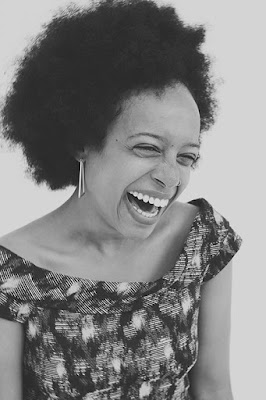
Nafkote Tamirat's Operation Awesome Debut Author Spotlight and Emerging First Book https://operationawesome6.blogspot.com/2018/08/nafkote-tamirats-operation-awesome.html

https://operationawesome6.blogspot.com/2017/02/meet-chinedu-enechi-in-this-debut.html
https://twitter.com/ChineduEnechi


John Ukah is a graduate of Business Administration from the University of Benin, Benin City. John's a banker and an associate of the Institute of Capital Market Registrars (ACMR).

Twitter: @JohnUkah

https://operationawesome6.blogspot.com/2017/03/meet-john-ukah-in-this-debut-author.html


https://operationawesome6.blogspot.com/2017/06/meet-tiffany-d-jackson-in-this-debut.html

https://twitter.com/WriteinBK


For those interested in supporting the movement, but are without money to spend or the ability to go to a peaceful protest, here's a free and easy way to help. There are people on YouTube who are donating their AdSense money from these videos to various charities related to the cause. I've gathered a few in various lengths.


If you find a debut author, please refer them to @JLenniDorner of Operation Awesome for an interview!

Thursday, April 4, 2019

#AtoZChallenge Diverse Characters


This is Jim Bob. He wants to write a young adult novel with an Autistic protagonist while he, himself, is neurotypical. He starts by thinking of all of the Autistic characters he’s seen in media, but he’s only read “The Curious Incident of the Dog in the Nighttime” and watched “The Big Bang Theory.” His only exposure to Autistic characters has been that of Christopher Boone and Sheldon Cooper, but he thinks that he’s got a good enough grasp of what Autism is.

Jim Bob creates a character named Harold, who is a (in Jim Bob’s words) “high-functioning” Autistic white cishet male super genius who is smart enough to qualify for Mensa but doesn’t have any friends because he is intellectually arrogant. Harold lacks empathy for other people and is obsessed with trains and solving mysteries.

Jim Bob sits down to write his novel and brainstorms on a situation that he can send his little insufferable genius through. He is filled with the burning desire to write about Harold’s journey to leave his hometown to ride a bunch of trains to find a cure for his Autism and gets into wacky shenanigans along the way. Jim Bob writes his magnum opus during NaNoWriMo without editing the first draft. He sends it into the query trenches without any real Autistic people reading his work beforehand.

Unbeknownst to Jim Bob, he was writing an extremely stereotypical and frankly offensive portrayal of an Autistic character because he didn’t do his research. Jim Bob missed a lot of steps in attempting to portray Harold in a way that would not harm others. For one, he did not do research on his own about what Autism is or the fact that there are many different types of Autistic people in the world besides Christopher Boones and Sheldon Coopers. He created a “curing” plotline, which actively harms Autistic people and would be especially touchy for a neurodivergent teen to read. He then didn’t bother to consult Autistic people about how he was portraying Harold and did not ask for feedback or do revisions. Don’t be Jim Bob.

Instead, do your due diligence. The consequences for portraying a marginalized character incorrectly have been on all of our minds, particularly in today’s online climate. Most people want to write marginalized characters, and they want to write them well. However, that cannot be done without, A. Doing proper research and B. Consulting real people who belong to that group. This could mean hiring a sensitivity reader, a person who belongs to the same marginalized group as the character(s) who can scan for stereotypes, microaggressions and offensive material. It could also mean consulting a friend or pairing up with a critique partner who falls under that category.

Do you have to be marginalized to write these types of characters? In my opinion, no. You just have to make sure that what you are writing is not going to actively harm others.

As a sensitivity reader, I appreciate all of my clients because they are taking a big step in hiring me. They have the self-awareness to know that they may not know everything about their character and are prepared to receive feedback that may communicate to them that they have unconscious biases toward marginalized people. That, I’m sure, can be terrifying.

But I will say until the day I die that making stereotypes and microaggressions in the first draft does not make you a bad person. As long as you read as much as you can about the group that you are portraying and communicate with members of that group to fix any offensive elements in the second draft, you are automatically caring more than most writers today.

Tuesday, September 4, 2018

September 2018 Pass or Pages Agent Panel


Meet the agents who are going to critique your Diverse Young Adult Fairy Tales, Folktales, or Myths entries!


Picture

Kelly Peterson

A recent graduate of West Chester University, Kelly earned her B.S.Ed. in English and went to pursue a career in teaching. Little did she know that despite all of her hard work, the environment she ended up in would be one she disliked. After taking a step back and reassessing her life, she realized that maybe she should have focused on the world of literary agents and publishing a long time ago.
When not working as a book nerd, Kelly can be found dancing, hiking, riding horses, perfecting her yoga technique, blogging, and writing her own manuscript. If you're lucky, you might even be able to catch her flying around the world, saving lives. She is superwoman after all!
With books, there's just something about strong female main characters holding their own against the world, in an environment that Kelly could never, in her wildest dreams, find herself living within. It tears at her heart and pulls at her soul, especially when the main character finds that she never needed another to complete her in the first place. You can find her on Twitter at @LitAgentKelly.


Picture

Saritza Hernandez

Saritza is the Sr. Literary Agent at the Corvisiero Literary Agency and is known as the first literary agent to represent authors in the digital publishing landscape. She is also a geek with a passion for all things Star Wars, Star Trek, and Harry Potter. But her love of great storytelling is what has driven her work in the publishing industry for the past 15 years. An avid coffee-drinker with a Kindle book and audiobook obsession, she enjoys a steaming cup (or several) of strong Cuban coffee while escaping into worlds and stories from all walks of life. With a passion for romance and a strong advocate of the GLBT community, she enjoys fresh voices in Young Adult and Adult genre fiction. You can find her on Twitter at @epubagent .


Weronika Janczuk

Weronika broke into publishing in 2009, through a high school workshop that placed her with former young adult editor Brian Farrey at Flux (now North Star), a small imprint in Minnesota, where she pulled, from the slush pile, the lovely Out of the Blue by Holly Schindler, which received a starred review in Booklist. She then moved on to intern with Jenny Bent at The Bent Agency.Following the unexpected death of her mother, Weronika moved for one year to an agency housed in NYC, Lynn C. Franklin Associates, Ltd., before departing the world of publishing altogether to make space for her own grieving. Weronika is back now for the long-haul. You can read more about her on her blog, Lightning & Lightning Bugs.

Category/Genre: Young Adult Fairy Tales, Folktales, or Myths, retold with diverse characters


Details for September 2018 Pass or Pages:

Entry starts: Monday, September 10 at 6 a.m. Eastern
Ends: Wednesday, September 12 at 6 p.m. Eastern
Category/Genre: Young Adult Fairy Tales, Folktales, or Myths, retold with diverse characters
How To Enter: Fill out the entry form on the contest post when it goes live
What Is Required: Your query (NO BIO or personalization for agents), your first 250 words, a complete and polished MS

You can also read more about the rules here: https://operationawesome6.blogspot.com/p/passorpages.html

The winning entries with agent commentary will be posted on Operation Awesome the week of September 24th, one entry each day.
If you aren't comfortable with having your entry (which will be anonymous) shared on the blog, please don't enter Pass or Pages!

If you have any questions, please ask in the comments or tweet @OpAwesome6. Also, feel free to chat about the contest with fellow participants on the hashtag #PassOrPages.

Wednesday, March 26, 2014

Writing: Breaking out of the white mold


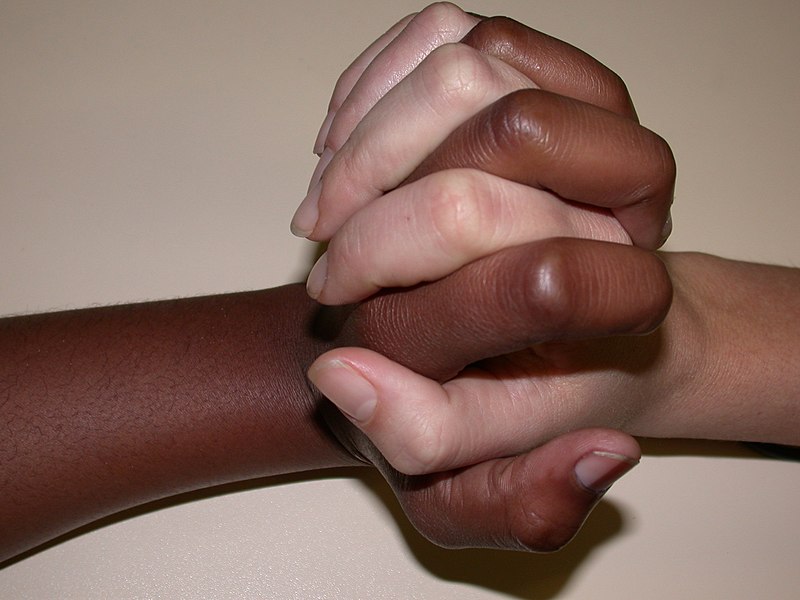
File:Diversity and Unity.jpg
photo courtesy of Frerieke via Wikimedia Commons

Hi guys. Today we're going to talk about diversity. Not because I'm trying to be politically correct or because I think this is a heated topic (in fact, I almost *didn't* bring it up because it is a heated topic), but because the more I see YA covers the more I see white females and a whole lot of white males and the more books I add to my TBR the more I see how many white females lead YA literature (that I, myself, read, too--I want to be clear about this). So the reason for my post isn't to stir anything up; it's to ask you, as writers, what you think about it. (I have no idea what the demographics are for authors (white versus everyone else) but to me, white authors seem to take precedence in the media. It's just how it is.)

So. Diversity. Recently, I got addicted to CW's Arrow. Lovemuffin and I watched a ton of shows back to back for an entire weekend, and were only a few episodes in when I observed that almost every scene had a white character right alongside an African-American. This has changed a bit as the series has progressed, but at that point I was like, "Wow. This is so cool." (Keep in mind that I don't watch TV ever, really, so perhaps this is now the norm. If so, whoops.) But to me, seeing both in almost every scene was proof that this wasn't some coincidence; their show was seriously trying to make it happen.

As someone who is very active on Twitter and Goodreads, I've noticed that many of the teens I interact with or follow or "squee" over stuff with are *not* white. And, I've noticed that they read the same things I do. Which means they too are not reading much about characters like them. And that, I think, is  quite unfair.

I have one series where almost every character is a different nationality specifically because I wanted it to look like a skin rainbow when the entire group hung out. My other series? Well, let's just say I saw them all as white Cali kids. Of course, neither of these make me (or anyone else) a better or worse author, but after watching Arrow I got to thinking: How hard would it be to throw in a nationality or two (even as secondary characters), and why don't we, as a society, do it more often?

Like I said, this post wasn't to start anything, but to see what you guys think. Sometimes books are best written to where the readers can decide for themselves what nationality a character is. But, I tell ya what: I can't even imagine how frustrated I would be if almost every book cover and character showed a Portuguese girl (when I am so *not* remotely Portuguese at all). It would probably be fine at first, but after years upon years of this, I'm pretty sure I'd be like, "Can't they find anyone else to put on their covers? Don't they know there are many more people in this world besides girls with dark hair?"

The mic is on! I'd love to hear your thoughts. :)

***Note: It occured to me days after writing this post that I had seen another post recently about diversity by Aimee Hyndman. You can check it out here.