Showing posts with label Characters. Show all posts

Thursday, June 13, 2024

Dear O'Abby: Can I use someone else's characters in my book?

 Dear O'Abby,

I'm writing a book in which my MCs end up in a world in which characters from classic literature appear from time to time - think Long John Silver, the Wicked Witch of the West, the Owl and the Pussycat etc.  - and I was wondering if that's going to cause me any copyright issues.  I feel like the texts I've drawn from are all old enough that they're probably public domain, but wanted to check if there was any reason not to include these characters.  Do you know?

Yours truly,

Peopled

Dear Peopled,

That is a good question!

But no, you're fine to use these characters as long as you don't use any of the language the original author used to tell the story.  That would be plagiarism!  But you can write whatever you want about these existing characters as long as you do so in your own words.  And from the sounds of it, you're placing them in a very different world to the ones they existed in originally, so there should be no problem.

That said, if I were you, I'd stick to characters from works published prior to 1923 if possible. Those books are now all in the public domain whereas a character from a book written more recently - Harry Potter for example -  might cause you a few more headaches. 

If you really need to use a character from something recent, the best way to go about it would be to get the author's permission, to well and truly cover yourself.  If it's possible...

Hopefully that helps!

X O'Abby

Thursday, August 20, 2020

Dear O'Abby: Characterization

There is no Dear O'Abby question this week, but The White Rose took the time to comment on the post about writer's block last week, and she has some really valid points, so today's post is about characterization and how to use it to drive your story.

Another writer's block tactic for me is to review the very extensive characterizations I write for the protagonist, antagonist, and supporting characters of my stories. Quite often plot points, both major and minor, come out of these characterizations, as well as traits and odd tid-bits that make the characters more interesting and quirky, and act the way they do throughout the story. These traits can spur a new (and often exciting) direction for them and the story.

I've been a member of several writing critique groups for several years and it never fails to surprise me how many new writers don't spend the time getting to know their characters by writing comprehensive characterizations before they start writing! They need to do the work! Most have a story structure or outline they follow, but the "bones" are not enough. The "flesh" of the story comes from the characters' actions/reactions to what happens in the story, as well as the character of their natures that act as a stimulant/catalyst for what happens. - The White Rose

I don't think I can underestimate how important characterization is to your writing.  No matter what the story is you are telling, it is filtered through the characters who are experiencing it.  And often, when we get stuck somewhere in a story, it's because the character is doing something that isn't right for them.

Each character has to have something they want and something they need.  These should not be the same thing.  Conflict, which is so crucial to a story, arises when what the character wants is different to what she needs. And when one character's wants and needs oppose another character's.  As each character fights through the story to get what they want, other characters will get in their way because they too are fighting for what they want.  These wants and needs should be set up early in the book as these are what compel the characters to move through the story, interact and finally resolve whatever the central conflict might be.

Every decision your characters make will come from these wants and needs and the more in opposition they are, the more tension you will create.

While I don't think it's entirely necessary to write long, detailed biographies of each character before you start writing (but hey, I'm not an outliner either so do whatever works for you), I do think it's absolutely critical you know your characters well.  Even if you never put any of it on the page, your characters need to have a past that has informed who they are at the time the story takes place, a set of beliefs that define them.  This will drive the ways in which they react to the different plot elements you put in place to thwart them.

When you find yourself stuck at any point, go back to the last place your characters had to make a major decision or action and check that the way they responded fits with the personality and backstory you have created for that character.  Does it go against their moral code?  Is it beyond the physical capabilities you have outlined for that character?  While people do extraordinary things, particularly in times of distress, how they respond is almost always in line with their personalities and one of the fastest ways to break your story is for your character to do something that isn't.

Hope this was helpful!

X O'Abby


Monday, February 23, 2015

Using our Better Selves to Sort Through our Lesser Selves

As writers, we're constantly confronted with what we do well in craft, and what we don't do as well (this ratio might be higher if you're part of a critique group or an MFA program).

The thing is, most writers know what they need to fix. But the problem isn't in the knowing. It's figuring out how to execute the things we have trouble with. For example, I've consistently struggled with character development, one of the basic corner stones of any story. The gist of my feedback usually goes along the lines of, "I don't really know this character..." or "I don't really care about this character..."  or "I'm not sure what this character's motivation is..."

But I think my favorite was the most recent feedback I got from a writing instructor: "What will she sacrifice or learn about herself to meet her goals? Give the girl a STORY!"

And it's not like I hadn't thought about ways to enhance my protagonists. But even after that, I still had trouble translating them to the page.

Then it occurred to me. What if I used what I did well to help the things I didn't do as well? Used my better self to sort through my lesser self?

Like this, but much more convoluted.
I've been complimented on my world-building, so I decided to use that as my catalyst, and see how my characters were affected by the places I'd created for them.

When I did this, I discovered the following: 

My external worlds played directly into my protagonists' main motivations

Both my current works-in-progress deal with characters who feel trapped in their situations. And I realized--the settings I'd created for them had no literal windows. None.

It turned out my world-building self was trying to tell my character development self something. That these characters wanted windows. Wanted options. And I could use that to motivate their actions and move their stories forward.

My external worlds demanded that my characters take action

One reason my characters tend to fall flat is I put them in these rich worlds but don't let them do anything. It's almost like I'm afraid to give them freedom to move within the spaces I've created.

So today, when crafting a scene where my protagonist finally has to confront the antagonist, I had her speak up and be an active agent of change in her own story.

While it was harder to write because I was stretching myself to places that weren't as comfortable, it helped me get more into her head. I ended up writing a scene where she actually had to struggle (I'm also way too easy with my protagonists a lot of the time).

Instead of taking the usual advice I've heard about character development, I made it work for me by putting it in terms of world-building, something I knew inside and out.

And now, I pose the following to you all:

  1. First, consider which writing aspects you receive the most compliments on.
  2. Now, consider something you don't do as well.
  3. Consider how you think through the thing you do well. For example, if you're good at characters, how do you build them? If you're good at plotting, how do you develop it?
  4. Use this same thought process for the thing you don't do as well, and discover ways to perceive it in a newer light.
  5. Apply this to your writing.  
What do you struggle with in your writing? What strategies do you use to work through challenges? 


Monday, January 19, 2015

Crow's Rest Book Trailer, and the Making Of

Today's the day that I get to share my book trailer for Crow's Rest! Since I made this video myself, I wanted to give a little behind-the-scenes info on the images.

But first--the book trailer! And make sure you have the volume on; you won't want to miss the soundtrack.


Hope the trailer entertained and intrigued you! You can find pre-order and Goodreads info on Crow's Rest here.

These are all my images, by the way, which saved me a tremendous amount of licensing fees. I did end up buying a program to give the whistling of my original song a little reverb, and then bought some stock audio of the crows, so the entire trailer cost me $3.89!

First off, once I had the script finalized, I knew I wanted to set the mood and place the story into its setting. To open the trailer, I used a few photos set in the Sierra foothills town that inspired Crow's Rest--and its haunted Castle. Here's another look in case they went by too quickly:
This is taken from the town cemetery, looking towards the Castle

This is an interior shot of the haunted Castle--which was abandoned for years after it did its duty as a boys' reformatory--and the perfect shot to accompany "Rumors that strange happenings are on the rise"


The exterior of the Castle, with one of the turrets that helped earn it its nickname (it was more properly called the Preston School of Industry when it opened in the 19th century)
With the setting established, I moved on to the characters: Avery, Daniel, and the corbin. The shots with the (human) models were actually taken as test photos for a possible custom cover shoot, and I didn't want them to go to waste--and I think they work really well here.

Uncle Tam is the caretaker for an historic cemetery, so Avery and Daniel spend a lot of time hanging around tombstones


The corbin picture is actually of a rook in Ireland--we definitely don't get these birds around here! But the crows that flock around my garden won't hold still for pictures, and I loved this ones's soulful expression.

For the trailer, I added a little violet to his eye color and cropped in tight on his face
 For a photo to depict the passage to Faerie, it was no contest--this lovely view is of the Stourhead Estate gardens, taken from inside the grotto


And the next one is the ruins of Kilcatherine church, which date back to the 7th century


That cheeky raven pic is from a trip to Bryce Canyon, but this post is already rather long so I'll skip adding that one! I just wanted to give you all an idea of what you can do with images that might already be in your photo collections, and that you don't need to spend a lot. For the links on the Power Point tutorials that helped me create this book trailer, see my post from November 24 here on Operation Awesome.

Sunday, October 19, 2014

The Key to Speed Drafting

Taking a break from my usual Reasons for Requesting or Rejecting, let's talk about speed drafting. We are, as we all know, only a couple weeks out from the start of National Novel Writing Month. The month of November in which every writer loses their social life. Everywhere, aspiring and established authors sit down in coffee shops or libraries or the isolation of their own bedrooms and try to crank out 1,667 words a day. Its a pretty daunting task, especially if you're not used to speed drafting.

But for me, speed drafting is the only way to write a book. Its just how my mind works. I tend to be very ADD and a book that sparks my fancy one month might lose my interest in the next. As such, I need to set goals for myself or I'd never finish writing a book. For every MS I've written, I have always written the majority of the first drafts in one month.

In fact, for the third year now, I am doing Octowrimo in addition to Nanowrimo. Its become an odd tradition now for me to have a 'Two book Autumn'. The first year, I started writing a novel in October and ended up finishing it because I wanted to start fresh on something for November. The second year I just got so excited about one new idea that I wrote it before September was out. I did Octowrimo after that and ended up getting too burned out to do Nanowrimo that year. And this year its Octowrimo again. I've done a lot of speed drafting so let's look at a few tips for how to crank out words fast.

1) Know Everything
Yep. Just know everything ever. Just kidding. But you do have to know everything about your world in characters. Establish everything in your head and get a good feel for the story you want to right. The better you understand your characters, the better they'll speak to you when you have to write about them. Your character might surprise you in the midst of the writing process. That's just what characters do. But you can at least TRY to know everything about them. Knowing your characters will especially help the dialogue flow. And knowing your world will make descriptions go a lot faster.

2) Outline
Seriously. I know that there are probably a lot of pantsers out there and if you absolutely, one hundred percent, can't outline, then don't. HOWEVER knowing the basic trajectory of your story can be very useful. For one thing, it influences how you write your beginnings, but more importantly, it gives you the ability to skip around.

For example, say you're having a lot of trouble writing this one scene. Its just not flowing at all. You're not in the mood. But there's this scene later in the book that you REALLY want to write at the moment. If you've outlined and you know where this scene fits in the story you can jump ahead and write that one. You can go back and fill in the blanks later. As long as the draft gets done, who cares what order you write it in. You're going to end up editing the crap out of it later anyway. And speaking of which...

3) Turn off that Inner Editor
Your speed drafts will be crap. This is a fact of life. The MS I'm writing right now? Hate it. Its awful. The dialogue prattles on for too long and there isn't nearly enough description. I use 'was' maybe ten times a page. I haven't even bothered to check on my punctuation.

But does that matter? Nope. Because the first draft isn't about making it perfect. Its about getting the thing down on paper. Your inner editor will be tempted to fix things. 'PLEASE let me go back and rewrite this chapter,' it will say. But you have to squash that voice down. Accept that your first draft will be crap, and you can let yourself go.

4) Find your Writing Time
In the end, none of this matters if you can't carve out a decent writing time. Find the place and time of day when you are most productive and lock yourself in. Inform your friends and family that you love them dearly but that you have to write. If they know you, they'll probably understand. And hey, if you write fast enough, you'll have time to spend with them later. But be intentional about when you are going to write. Don't dawdle and drift to youtube to watch cat videos. Sit down and get yourself typing. Because at 1,667 words a day, you'll have a novel by the end of the month. And that's pretty cool.

So are you prepping for Nanowrimo? If not, you really should try it out. Speed drafting might not be for you but at least you can say you tried it. And most people can't even say that. Happy typing!

Wednesday, March 26, 2014

Writing: Breaking out of the white mold


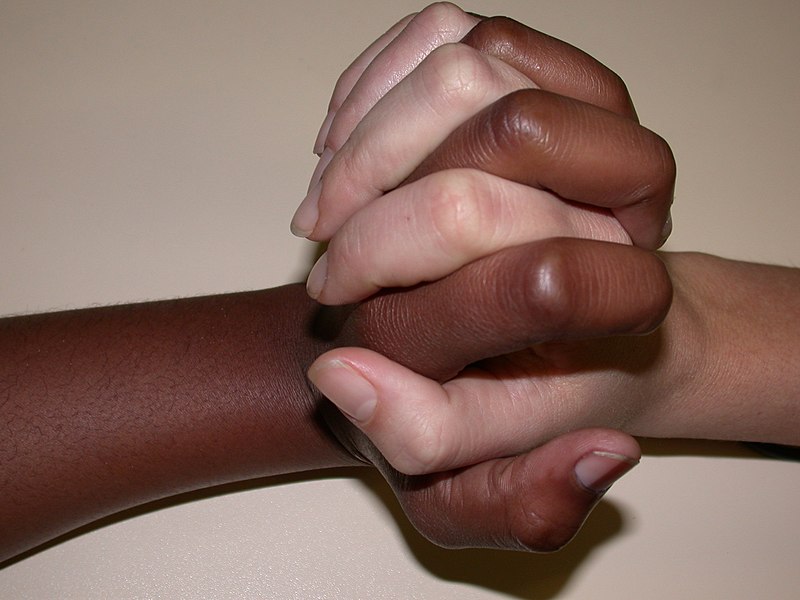
File:Diversity and Unity.jpg
photo courtesy of Frerieke via Wikimedia Commons

Hi guys. Today we're going to talk about diversity. Not because I'm trying to be politically correct or because I think this is a heated topic (in fact, I almost *didn't* bring it up because it is a heated topic), but because the more I see YA covers the more I see white females and a whole lot of white males and the more books I add to my TBR the more I see how many white females lead YA literature (that I, myself, read, too--I want to be clear about this). So the reason for my post isn't to stir anything up; it's to ask you, as writers, what you think about it. (I have no idea what the demographics are for authors (white versus everyone else) but to me, white authors seem to take precedence in the media. It's just how it is.)

So. Diversity. Recently, I got addicted to CW's Arrow. Lovemuffin and I watched a ton of shows back to back for an entire weekend, and were only a few episodes in when I observed that almost every scene had a white character right alongside an African-American. This has changed a bit as the series has progressed, but at that point I was like, "Wow. This is so cool." (Keep in mind that I don't watch TV ever, really, so perhaps this is now the norm. If so, whoops.) But to me, seeing both in almost every scene was proof that this wasn't some coincidence; their show was seriously trying to make it happen.

As someone who is very active on Twitter and Goodreads, I've noticed that many of the teens I interact with or follow or "squee" over stuff with are *not* white. And, I've noticed that they read the same things I do. Which means they too are not reading much about characters like them. And that, I think, is  quite unfair.

I have one series where almost every character is a different nationality specifically because I wanted it to look like a skin rainbow when the entire group hung out. My other series? Well, let's just say I saw them all as white Cali kids. Of course, neither of these make me (or anyone else) a better or worse author, but after watching Arrow I got to thinking: How hard would it be to throw in a nationality or two (even as secondary characters), and why don't we, as a society, do it more often?

Like I said, this post wasn't to start anything, but to see what you guys think. Sometimes books are best written to where the readers can decide for themselves what nationality a character is. But, I tell ya what: I can't even imagine how frustrated I would be if almost every book cover and character showed a Portuguese girl (when I am so *not* remotely Portuguese at all). It would probably be fine at first, but after years upon years of this, I'm pretty sure I'd be like, "Can't they find anyone else to put on their covers? Don't they know there are many more people in this world besides girls with dark hair?"

The mic is on! I'd love to hear your thoughts. :)

***Note: It occured to me days after writing this post that I had seen another post recently about diversity by Aimee Hyndman. You can check it out here.

Wednesday, December 18, 2013

Making a connection: sympathizing with the characters

Recently, I was asked a question for my upcoming blog tour for the release of If I Speak True in January. It was: What do you think makes a well-written story? I kind of surprised myself when I didn't even have to think before giving my answer: well-written characters, tension, mystery, and humor.

Later, as I was thinking about my interview answers, I had to laugh. Apparently, a plot--of any kind--wasn't even on my list of necessities. I've found that I love to be in the characters' heads more than anything, which leads me to today's topic: How do you keep that happy medium of delving into your characters' heads enough that you readers connect with them, but not so much that they can't stand reading it?

I know some people have felt that Pity Isn't An Option is way too into Jonas and Hattie's heads, and I get it. Sometimes readers are in the mood for a story like that, and sometimes not. Sometimes they're in the mood to get to know characters and coast along on their journeys, other times they'd rather see a wide scheme of things played out before they reach the back cover.

So here's my question for you: How, as writers, do you attain this? I've often seen reviews where readers share their frustrations of feeling no connection to the main characters (or the opposite--they were tired of the characters and wanted more action), and I've wondered, Does the author's voice have anything to do with this? Is it a conflict of personalities (the reader's and the MCs) that makes this such a touchy experience? Or, Did the author simply miss the opportunity to get you to sympathize with the character/s by not helping you understand where they're emotionally coming from, first?


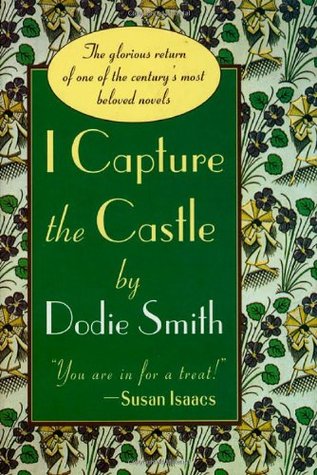
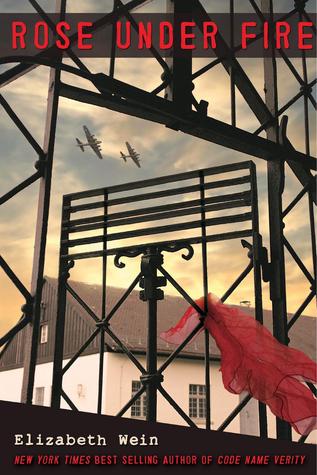
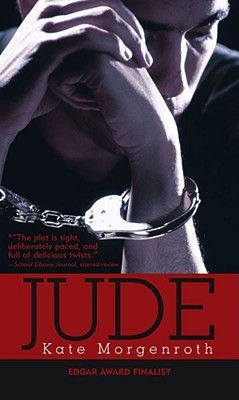
Enabling the reader to sympathize with the characters is, after all, part of writing a "well-written" book in the first place--something all of us writers are striving for. Below, I've listed a few books that really made me connect, sympathize and root for the characters. 

How about you? We'd love to hear about your own personal character connections in the comments!


The House of the ScorpionNever Fall DownStolen: A Letter to My Captor
I Capture the CastleRose Under FireJude


Monday, July 15, 2013

What I Learned From My Summer Reading

When I’m working on a project, the books that I happen to read for entertainment start to do a funny thing.  They teach me and remind me about important things that I must do (or not do) in my own work. 

Lately I’ve read (and re-read) novels by the wonderful Linda Urban.  Specifically, A CROOKED KIND OF PERFECT and her latest, THE CENTER OF EVERYTHING.  I’m particularly fond of THE CENTER OF EVERYTHING because of how Linda Urban crafted the character of Ruby Pepperdine, a twelve year old who recently lost her Gigi and is hanging her hopes on one wish and an essay about her town’s founder and inventor of the donut.  One thing that really impressed me about this book is that it’s told from close third-person and weaves between past and present tense. It took me a while to read THE CENTER OF EVERYTHING because I found myself engaged in “How did she do that?” with every chapter. 

And in a story filled with great lines, there was one that jumped out at me because of its meaning to the story and the meaning for novel craft.  You can find it on page 137 in the chapter entitled “The Hole that Turns Things Inside Out.”  Ruby and her friend Nero are at the library researching a torus and how it changes.  During this scene, Nero tells Ruby, “The hole is what lets it change.”

And I thought….BAM.  There you go, Linda Urban.  Teaching me something important about my own story.  I have a character who is missing something very important in her life and without that hole, there would be no way for her to change.  And, as we all know, transformation of our characters is key to a strong story.

What have you read lately that entertained you as well as taught you something new about your craft? And are there any lines from a novel that stay with you because they remind you something important about your approach to writing?

Tuesday, February 5, 2013

Where's the Love?


I thought I'd start my OA posting history with where I am right now in my writing life. My first novel is due to be released into the wild this November, and for now, it is in the hands of an editor. So I got organized and developed a fantastic idea for a shiny new project (something to keep me busy while I wait).

All of my characters showed up the first day, each dutifully carrying note cards with character traits and arcs and a very clear outline of my expectations. And after the first 1,500 words, they got up and left.

Hello!? I need this first draft by the end of February! My goal seems completely reasonable, and I know I can write awesome first drafts—I've got one simmering as proof! What's going on here?  

Let's call my characters Team A and Team B. Team A has been around for years. They check in at all hours of the day and night, and I can count on them being ready to go at 5am, when I write best. They'll do anything I ask, and I don't argue when they say I'm wrong. Heck, even when I'm pretty sure what they want will be nothing more than a "candy bar" scene, I'm always willing to let them have a little fun. They've earned it!

Team B? They have no clue what's going on. Sometimes I think they sleep in 'til 3pm. Don't they know I'm long-gone by then, picking up the kids from school? Sheesh! And their eagerness to correct me all the time is not helping this first draft, it's putting a screeching halt to it.

So, I came to the creative conclusion that this issue is not about my skills as a writer (thank goodness). It's about the relationship I have with this new set of characters. They don't know me, I don't know them. I assumed they'd have the same work ethic as Team A, because, you know, I'm the author! I am not going to change what I've been doing successfully for years and years. Am I?


So, Team B and I got together for a pow-wow session and here's what I learned:

1. Where Team A was love-at-first-sight, Team B is more like an arranged marriage. We're going to have to get to know each other before we can expect to make anyone truly happy.

2. Team B is tired of being compared to Team A.

3. Team B doesn't reject my overall plan, but they don't trust me with the details.

4. With every wrong assumption I make in this first draft, they lose respect and motivation to participate. (Apparently, I've been wrong quite often)

5. They want more freedom and I'm not trusting them to stick to the plan. (Yeah, that's true.)

6. They don't like acoustic guitar, nor do they like silence. They want upbeat dance music during writing sessions (ugh).

7. Relaxing candle scents make the two youngest characters gag.

8. They don't care if my work space is organized, and get annoyed by the unnecessary delay if I take a moment to put things away. So basically, if I'm not ready when they are, they're not going to be ready when I am, just to make their rebellious point. (This one makes me mad—total lack of respect.)

9. They like chaos and crowds of people. If I can't find them when I need them, they will NOT be waiting in the orchard next to the river for a private pep-talk. They will be at the mall with their friends, one in the arcade, the other in the food court, texting her best friend who's sitting at the same table.

But the most important thing I learned from this WiP time-out, is that I'm trying to write this first draft as if it was a final draft, wasting precious time guessing at details I can't possibly know yet. The point of this draft is to test the overall plot and get to know the characters, to see how much stress each one can handle. Because nothing is set in stone at this point—not my writing routine, the PoV, personality traits, voice... not even the main character.

I never thought I'd say the characters aren't important, but maybe Team B should play elsewhere while I work out these first draft details—that way I can test some ideas without being ridiculed to death. (I swear they're worse than the "internal editor". SO dang picky.)

Right now, my only goal is to write the bones. I'll be more than happy to let the characters add heart, soul, and flesh to the story on the very first round of editing, after I've gotten to know them on a more personal level. I might even let them add a few scenes as incentive if they'll agree to keep quiet for now.

Anyone else having first draft issues, where everything is an obstacle and there's no love or motivation to make it work?

And here's a funny thing... this quote found its way to me today. ‎"We should be taught not to wait for inspiration to start a thing. Action always generates inspiration. Inspiration seldom generates action," Frank Tibolt

As of this moment, I would reply with, "But action seems so pointless when there's no inspiration."
Fake it 'til you make it? 

Friday, January 4, 2013

Creating Unique Characters - Bethany Wiggins

First of all, I have to say thank you for letting me post on your blog! It is an honor.

Now, let's talk a little bit about characters. What makes a character likeable? Interesting? Despised? Here are a few thoughts.

INNER TURMOIL, MOTIVATION, and COMPASSION!

These three things are very typically wrapped up in each other. Some of the best characters are not only plagued by difficult pasts, but it is that very past--that inner turmoil--that motivates them to do interesting and amazing things. Think Batman/Bruce Wayne. His parents were murdered in front of his face. Because of that traumatic event, he decides to grow up and fight bad guys. Not only does this motivate him to kick some butt, it also makes us feel something for him . . . compassion! And when you feel compassion for a character, it builds a bond with that character and something happens. You LIKE him. And if you like the character, you want to know what happens to him.

So, know your character's past, and know how that past motivates him.

FLAWS and IDIOSYNCRASIES!

Are you perfect? Is anyone perfect? Yes, actually we are all perfect in our uniqueness and personal quirks--and that's what makes us so special and loveable. This is also what makes a character special. BUT you can't tell us what her flaws are (ie: A door slammed and the power went out. She was nervous so she chewed her fingernails until they bled.). You have to show us her flaws (ie: A door slammed and the power went out. She caught her nail between her teeth and started chewing while she waited for her pulse to slow down.). Flaws/idiosyncrasies can be simple things, like only wearing white socks, or they can be deeper things like not trusting people or being scared of what's under the bed or carrying around a special handkerchief because it belonged to a long-dead grandma.

So, know what makes your character quirky. Know her flaws. Know her odd habits. And embrace them.

Last of all, and this was touched on already, because it is the most important thing you can know about a character: PAST PAST PAST!!!

To know someone's present personality, you have to know their past. You have to know why they act the way they do. Why they respond to situations the way they do. Why they love or hate a certain thing, why they're scared of certain things, why we should love them. So, get to know your character. Make up his/her past! What traumatic things happened to him in grade school? What were her parents like? What was the best day of his life? The worst? The saddest? The scariest? Know these things, and then while you're writing, you not only know what makes your character tick, you can also give us little tidbits of his/her past.

Most importantly, have fun with your characters. Make them unique and pitiful and funny, and then we won't be able to help ourselves. We will fall in love with them.


Bethany Wiggins has always been an avid reader, but not an avid writer. She failed ninth grade English because she read novels instead of doing her homework. In high school, she sat alone at lunch and read massive hardback fantasy novels (Tad Williams and Robert Jordan anyone?). It wasn't until the end of her senior year that the other students realized she was reading fiction--not the Bible. Several years later, Bethany's sister dared her to start writing an hour a day until she completed a novel. Bethany wrote a seven-hundred page fantasy novel that she wisely let no one read--but it taught her how to write. The rest is history.

You can find Bethany at:


BUY LINKS:

Shifting - Amazon; B&N; Books a Million
Eighteen-year-old Magdalene is transferred to what should be her last foster home in Silver City, New Mexico. Fitting in has never been her strong suit, but it's not for the reasons most people would expect-it's because Magdalene is a shape shifter. But even in her new home danger lurks, waiting in the shadows to pounce. Those hunting her are the Skinwalkers of Navajo legend, who have traded their souls to become the animal whose skin they wear- and Maggie is their next target.


Full of romance, mysticism, and intrigue, this dark take on Navajo legend will haunt readers to the final page.


Stung (available for pre-order) - Amazon; B&N; Books a Million
Fiona doesn't remember going to sleep. But when she opens her eyes, she discovers her entire world has been altered-her house is abandoned and broken, and the entire neighborhood is barren and dead. Even stranger is the tattoo on her right wrist-a black oval with five marks on either side-that she doesn't remember getting but somehow knows she must cover at any cost. And she's right. When the honeybee population collapsed, a worldwide pandemic occurred and the government tried to bio-engineer a cure. Only the solution was deadlier than the original problem-the vaccination turned people into ferocious, deadly beasts who were branded as a warning to un-vaccinated survivors. Key people needed to rebuild society are protected from disease and beasts inside a fortress-like wall. But Fiona has awakened branded, alone-and on the wrong side of the wall . . .

Monday, October 22, 2012

Disney's Princess Sofia + Stereotypes = What Do You Think?

So. You may or may not have heard the latest over at Camp Disney--they've unveiled their newest princess. Her name's Princess Sofia, and she's the star of her very own movie, Sofia The First: Once Upon A Princess. According to the movie's producers, Sofia is of Hispanic heritage on her mother's side. 

And she looks like this:


And she's voiced by actress Ariel Winter, who stars in one of my absolute fave TV shows, Modern Family:


As you can see, these ladies are both Caucasian. Princess Sofia, in particular, has blue eyes. Now here's the thing: I'm Puerto Rican. I've lived in Puerto Rico my whole life, and yes, there are white, blue-eyed Puerto Ricans (if this shocks you, then holy smoke bombs, you need to get out more). Seeing white, blue-eyed peeps from other Latin-American countries doesn't surprise me at all, either. That being said, there's been some serious backlash over Princess Sofia's appearance. Her critics believe she doesn't look Hispanic. To add fuel to the fire, the movie won't address her Hispanic heritage as A Thing That Matters, but as A Thing That Is Simply Part Of Who She Is And Won't Be Dwelt On.   

Now I leave the floor open to you: whether it's in Disney movies/books/TV shows, do you prefer the main character's heritage to be on the forefront of their story, or are you okay with it not dwelling on their heritage too much? Can you provide examples to better illustrate your preference and why it works for you? Thanks in advance!


Also, don't forget: you can still submit your questions for our New Year's Revisions Conference Agent Q&A!!! AND instead of just one question per person, you can submit as many you want! Just make sure you get them in before October 31st!!


Monday, September 17, 2012

Nom Nom Nom: Why I Want Food In Your Story

Confession: I am obsessed with food. I eat about a bazillion times a day (that's a rough estimate). I am not ashamed of stealing cupcakes and cookies and pizza slices from my loved ones. They know I'm a lost cause. 

Perhaps it's this obsession with food in my real life that I'm always on the lookout for food in novels. I almost pass out every time I read scenes inside the Great Hall in the Harry Potter series. My tummy went berserk when I not only read about the November cakes in Maggie Stiefvater's The Scorpio Races, but also when I saw BOTH of her posts with the recipe. I've yet to actually make my own November cakes, but it's forthcoming :)

Similar to your main character's Impala, I think food tells your readers a lot about him or her. Do they like sweet stuff? Sour stuff? Spicy stuff? Or are they like me and eat EVERYTHING EVER IN THE UNIVERSE EVER? Perhaps your MC is an aspiring chef, and food is their whole life. Or perhaps your MC is allergic to halibut, but their love interest is all over that halibut. Awkward first dinner date, huh? Or perhaps your villain knows about your MC's allergy, sneaks in bits of halibut in your MC's dish, and OMG I don't even want to finish this sentence. 

My point? Food is just another layer of who your characters are. Sure, there are tons of other things that can deepen characterization better, but why pretend food isn't a big deal? I think it totes is. You should, too :)


Now tell me: how do you incorporate food into your manuscript? Do you go about it casually or are there detailed descriptions of yummyness? 

Monday, June 18, 2012

Fake Dads: Who's The Worst?

So. Yesterday was Father's Day. Which got me thinking about... you know... fathers. Which then got me thinking about male characters in fiction/movies/TV. 

It didn't take long for me to come up with a list of male characters I'd love to have as dads. But I had way more fun brainstorming male characters--with children in their fictional lives or not--that I'd NEVER want as my dads. 

This week's question is the following:


Which fake male character would you NEVER EVER EVER want as your dad?


My top pick? This piece of work right here:


Me: "Oh, hi, Dad!! How's that whole war against the Muggles/Mudbloods/Good Wizards going?"

Voldemort: "AVADAKEDAVRAHARRYPOTTERISMINEOHYESHEISDIEDIEDIE!"

Me: O_O


I won't be sending him any postcards in the near future, folks. Oh, no, I won't. 

*shudders*

Tuesday, May 15, 2012

How to Make Your Characters Behave.

So I went to the Query Tracker forum yesterday. FYI, I was one of the first members of that forum in its baby stage. I used to spend loads of time posting on that forum, as you can tell since I still am one of the record holders to most time online. (Yes yes, I was on there a LOT back then.)

One of the topics was about how you get past the sludgy bits in a manuscript, especially when you have exciting scenes a few chapters ahead. We've all been there, when the writing feels like you are walking through curdled chocolate pudding. It feels like it takes forever!

A few suggestions I thought were very interesting. One person said that when their characters aren't cooperating, she tells them they are going to Disneyworld. And when the charters say, WTF, they end up taking her by the hand and leading her where they need to go.


Another person said that she writes a "shower scene". Can you all imagine what would happen if BAM, all of sudden your characters are in a shower? I"m sure interesting conversation would develop for sure.

I thought that they were both creative and fun suggestions to a problem we all face in the slow, transitional bits of our writing. It got me thinking: Wouldn't it be fun to have a topic that you went to in those situations? A topic that you pull out of your bag of tricks to make your characters get their butts moving? My current project is a MG fantasy, so I don't think a shower would be quite appropriate for them. Disneyland might be good, but I think I'd like to come up with something completely different.

So I thought I'd ask you all, my wonderful blogging buddies, for brainstorming ideas. Lets figure out some fun ways to force our characters into submission, by manipulation and humiliation. If they aren't going to corporate, lets share some ideas to MAKE them behave.


Oh, and by the way, more than likely, these scenes will not stay in a manuscript. I though it was a great strategy to get past writer's block. Computers are great. You can always delete it later once you've moved on.

Monday, May 14, 2012

The Sirius Black Problem

So. Yesterday, I watched two super awesome movies. One of them was ze following:


Yes, that's Sir Gary Oldman. I typically adore Gary's performances in everything, so I decided to check Tinker, Tailor, Soldier, Spy out. Obviously, Gary was amazeballs. But there was one moment where I FLIPPED OUT and screamed at my TV: during one scene, Gary's character (an agent working for British Secret Intelligence in the 70s) is speaking to someone else. He starts by saying "If Witchcraft is genuine..."

And I went all, "OF COURSE IT'S GENUINE, SIRIUS!!! ARE YOU KIDDING ME??? YOU OF ALL PEOPLE SHOULD KNOW!!!!"

Then I realized two things.

1) I wasn't seeing Gary Oldman as Agent Dude From British Secret Intelligence. I was seeing him as Sirius Black, super awesome wizard badass from the Harry Potter series. 


2) I have issues (this is a recurring realization, actually...).


But the most important thing that dawned on me is this: sometimes I have trouble setting aside a writer's/actor's previous work, and blur the lines between that and the current one. I blend both projects together. Don't know why, but I tend to do so. In Gary's case, when he mentions "Witchcraft," he's referring to an operation, not magic. And yet, BOOM. I thought magic. 

The Sirius Black Problem, ladies and gentlemen. Oh, how it haunts me...

So now I'm wondering: has this ever happened to you?? If so, which two (or three...) projects have you blurred into one?

Monday, May 7, 2012

On Batman And Letting Go


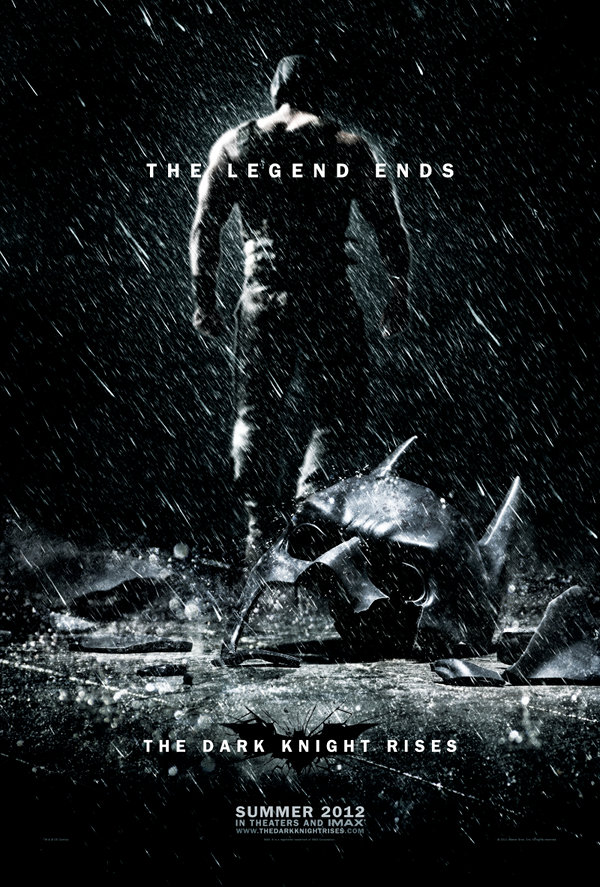
Confession: The first time I saw this poster for The Dark Knight Rises, I cried. I also cried the first time I saw the teaser trailer. And I also cried the first time I saw the two trailers after that one.

But back to that poster. You see how the words "The Legend Ends" sit at the top? Yep. Those did me in, folks. I read the stupid words and bawled.

Why?

Well, I'm a h-u-g-e Batman fan. Christopher Nolan, director/screenwriter extraordinaire, has re-envisioned my childhood superhero into someone I don't want to say goodbye to. Of course, I'm aware that even after Nolan's trilogy wraps up, more Batman films will be greenlit in the future. 

But Nolan won't direct or write them.

Christian Bale won't be Batman anymore, either. Some new dude will take over and re-envision the man/mythology all over again. 

That's one reason I don't want to let go.

The other? I suck at letting go of my favorite characters. Big time. I can convince myself that it's for the greater good and that it's not a real person I'm saying goodbye to, but in the end, those pesky tears always come back. Something tells me I'm never going to change. I'm destined to be a sort of character hoarder, unwilling to part ways with the fake people ruling my heart, and eventually burying myself underneath their awesomeness. 

*suffocates*

Which leads me to today's questions: how do you let go of your favorite characters? Which character proved the hardest to let go of for you? They can be from books/movies/TV shows you love, or they can be from your very own WIPs!!!


Also, for the Batman lovers out there, here's the latest trailer for The Dark Knight Rises: *sobs*


Monday, April 23, 2012

We Need More Girls... Right?

So. There's this movie opening in a few weeks. You may or may not have heard about it.


Confession: I am beyond excited to see The Avengers. I am. Really. Joss Whedon directing? A handful of Marvel's best superheroes? I'm so in. 

But I've been thinking about something one of the film's actors said in an interview. You see, there's this guy named Chris Hemsworth. He looks like this:


*fans self*


While promoting The Avengers, my future husband Chris Hemsworth was asked about Kristen Stewart. They both star in this summer's upcoming Snow White and The Huntsman.


Huntsman: "Wait... is that guy... sparkling?"

Snow White: "I have no idea what you're talking about. I am too busy freaking out over your gorgeousness." 


The interviewer asked Chris whether Kristen could hang out with The Avengers on a save-the-world mission, to which he replied with high praise for Kristen. He was then asked whether she could "hold her own" alongside the superhero team:


"I think so," smiled Hemsworth. "Why not? We need some more girls."


Chris's answer immediately made me think of the lone woman in The Avengers team.


Scarlett Johansson as The Black Widow 


Yes, she's tough. Yes, she can fight. She even carries a gun (???). But while her inclusion is a step in a good direction for female characters in films, I can't help myself in taking Chris's answer to the next level. Thor, Captain America, Iron Man and The Incredible Hulk have their own origin stories on film. The Black Widow doesn't. Her origin story is glossed over in Iron Man 2, where she first appears onscreen. Which leads me to wonder: is representation enough? 

To me, it isn't. I want to know more about The Black Widow. I don't want her to be in a movie surrounded by a bunch of guys who can protect themselves just fine without her. I want to see her serve a purpose. These are my expectations for the movie. Maybe they'll be met. Maybe they won't. 

Either way, Chris Hemsworth is on to something. 

We need more richly developed, purposeful female characters in all genres of fiction. Don't write a story about a girl if she isn't someone worth exploring further. Don't settle for less than what she deserves. Same goes for male characters, of course, but that's for another post :)

Now tell me: what do you think of the need for more girls in fiction/film/TV? Which are some of your fave female characters? 


Monday, August 29, 2011

Hurricane Irene + Boredom = PLOTTING TIPS

So. Hurricane Irene. 

*glares*

You see, I live in Puerto Rico. And dear ol' Irene was not very kind to my country (for some reason, I am typing this while speaking like Borat. I assure you, Puerto Ricans do not speak like Borat. Just me). Anyway, Irene hit us this past weekend. She stayed with us for about three-ish days. On Sunday, while I was watching this:


...the power went out.


The water said goodbye the next day. On Wednesday, it returned. 


The power, on the other hand, came back on Thursday.


But without cable or an Internet connection.


I spent the majority of the week looking like this:


Things Amparo Was Plotting:


1) Irene's slow and painful death

2) Her WIP


When it comes to #2, I sort of had an epiphany... because of #1. You see, when it comes to character development, the toughest things for me to nail are the external triggers that allow said development to unfold. I know how my MC will change throughout the manuscript, but not always what causes that change. 

Which leads me to Irene and my Week In Cyber Suckage: if you take something away from your MC, giving it back in half pushes them to seek the missing piece. Also, if your MC gets everything he/she wants in one fell swoop, take something else away that means more than what they gained. This could be material or not. Totally up to you, and your story's needs. I think books are all about The Lack, and exploiting what your MC's lacking makes for awesome storytelling. 

So yeah. I guess Irene was good for something.

Now tell me: how did you spend time with Irene? Did she help you with your WIP? Have you used these tips in your writing?

Monday, June 27, 2011

Awesome Book Reviews: BEAUTY QUEENS by Libba Bray


From bestselling, Printz Award-winning author Libba Bray, the story of a plane of beauty pageant contestants that crashes on a desert island. 


Teen beauty queens. A "Lost"-like island. Mysteries and dangers. No access to email. And the spirit of fierce, feral competition that lives underground in girls, a savage brutality that can only be revealed by a journey into the heart of non-exfoliated darkness. Oh, the horror, the horror! Only funnier. With evening gowns. And a body count.


Review: Remember that time I said I wanted to make out with Elana Johnson's Possession?

Yeah. It happened again.


This was my first time reading a Libba Bray book. While I am still appalled at myself for not having read her other books, I'm glad Beauty Queens was my first. Bray has a knack for the funny. Scratch that--for the hilarious. Pageant girls stranded on a deserted island? Come on. You know you're laughing right now.


But Bray's novel isn't just about the hilarious. Yes, there are a few borderline psychotic, high-maintenance contestants who live and breathe sequins and sparkles. Some would kill for a flat iron. Or cry if they broke a nail. They are your standard beauty queen cliches. 


And it's precisely this that worked for me. Because not only does Bray acknowledge the cliches, she stomps on them and tosses them into the ocean. Adina, one of my favorite characters, is Miss New Hampshire. She has ulterior motives for being a contestant on the Miss Teen Dream pageant. I won't reveal said motives, but I will say that they spur debates between the rest of the girls. Mainly, they seek to answer this question: what does it mean to be a girl? Other contestants have their questions, too. Bray weaves them all together throughout the book, making you laugh and think at the same time. 


Beauty Queens shows an America turned corporation, where consumerism is king. At times, there are "commercial breaks" that feature ads for ridiculously named products, TV shows, and celebrities. There are also Fact Sheets that each contestant has filled, revealing funny yet poignant details about them. But sometimes those facts have to be censored--they clash with what a future Miss Teen Dream is all about. Or they might make The Corporation look a little less perfect. And we just can't let that happen, can we? 


I could go on and on, folks. My verdict? Don't listen to me. Go pick up Beauty Queens, which is in stores now, and see for yourself :)