Showing posts with label Karen McCoy. Show all posts

Friday, May 6, 2016

Bid on an Awesome Package from our Operatives!

http://pensforpaws.blogspot.com/


For this year's Pens for Paws Auction, our members are offering an entire package that includes:

From Karen McCoy:
Signed ARCs of Miss Peregrine's Home for Peculiar Children by Ransom Riggs, The Marvels by Brian Selznick, and Winter Falls by Nicole Maggi


From Katrina Lantz:
 $15 gift card for Amazon.com


From S. L. Saboviec:
E-books of Guarding Angel and Reaping Angel (books one and two in the Fallen Redemption series)


PLUS A Critique of your first chapter 


From Kara Reynolds:
Critique of Twitter pitch, query, and synopsis (between Kara's crits and Samantha's, you could have an entire submission package ready to go!)


From Angelica R. Jackson: Signed paperback of Crow's Rest plus swag


This item will close on May 8, 2016, at 9:00 PM EST, so hurry over and get your bids in!

Thursday, April 28, 2016

A Final Farewell...

It is with great sadness that I bid my final farewell to my Operation Awesome operatives. I am thankful to you all for your many contributions, and teaching me more than I could ever hope for.

In looking back over my past posts, I was reminded of one of my first, Sailing Through Fog: How Writers Can Chart Toward an Unseen Horizon. Yet again, I find myself in unfamiliar waters, navigating a new job and figuring out a new normal.

Fog Photo by Psytrom, courtesy of Photobucket

You'd think, two years after that post, I would have figured out all the bumps by now. But that's not how it works. You dodge a rock you think is there, only to run into a completely new rock on the other side. Then you have to re-chart again, because the reality you perceived wasn't there at all, and your certainty is dragged from your center until it becomes a delusion.

So you get knocked out of the boat maybe, and once you get back in, you're cold, wet, and irritated. But if you're in the right state of mind, you can start to see the new pattern so clearly that it turns into one that's familiar, and slowly, surely, you can sail forward again.

It's something we face time again, in writing, and outside of it. Something you tried didn't turn out the way you planned. Perhaps a book you wrote went off in a completely unexpected direction. Or your query flopped. Or a publishing relationship inexplicably went south. Or a marketing strategy you put a lot of work into tanked, and you're still not sure why.

All of these have one aspect in common: they all represent trials we have to go through in order to fully understand what we need to learn from them. And with that understanding, we're armed with a oar to do it better next time.

Sometimes we have to go through the same thing a lot of times before it finally registers. And that's okay. Even new mistakes are okay--because in them we can see where we've improved, what we've overcome, and what else we can learn.

So I leave all you wonderful readers in the hopes that you'll find as many new paths as possible, and when the river gets bumpy, remember we're are all sailing through this together, toward that unseen, misty horizon.

I'll let the Shakira song from the new Zootopia movie finalize my point:


Monday, April 4, 2016

March 2016 #OABookClub: Emma by Jane Austen

Welcome back! In March, the members of Operation Awesome read EMMA, by Jane Austen.


Emma is a classic, by a revered author. So why did some of us have trouble finishing? Read on, and please add your thoughts in the comments!

Kara

I have struggled with reading "classics" all my life. While a part of me would love to be "well-read," the actual reading of most of those books has been onerous. I often can't read them unless I've seen the movie (Pride and Prejudice is one that comes to mind).

Well, I've seen Clueless, so I figured that would be enough to get me through EMMA. And it helped; I kept reminding myself "Okay, Harriet is Tai, Mr. Knightley is Paul Rudd's character..." While I was able to keep the characters straight, I still kept falling asleep while reading! I do intend to finish EMMA, someday, but alas I could not finish it in March. It's not like I didn't have free time this month; the amount of Gilmore Girls I watched can attest to that. But when the choice came down to watching Netflix, working on my own book, or reading EMMA, somehow EMMA always got picked last. In fact, I only read it when I was donating plasma and the internet wasn't working (meaning no Netflix).

I tried to pinpoint what it was about EMMA that kept putting me to sleep, and I think it's the pacing. It moves soooooo sloooooooowly. Most of the beginning of the book is dialogue or exposition. Emma's governess/companion moves out, but we're mostly told that, not shown it. Harriet becomes Emma's friend. And then the Travis-equivalent proposes to Harriet (that's as far as I got). But somehow there is endless talking about FREAKING EVERYTHING even though barely anything is happening!

It reminded me that while dialogue often helps us get to know characters and love them, it is not a good device for advancing a story. Action is important. Stuff has to happen on the page, not just be talked about.

I'll finish this one, eventually, if the internet isn't back on at BioLife. At least it was free!

Samantha

Honesty time: I did not complete the homework assignment. I DNFed this book at 7%. And what's more... I was the one who picked this out.

I spent most of my life avoiding Jane Austen. Her writing isn't exactly my thing. I'm more into space operas, gritty fantasy, and psychological thrillers. That's about as far from her prim romantic interludes that you can get. My BFFs in high school were obsessed with the Gwyneth Paltrow movie, yet I never read any Austen works until a couple years ago.

However, I enjoyed Pride and Prejudice. It's quaint. I liked the voice, and I can understand why people go crazy over her writing. I've also been bingeing Downton Abbey on Netflix lately, so I get it. I get it. I GET IT.

What I didn't get was who all these people in Emma were. OMG, so many people. And her father went by "Mr." or whatever? Like, how am I supposed to remember that? I spent half the second chapter thinking I'd been introduced to someone new and being confused about someone's second cousin's childless marriage and... Yeah.

March has been a stressful month for me overall. I might have persevered longer if I had more energy. I really thought I'd like it, but that's the verdict: DNF, 7%. Sorry, Ms. Austen.

Karen

I have to confess that the only reason I read this book is because a good friend of mine told me it was a digestible Jane Austen. I had a history of DNFing all the Jane Austen books because, oh my goodness, they dragged. And dragged.

This one was a bit more readable for me though. Perhaps it's because I'm older, reading more, writing more, and I have a different relationship to words than I used to. It probably also helped that I saw the movie Clueless first, which made it easier to keep track of everyone, especially with a double-check to the wiki. But I definitely agree with Samantha that it was chock full of people.

Emma is a beautifully complex character, so much so that I still rooted for her despite her frivolity and stubbornness. She's smart and clueless at the same time, all while being so wonderfully interesting. Something very difficult for a writer to pull off well.

As much as I liked the book, however, it is, as of this post, still a DNF. I'm more than halfway through, and intend to finish. And I'll definitely be watching Clueless again.

Katrina

I am a sucker for Jane Austen's dry humor and spot-on characterization of people who seem too real to be made up. Frank Churchill, for instance, while charming in every movie adaption of Emma I ever saw, is really quite a cad in the book. Take this excerpt, from when Emma catches him staring at his secret fiance.

He started. "Thank you for rousing me," he replied. "I believe I have been very rude; but really Miss Fairfax has done her hair in so odd a way--so very odd a way--that I cannot keep my eyes from her. I never saw anything so outre! Those curls! This must be a fancy of her own. I see nobody else looking like her. I must go and ask her whether it is an Irish fashion. Shall I? Yes, I will--I declare I will; and you shall see how she takes it--whether she colours."

Not quite the charmer Ewan McGregor had me crushing on! As much as I have loved the characters in Pride and Prejudice, and Persuasion, I believe Emma holds some of the most ridiculous and yet life-like of any Jane Austen wrote. While the story line may drag a tad, the actual conversations are so much fun, you couldn't get any more entertainment from watching The Bachelorette, which is, of course, how Emma likes to describe herself.

Wendy

I'm a big fan of Jane Austen's work, and of all of them, I love Emma the most, and not just because I think Mr. Knightly is the best Austen love interest.

The characters in this book are people you can identify the world today: Emma, who means well and says things that sound correct but doesn't realize how unnecessary her advice and "assistance" really is; Harriet, who values her friend's opinions over her own, much to her detriment; Mr. Woodhouse, who's content in his comfortable little world of consistency and hates any kind of change; and the rest of the cast, whose blunders and antics and interactions are so relatable, even so many years later.

Yes, the plot isn't exactly action-filled, but with Austen, I'm in it for the characters, the clever dialogue, and the little hidden gems of understanding, rather than a riveting plot.

On the topic of "hidden gems" -- for fans of Austen, or those who may have read the works but feel like they're still missing the "inside jokes," I'd definitely recommend What Matters in Jane Austen: Twenty Crucial Puzzles Solved by John Mullan. This literary criticism outlines twenty insights into Austen's world that make reading these novels even more enjoyable and might make some of those tough-to-get-through chapters make more sense. It contains insights on what those books were that Harriet told Mr. Martin to read, why Austen had her characters play those particular card games, and how much the age difference between characters would have really mattered during those times. You may be surprised what you've been missing!

***

April's Operation Awesome Book of the Month


In April, we're reading A DARKER SHADE OF MAGIC, by V.E. Schwab.


Kell is one of the last Travelers—rare magicians who choose a parallel universe to visit.

Grey London is dirty, boring, lacks magic, ruled by mad King George. Red London is where life and magic are revered, and the Maresh Dynasty presides over a flourishing empire. White London is ruled by whoever has murdered their way to the throne. People fight to control magic, and the magic fights back, draining the city to its very bones. Once there was Black London—but no one speaks of that now.

Officially, Kell is the Red Traveler, personal ambassador and adopted Prince of Red London, carrying the monthly correspondences between royals of each London. Unofficially, Kell smuggles for those willing to pay for even a glimpse of a world they’ll never see. This dangerous hobby sets him up for accidental treason. Fleeing into Grey London, Kell runs afoul of Delilah Bard, a cut-purse with lofty aspirations. She robs him, saves him from a dangerous enemy, then forces him to another world for her 'proper adventure'.

But perilous magic is afoot, and treachery lurks at every turn. To save all of the worlds, Kell and Lila will first need to stay alive—trickier than they hoped.

Come back on Monday, May 2, to discuss what you thought of the book!

Tweet: I'm reading A DARKER SHADE OF MAGIC by @veschwab in April for @OpAwesome6's #OABookClub. Join me?Click to Tweet: I'm reading A DARKER SHADE OF MAGIC by @veschwab in April for @OpAwesome6's #OABookClub. Join me?

#LesMisRead2016 Update from Samantha


Quick update: As I mentioned above, I've had a hard month. My father-in-law died on Good Friday. Before that, my husband went up to see him in his final days, and I had the week off from work to (supposedly) potty train our toddler. But Morrigan was very upset that Daddy was gone, so that didn't happen. No potty training with depressed toddlers. Then hubby got home, and his father went into palliative care, and we took the twelve hour drive up there. As I'm writing this, we're on the road back home.

So that's more of a life update than a Les Miserables reading update, but all that to say: I'm behind, but not because I'm not enjoying it. My big overall thought on the novel is, "Poor Cosette. Poor Fatine. Poor Jean Valjean. Poor everyone." But then, with a title like that, what do you expect?

Hopefully I'll be caught up by next month!

Thanks for stopping by. Let us know what you thought of Emma in the comments!

Thursday, June 25, 2015

UtopYA Con 2015 and Beyond

One of my original critique partners, Christina Mercer, started going to the UtopYA Con in Nashville a few years back, and raved about the experience. Which is why that con was the first one to come to mind when I decided earlier this year that I wanted to travel to a fun con as a debut author.

It took some planning (and more money than I anticipated) to be able to attend this year, and I'm so glad I did! UtopYA started with a focus on YA paranormal and fantasy books, and has evolved over its four-year lifetime. For 2016 and the fifth year, they're expanding the scope to include MG through Adult categories, in the paranormal, fantasy, and contemporary genres, with a name change to Utopia Con to reflect that it's not just YA any longer.

Panel on "Is Time Travel Really Possible?" with Myra McIntyre, PK Hrezo (an Operation Awesome alumna), Robert Scherrer, Rysa Walker, and Sherry Ficklin


This is the most fan-based con I've ever gone to, and there was so much enthusiasm given to each and every author--we all joked that we're spoiled for other cons now, because we know what it's like to go to a great one. EVERYONE I interacted with was friendly and welcoming, and the creepster factor encountered at a lot of cons was nearly completely absent (I only heard of one incident with a member of the public trying to push his book idea on authors on fan day). Oh, and I got to have fellow Operative Karen McCoy as a housemate!

For me and Crow's Rest, going to UtopYA Con allowed me to peek into an entire other world of bloggers and fans that I haven't been tapping into. These authors (mostly indie- and self-published, and even trad pubbed authors like Rachel Harris) at UtopYA were doing everything right, and have a fan base that I wasn't even aware of. I hadn't ever heard of many of them before the Con, and yet they had fans traveling cross-country to squee over meeting them--and then those fans bought every single print book by that author to get it signed. I know of several people that left with close to 200 books they'd purchased at UtopYA. 

And not only did the con offer good-quality workshops, panels, and talks, there were tons of opportunity for letting loose! On karaoke night, the theme was time travel, so I wore one of my steampunk outfits and got lots of compliments


L to R: me, Karen McCoy, Michelle Kellogg, and Lora Beth Johnson

Karen and I rented a condo with critique partner Alison Kemper, and we got out into the humidity for a walk and to see some of Nashville. We were located on the Cumberland river and my photographer side fell in love with all the rusted metal


The railroad bridge near our condo

The drawbridge upriver from our condo

The view from our balcony
A statue of a French dude which I mocked mercilessly
And then on Saturday, there was a Fan Day and signing event, and Alison and I both had tables set up


Alison's books are rom-zom-com (romantic zombie comedy), so she gave out eyeball lollipops at her blood-spattered table

My display included my trailer on a loop, free bookplates, buttons, and bookmarks. You can't see it in this picture, but my skirt has blackbirds embroidered on it!
On Sunday, one of the attendees, Eva Pohler, organized a tour of the Parthenon replica in Nashville's Centennial Park.


I know I'm not doing this con justice--there were just so many cool things that happened, large and small--oh, oh, we saw nuns playing basketball!


Actually, that unintenionally-rhyming brain detour captured it pretty well! I'm still on overload and trying to process all the things I learned and saw. I even got video of Karen's lip sync contest performance, but it didn't turn out well. The best footage is in another post by Michelle Kellogg if you'd like to see her in action.

I really hope to be able to swing the finances to attend again next year--will I see any of you there?

Monday, June 15, 2015

Maximizing Productivity on First Drafts: The NaNo Way

Katrina did a great job of covering how she does first drafts. I'll expand by how I get through my first-draft explorations by maximizing productivity. Keep in mind, my way isn't the right or only way; it's just what's worked for me.

Like Katrina, I begin with Save the Cat beat sheets, but add a Fiction University twist on the Three-Act Structure. And, because characters don't always come as quickly as my worlds and plots do, I also draft character profiles on a master sheet, including a character poem for the protagonist.

I borrowed the character poem idea from author Shelley Coriell.  It works great for figuring out a character's likes, dislikes, weaknesses and flaws early on. And whenever I add a new character while writing (I'm more of a pantser than a plotter) they also go on the master sheet. I'm also playing with the idea Stephsco brought up on Katrina's last post because a character arc beat sheet would better show how characters grow and develop as a result of story events. It's not just about what happens, but how the characters react and change throughout their journeys.

Once my beat sheet and character profiles are done, I usually dive in full force. I borrowed a NaNoWriMo spreadsheet from a fellow writer back when I wrote my second novel and have used it ever since. The first column is for minimum word count per day required for a NaNo win (50,000 words in one month), the second is for actual word count, and the third is to measure the difference between the two (all Excel formulas have been calculated beforehand, so the spreadsheet automatically determines the differences between counts). I don't fill out the sheet daily (just during each draft session), but it encourages me to get words out as often as I can. I also do virtual writing sprints with people to motivate me to keep working when the going gets tough.

Here's a word-count sheet from my last (fifth) novel (notice I expanded the formula from 50,000 to 80,000):


Green indicates when my word count exceeded the NaNo measurement, and dashes show when I broke even. Luckily, this last go-round, I went above and beyond the minimum more often than not. This is rare, but shows I'm getting better (and quicker) at drafting which each new novel.

But I also need to point out the dramatic down-side to this method, one I've seen in my writing after the fact. Paying too much attention to word count causes my first drafts to be too skeletal. Things happen way too quickly (or are inconsistent throughout the story), and transitions are often rushed and forced. So just be cautionary if you choose this method--don't be afraid to take your time, flesh out details, and let the novel romp around in the mud as much as it wants to. See where the words take you!

What about you? What has helped your productivity during a first draft?

Wednesday, June 10, 2015

Always Know Yourself Before...

During my trip to New York, I saw a lot of interesting sites, and had a great conference experience at Book Expo America.

Before visiting the city, I had a chance to go to Caffe Lena in Saratoga Springs, where the likes of Bob Dylan and other folk musicians have performed. That night, it was a unique blend of blues--sliding guitar, tuba, and trombone. But most fascinating was what I encountered in the bathroom:

"Always know yourself before making a decision that may change your life"
While the walls were covered in inspirational quotes, I picked this one above the others because it's so deceptively simple: "Always know yourself before making a decision that may change your life." Because better decisions are made when you have your own best interests in mind. And knowing what those interests are is key in determining whether a decision is a good fit.

As with anything, this can be applied to writing at all levels:

Crafting stage: When you are still in the process of editing your work, and getting it critiqued by others, make sure feedback resonates with the story you want to write. Don't assume that someone knows more than you, or that negative feedback means you have to change the story entirely.

How to Know Yourself: Think, reflect, and figure out which feedback resonates with you most. Be with it for awhile to see what sticks and what doesn't. That way, you can save having to revert to a previous draft when someone else's recommendations aren't working (though this isn't unheard of--I've had to do it myself).

Agented/publishing/selling stage: From what I understand, this can be a perilous stage because it involves a lot of waiting. And waiting can inevitably morph into unnecessarily questioning yourself. Or settling for a deal that might not be right for you in the long run in order to relieve immediate stress.

How to Know Yourself: Be sure of the direction you want your career to go. Make the decisions that honor that, even if it means waiting to see yourself in print. Because settling for something lesser means possibly having to undo it later on--and that isn't always an option.

What about you? In what ways do you know yourself? And how do these inform your decisions going forward? 

Thursday, May 14, 2015

Regarding mind space--and a partial farewell

Like Angelica and a few other Operation Awesome operatives, I will be posting on more of a limited basis. But I'll still be in the Operation Awesome Twitterverse, so feel free to find me at @OpAwesome6

And now, to today's post:

Mind space. The final frontier.

Cue Star Trek theme.

I've attended workshops where writers talk about mind space in relation to creativity. But what exactly is mind space, and how can writers capitalize on it?

Step 1: Admit there's muck to clean

For starters, ask yourself:

a) What gets in the way throughout your day?

b) What's occupying your brain region normally reserved for creative endeavors?


For me, it was something very palpable.

A childhood friend of mine recently passed away from breast cancer. And even though we hadn't seen each other in quite a few years, she had an active influence on my life. One I wasn't able to express to her fully before she passed.

So to keep my mind occupied, I decided to resume my work-in-progress edits the day after I found out she died.

Big mistake.

Later, I looked over those words and went. Oh. Boy.

I was not in the mind space for this.

Which is why admitting it is the first step.


Step 2: Step away from the muck until it's a tiny speck. 

But then what?

That's where the space comes in. The day after my disastrous edits, I took a few days for myself, where I didn't have to do anything. Where I could reminisce about my friend with those I cared about, and those who knew her. This allowed me to work through my grief to the point where it wasn't all-consuming.


Step 3: Clean out the speck so your eyes can see clearly. 

Once you can see the muck for a speck, removing it is easier (though sometimes step two takes longer than I'd like). And once it's gone, you can see things you didn't before. Case in point, I had a plot flaw that was making all kinds of dust bunnies in my manuscript. I'd thought about this problem for weeks, months at a time, with no solution.

But after the speck vanished--the solution came, and it actually tied into another plot element I hadn't known what to do with before that point.

An ideal mind space is clear enough to see a path forward. Wide enough to let in possibilities.

But sometimes, steps one through three will have to be repeated, depending on how much muck you have. Which brings me to this:

Step 1-A: When the muck's purpose is recognized, it can be easier to clean.

Once I realized the purpose my friend had in my life, it was easier for me to be at peace with her passing. She was not only someone who influenced me, but also brought me to my truer self. And in that way, her memory still has purpose for me.


What about you? What's in your mind space? What's not there that you think should be? And in what ways will you allow yourself space?


Monday, April 20, 2015

Is your character someone to root for?

As I've mentioned before, effective character development is something I constantly strive toward. This was especially apparent last Friday, when my story was up for critique in my MFA class. 

During the workshop, people said they didn't really like the main character--and some of them even sympathized with characters who were supposed to be adversaries. 

One classmate hit the nail on the head as to why. She said, "She wasn't really someone I could root for."

This really struck a chord with me. Because we all want our characters to be relatable. Likable. Someone our readers will want to stick with for several pages. 

But if I'm rooting for a character, I'm with them all the way, even after the wheels fall off. 

So I asked myself the following:

Which characters make me feel like this: ("Rick 'em, rack em!")

From Tumblr: "A Girl Worth Fighting For" http://i-wont-say-im-in-loveee.tumblr.com/


Instead of this: ("If he can't do it, GREAT!")
From Tumblr: "Darling You'll be Okay" http://lover-drown-me.tumblr.com/

Here are a few examples I came up with:

Matilda Wormwood (Matilda, by Roald Dahl): Matilda grows up in a family that doesn't appreciate her. But what really keeps us with her the whole way is she doesn't let this get her down, nor does she act superior (even though she is). As an agent of chaos, she fights back by playing subtle pranks on her family and other adversaries.

What Matilda teaches us: Protagonists need to see the humor in their situations, no matter how bleak they are.

Claire Beauchamp (Outlander, by Diana Gabaldon): In contrast with Matilda, Claire is an inherently strong-willed person. But what keeps us for the long haul is her vulnerability as well as her strength. Like Matilda, she's cunning, and willing to be an agent of chaos to get what she needs. Steal a horse to return to the standing stones that brought her to eighteenth century Scotland. Or defy a priest to save the life of a young boy.  But in both those situations, Claire is also inherently vulnerable. 

What Claire teaches us: Protagonists' actions need a distinct purpose in concordance with the chaos they create, and strong characters need to show their softer sides.

Tally Youngblood (Uglies, by Scott Westerfeld): Tally, like Matilda, is put in a weak position from the onset, especially after she loses her best friend Peris to the "pretties." Although Tally considers herself an "ugly," she doesn't wallow in that. And through her journey to dismantle what's been created, she figures out that being "pretty" isn't all that important anyway. 

What Tally teaches us: Protagonists need enough flexibility to grow and change. 

Notice that all three characters have something in common: a willingness to be an agent of chaos. To turn their external worlds upside down. What makes the difference is how that change relates to them as human beings.

So in this short story I wrote (it's probably going to turn into a book chapter), I've decided to make my character a little wiser (like Claire), more stoic (like Matilda) and more flexible (like Tally). And, like all three, a true agent of chaos.

What about you? Which characters do you root for most? And in turn, what do you think makes readers root for the characters you've written?


Monday, April 6, 2015

What's Your Easter Egg?

I hope everyone had a wonderful Easter! I spent mine trying to get some relaxation time in, while fixing some plot and character problems in one of my manuscripts. There was a place, a little more than 30% in, where it felt flat, and had no direction. Kind of like this:


Now what?

Ultimately, it meant I hadn't yet gotten to what that story really was--it was floundering, with nothing holding it together. I'd added too many directions, and made the story wider instead of deeper.

But it needed to go deeper. That was the creamy filling that the book's egg was missing.

Which meant my character needed a clear focus, a motivation, even after she'd experienced a pretty significant trauma. And it had to directly relate to the mid-point reversal.

And then, when I saw the the end of an episode of Better Call Saul, called Pimento, I finally found my missing Easter egg.

I won't ruin Better Call Saul for those who want to see it, but suffice to say that Saul (Jimmy) finds out that he's been strung along for quite awhile by someone he thought he trusted (which is exactly what happens to my protagonist). Watch if you dare:


My protagonist's motivation was not only to try to fill the holes in her life, but acknowledge that they were there in the first place. And because the antagonist would never allow her to do that, that's where they could bat heads at the mid-point reversal.

Armed with my Easter egg (and its creamy filling) I'll go back to revising that section with a completely new purpose--both with what the antagonist intends and how my protagonist has to get around it.

To to sum up, if you have a section of your book that's falling flat, revisit the following questions:

  • What does my protagonist really want here (their Easter egg)? Why do they want it? How will it help him/her?
  • What does my antagonist really want here (their Easter egg)? How will he/she thwart my protagonist's efforts to get what he/she wants?
  • How will this section relate to the mid-point reversal (or other places where protagonist and antagonist go head-to-head)?

Hopefully, by the time you've worked through this, you'll find Easter eggs that you might not otherwise have discovered.


Your turn. What's your protagonists's Easter egg? Antagonist's Easter egg? How will they help your plot and character development?

Monday, March 23, 2015

More on Contests, April Mystery Agent Lottery, and Nestpitch

I really enjoyed Aimee's post yesterday about contests--and I agree that they're a great opportunity for writers to get their work in front of agents and editors.

I also agree that organizing contests is a lot of hard work--and I'm lucky to have all my Operation Awesome operatives to help when we run pitch contests here (have you entered the April Mystery Agent Lottery yet? Time is running short!)

I'd also like to plug another contest I'm involved in from the other side--Nestpitch, which will be commencing April 1. It's a pitch contest with an Easter theme.

Though I'm sure the judges will be more tolerant than this egg.

More information on Nestpitch can be found here, but here's a brief run-down:

The submission consists of:

(i)    35-word pitch

(ii)    Answer to this question: If YOUR MC was an Easter Egg, what flavor would s/he be? (no more than 15 words)

(iii)   1st 300-words of your manuscript

Throughout the month of April, multiple teams will look at the entries and pick their favorites. Yours could be one of them.

And of course, you should still enter the April Mystery Lottery too, if you can.

Finally, here are some tips if you plan to enter a contest:
  • Make sure you have something ready and polished. Nothing like getting a request for half-done manuscript!
  • Make sure your pitch includes your protagonist, what they want/need more than anything, and what gets in their way
  • Make sure you follow all the contest specifications, especially submission guidelines, which can vary greatly 

And here are some tips if you plan to be a contest judge:
  • Make sure you know the full extent of what's expected
  • Make sure the timetable fits into your schedule, and that you are clear on what is supposed to happen when
  • Make sure that you can glean/learn something from the experience

Question for all: What has been your experience with contests? 


Monday, March 9, 2015

On the Quantification of Things

Congratulations to the winners and runners up of the March Mystery Agent Contest! Keep your eyes out for the next one--we have them pretty frequently over here in the Operation of Awesome.

And with the word frequently, I segue into today's blog topic: quantification.

I see quantification a lot in my academic library job--mostly because what my department does isn't something that can always be measured. (Specifically, whether or not students become lifelong learners and researchers.)

Along the same vein, the disciplines that I work with (the humanities, mostly) are more difficult to measure than some of the STEM areas. As a result, I, and a few of my colleagues, were required to conduct a session where we explained what we did to other library departments, so they could see the value in what we did.

Which got me thinking--as a society, we seem pretty numbers obsessed, especially when it comes to measuring value.

The problem is, it doesn't always work.

Except here, maybe.

I see this a lot in the writing world as well as the librarian world, probably because the publishing side of things is more business (and therefore numbers) oriented. But that aside, sometimes, even some of the yet-to-be agented or yet-to-be published get worried when they see things like this:

  • Only 50-60% of first novels actually get picked up by a publisher.
  • You have to get at least ten full manuscript requests to land an agent. 
And so on. I get quantification when the business becomes reality, like advances and sales and such (and I'm sure there are countless other measurements), but I'm wondering if dwelling on hypotheticals like the ones above is a masked attempt to control a completely random process. Even worrying about word counts falls into this category--as if the perfect word count would guarantee an opportunity that might not otherwise come. 

I think, there, in the word, "category," we have our answer--it's not necessarily the quantification itself, but which category we think the quantification puts us in. If we don't have enough fulls out, we're in that other, lower, category. Same if book sales don't do as well as we hope (though it's very true that this sort of quantification has some very real effects). 

Our society's need to categorize is a separate blog post, probably, but we see it everywhere, lines that are put up that don't really exist. 

So I say--let's tear those lines down, and not let them limit us. And to put this more eloquently, I'm going to quote someone much smarter than me:

"Yes, you can calculate what percentage of writers actually sell their first book, but don't expect it to be meaningful information. In the end, it is just another pointless thing to fret about. Go forth and write something fantastic." -Amy Schaefer

So what about you? Where do you find yourself trying to quantify? Has it helped or hurt your process?

Monday, February 23, 2015

Using our Better Selves to Sort Through our Lesser Selves

As writers, we're constantly confronted with what we do well in craft, and what we don't do as well (this ratio might be higher if you're part of a critique group or an MFA program).

The thing is, most writers know what they need to fix. But the problem isn't in the knowing. It's figuring out how to execute the things we have trouble with. For example, I've consistently struggled with character development, one of the basic corner stones of any story. The gist of my feedback usually goes along the lines of, "I don't really know this character..." or "I don't really care about this character..."  or "I'm not sure what this character's motivation is..."

But I think my favorite was the most recent feedback I got from a writing instructor: "What will she sacrifice or learn about herself to meet her goals? Give the girl a STORY!"

And it's not like I hadn't thought about ways to enhance my protagonists. But even after that, I still had trouble translating them to the page.

Then it occurred to me. What if I used what I did well to help the things I didn't do as well? Used my better self to sort through my lesser self?

Like this, but much more convoluted.
I've been complimented on my world-building, so I decided to use that as my catalyst, and see how my characters were affected by the places I'd created for them.

When I did this, I discovered the following: 

My external worlds played directly into my protagonists' main motivations

Both my current works-in-progress deal with characters who feel trapped in their situations. And I realized--the settings I'd created for them had no literal windows. None.

It turned out my world-building self was trying to tell my character development self something. That these characters wanted windows. Wanted options. And I could use that to motivate their actions and move their stories forward.

My external worlds demanded that my characters take action

One reason my characters tend to fall flat is I put them in these rich worlds but don't let them do anything. It's almost like I'm afraid to give them freedom to move within the spaces I've created.

So today, when crafting a scene where my protagonist finally has to confront the antagonist, I had her speak up and be an active agent of change in her own story.

While it was harder to write because I was stretching myself to places that weren't as comfortable, it helped me get more into her head. I ended up writing a scene where she actually had to struggle (I'm also way too easy with my protagonists a lot of the time).

Instead of taking the usual advice I've heard about character development, I made it work for me by putting it in terms of world-building, something I knew inside and out.

And now, I pose the following to you all:

  1. First, consider which writing aspects you receive the most compliments on.
  2. Now, consider something you don't do as well.
  3. Consider how you think through the thing you do well. For example, if you're good at characters, how do you build them? If you're good at plotting, how do you develop it?
  4. Use this same thought process for the thing you don't do as well, and discover ways to perceive it in a newer light.
  5. Apply this to your writing.  
What do you struggle with in your writing? What strategies do you use to work through challenges? 


Monday, February 9, 2015

Lessons Learned: Writing as Performance Art

Last week, I heard a presentation that discussed performance anxiety, given by music professor John Masserini. As I listened, I realized the tips he gave could also be applied to writing. Because all creative pursuits, whether they be art, music, or theater, share the same anxieties.


Translating this...
       
...to this. 

And as artists, we can use these anxieties and translate them into bigger truths. Such as:


1. You are the vessel.

This was probably the most useful tip of all. When John coached his music students on performing, he reminded them they were just a vessel for the music--that the audience wouldn't be focused on them--but on the music itself. It was the the notes, instead of the person playing them, that truly mattered.

And it got me thinking about how nervous I've gotten when putting my writing out there, and worrying about what people will think of me. When all this time, I've only been a vessel for the words that choose to come through my fingers and onto the page. This helps takes the onus off me as a person, and puts it where it belongs--on the story.

Elizabeth Gilbert alluded to this sort of thing during this fabulous TED Talk (it's lengthy, but definitely worth watching):


It's worth mentioning that Elizabeth Gilbert's use of "vessel" (8:41) is different from what I'm implying. I'm treating vessel as a conduit, a way to sail somewhere, rather than the full vat of creativity, or, the boat itself. As writing vessels, we write the words, but they do not necessarily always come directly from us.


2. Establish a routine.

This seems pretty basic, and as writers we hear it a lot, but John took it a bit further in his talk. As in, when his students are preparing for a recital for 7 p.m. on a Friday, he advises that they run through the repertoire at the same time (7 p.m.) on the Monday, Tuesday, Wednesday, and Thursday before the performance. That way, by the time Friday rolls around, the student's brain will be attuned and accustomed to running through the repertoire by the time they have to do it in front of a crowd.

In writing, the equivalent of this is anything potentially big that could happen along the way (meeting with an agent, editor, or perhaps pitching at a conference). So, for example, if you have a pitch appointment with an agent at noon, run through your pitch at noon as many days as you can before that meeting. Then, it will seem like it's old hat.

One final note about routine: even though we often hear that we "should" establish some sort of routine, it can sometimes be easy to brush off as, "Well, that's not my process." I told myself that for years. "I'm not an early riser, so I'll write at night." But recently, one of my MFA writing instructors recommended writing with the "best brain"--which means first thing in the day. And after trying that for the past few weeks, I've realized how much of a positive difference it makes. By getting my writing done in the morning, I get to do the thing I love most first--and then I'm not as resentful of the time taken away by other things throughout the day.


3. The art is in the recovery.

As a former pianist, one of my biggest anxieties was making a mistake during a recital. John admitted that mistakes were inevitable, but he advocated going on anyway. "The art is in the recovery," he said. A bad note may happen--but it's the notes that come afterward that count.

And of course, this can be applied to all stages of writing. Rejections at the query stage--what writers do afterward is what counts. Do they quit? Or do they hunker down at the desk and strive to write something better? Same goes for abysmal sales. What does the writer do next? Give up? Or write the next book?

Mistakes, nerves, and insecurities are inevitable in music, art, writing and life. But if we can learn ways around them, and not make them a hindrance, we'll go farther than we thought possible.

What about you? What are your fears? Where is your focus? When are you at your best? And how does all this translate to your writing?


Monday, January 26, 2015

To MFA, or not to MFA? That is the question...

When people find out that I'm enrolled in an MFA program, they often ask me if it's an essential part of becoming a part of the writing profession. And while there are some who believe that an MFA is necessary, I'm in the camp that says it might not be.

Which sort of makes me look like this.
You might be asking why I'm in a program at all. Simple. I'm in a situation where my MFA fits my lifestyle and doesn't break my bank (my body, however, is a different matter, but we'll get to that in a bit). Besides, I feel like I need it to grow as a writer.

So here, in my experience so far, are my suggestions if you're considering an MFA program:

Like I said before, don't break your bank.

In my MFA program, I'm surrounded by writers who are battling huge debt, loans, broken-down cars, and other horrors. While I'm sure getting a writing degree has been the right choice for them, I wouldn't recommend it if you're not a situation where you have to break your bank to do so.

With my librarian job, I get a tuition discount, which basically adds up to about $100 or so a class, and I work in a job where my time is somewhat flexible. So if you're in this kind of position, and you're looking to grow, that's when an MFA might be the right thing for you. (But I also know many people who have been successful writers without one.)

Surround yourself with other writers, but keep writing on your own, too.

A lot of my classmates tell me how astonished they are with how much I write. Right now, I'm drafting a new project while working on an old one, because I'm making the time to do what I can, when I can.

Even some of my writing instructors are encouraging us to make time to write outside of class, which I'm thankful for. Some people are good at talking about writing (see the OA blogger typing to you right now), but my instructor mentioned this great book called, Do the Work, which encourages the doing rather than the talking.

So, write what what you can, when you can, no matter what your current situation might be.

Be open to learn new things, but only use the information that works for you. 

I'm lucky that I have instructors who are open (and sometimes even insistent) on plot-driven material. But this isn't always the case in MFA programs. A lot of times (perhaps more twenty years ago than now) literary writing is encouraged to be poetic more than anything else, and "commercial" fiction is sometimes looked down upon. I'm lucky that my program covers a lot of disciplines (fiction, nonfiction, poetry) and allows for flexibility in creativity. Just know that not all programs will emphasize this.

And so far, I've gotten some good guidance on how to help my writing grow. One instructor helped me see how I could make my characters more empathetic to others (and therefore more sympathetic to readers), and another encouraged me to "write with a heartbeat," because my prose tended to fall a bit flat. Both these suggestions have helped my writing immensely.

But if there's a guy either in your MFA class or critique group who wants you to change the plot because that's not how he would have written it, you can go ahead and tell him to suck his hot air.

Make sure you take care of yourself.

I'm mentioning this one last, but it's the most important, and one thing I've neglected lately. Ever since I've started my MFA program, whenever I had a week of vacation, or a bit of down time, I've always gotten sick. Even now, the scratchy throat and congested chest I have are so closely following my previous illness that I'm not sure if it's the same iteration of it, or something different. And while I did take the advice of my instructors to write in the morning, I didn't make the effort to get to bed at a decent hour and get enough sleep.

So here are some suggestions (especially while in a graduate program) that might help:

Get enough sleep.

Spend at least 20 minutes a day doing something that's completely unproductive.

Choose physical exercise that fits your lifestyle and routine.

Stop being so hard on yourself, you perfectionist, you.

That last one was mostly for me, but you get my point. Which brings me to my last one. Do whatever helps you grow the most as a writer, whether that means an MFA or not.

Monday, January 12, 2015

Pixar and High-Impact Fiction

A lot of writers know that the people at Pixar are master storytellers. For starters, there's a list that discusses 22 Rules of Storytelling according to Pixar. They've also been mentioned previously here at Operation Awesome, and I explained on my other blog, The Writer Librarian, how Wreck-It-Ralph helped me learn about plot and character motivation. (Wreck-It-Ralph was officially "Disney," but was produced by John Lasseter, the chief creative officer at Pixar.)

And, in starting a new manuscript for the new year, I stumbled upon this video from Michael Arndt, one of Pixar's screen writers. This gem helped me work through the beginning of my story:


After watching this video, I figured out that my main character was a perfectionist, and that was the motivating factor that led into her journey. And as Michael Arndt so brilliantly points out, "the seeds of failure have to be planted in the beginning." So even though I'm only about 12,000 words in, I know exactly what happens next, and how it will affect my main character later in the story. 

It was a reminder how Pixar's storytelling has been a key element in their success. 

In reading submissions for a literary magazine, I've come across a lot of pieces that were well-written, but there was no actual story involved. Just a bunch of vignettes where nothing really happened, and the characters weren't really changed by the end. 

On the flip side, a lot of commercial fiction (particularly YA) is thought of as plot-driven only. I've definitely run into this as a YA writer in my MFA program, and luckily for me, my cohorts are supportive of what I write, and don't try to steer me in any particular direction. 

But all that aside, there's room for storytelling in all facets of fiction. Literary agent Donald Maass talked about this in his book Writing 21st Century Fiction, regarding what he called high impact fiction. "High impact comes from a combination of two factors: great stories and beautiful writing" (2). 

So, think back to other Pixar movies you've watched (or Disney movies that had obvious Pixar influence, like Wreck-it-Ralph, Meet the Robinsons, and Frozen). What kept you watching? What made the movie memorable? What seeds were planted in the beginning that showed up throughout the story?

Now think about your own current Work-in-Progress, and ask yourself the following:
  • What does my character want more than anything? How will this get in his/her way?

  • What are the bad choices my character will make, and how do I get the audience to root for him/her in these decisions?

  • How will my characters change as a result of their journey?

Feel free to watch a Pixar movie in the meantime, if it helps. Even Pixar/Disney movies that didn't do as well are informative, because they're examples of stories that might have been lacking.

What about you--what have you learned while crafting your own stories?

Wednesday, December 31, 2014

Top Ten Operation Awesome Posts of 2014

Tis the season for top ten lists! Look back with me on the top ten Operation Awesome posts of 2014.*

*Does not include critiques or Mystery Agent posts


10. Shifting Publishing Power Structures by Melinda Friesen
Guest blogger Melinda Friesen talks about the steps to getting a book published by a trade publisher and her decision to work with a small press.


9. Behind the Contest - A Few Pointers from a Contest Judge by SC Writer
Guest blogger SC Writer, one of the masterminds behind Nightmare on Query Street, Query Kombat, and other pitch contests talks about what catches his eye.


8. Tomorrow is #MSWL Day! by Amy Trueblood
OA contributor Amy Trueblood reminds us of some guidelines for making use of agents' twitter hashtag, #MSWL (ManuScript Wish List).


7. The Sibyl Reborn by Toni Kerr
OA contributor Toni Kerr interviews author J. Perry Kelly on his urban fantasy novel, The Sibyl Reborn.


6. Platypire World Domination by J. Hooligan
Guest blogger J. Hooligan teaches the world about a fascinating new creature, the playtpire!


5.  Numerical Motivation 2014: Using Spreadsheets to Increase My Word Count by Abby Annis
OA contributor Abby Annis shows how she uses spreadsheets to keep herself organized and accountable for her daily, weekly, monthly, and annual word count goals. Includes links to awesome spreadsheets you can use!


4. Submission Tips from an Editorial Intern by Jennifer Blackwood
Guest blogger Jennifer Blackwood shares the top things she looks for when a submission crosses her desk.


3. The Anchors that Weigh Us Down and How to Break Free by Karen McCoy
OA contributor Karen McCoy talks about the tough task of letting go of a manuscript so that you can move on to better things.


2. Adaptations and Loose Interpretations: Frozen and the Snow Queen by Katrina L. Lantz
OA contributor compares the Disney movie Frozen with the Hans Christian Andersen fairy tale on which it's based.

and finally....

1. Settings that Pop by PK Hrezo
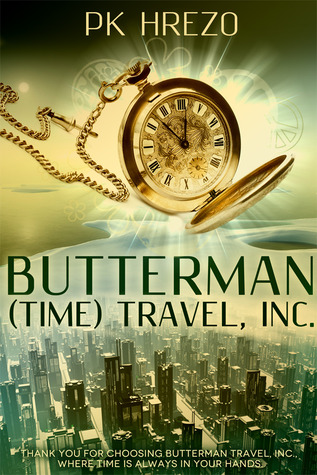
Former guest blogger, now official OA contributor PK Hrezo talks about the settings in her debut, Butterman (Time) Travel, Inc, and how she researched these historical places to make them pop!


Monday, December 29, 2014

The Art of Letting Go

In preparing for the New Year (Abby is right--the future is coming soon!) I've been thinking about the baggage I'm carrying into it. Not just literal baggage (I'm on a holiday trip as we speak), but the mental baggage too. Often, it can become heavier than we realize, and a lot of times we don't know why we're even carrying it.


It's...so...heavy...
Luckily, unnecessarily heavy baggage allows me an opportunity to assess whether I can let it go.


Elsa definitely had the right idea.
 
It got me thinking of things that take my brain energy on a daily basis. Sometimes it's social networking. Other times it's graduate school. But if I'm being honest, most of the drainage comes from my full time librarian job. On my other blog, I've documented some of the library questions I get, ranging anywhere from the mundane to the just plain goofy. (If you'd like more, Mental Floss recently posted some pre-internet questions from the New York Public Library). 
There is a lot I like about my job too. But when I'm able to separate myself from it, strip away what I don't need, it allows me to focus more on my writing and inner sense of well-being, both of which I intend to put front and center in the coming year. To do that, I need to ask myself the following:
1. What am I holding on to, and what makes it important?
2. What will happen if I decide to let go of things that might not be as important as I'm making them?
3. How can I prioritize what's important over the other stuff that isn't?
The first step I took was going dark on my other blog in December. As time goes on, I may be more selective about what I post there, at least until I get enough fiction writing under my belt to support the platform I've built for myself.
The second step I took was making a list of conferences I hope to attend. Google Docs is a great place for to-do lists, and if you need ideas on how to organize and prioritize, Getting Things Done is an excellent book.
Finally, per Abby's advice, I'm setting measurable goals for the coming year. Currently, I'm editing an old project and drafting a new one, and my goal is to have something submittable and polished by the end of 2015.
So what about you? What are you holding on to? Is it helping you? And if not, are you ready to let it go?