Showing posts with label PK Hrezo. Show all posts

Friday, April 24, 2015

Not Farewell ... Just See You Later by PK Hrezo

First off, I'd like to extend my sincere gratitude to everyone at Operation Awesome for inviting me to contribute these last few months. I've enjoyed every minute with the authors, bloggers, and followers here.

BUT ...


Due to an overwhelming calendar of obligations, I must step away. It's not farewell, it's just see you later.

I'll stop in when I can for guest posting. I still have so many things to share!

In the meantime, feel free to contact me anytime with questions or just to say hello. You can find me on my website at www.down-the-rabbithole.com

And in case you didn't know, I offer developmental editing services at very reasonable rates. Stop by the Story Scientist page to learn more.


I'd also like to invite you to an online auction starting next Monday the 27th. You've got to see some of the items up for bidding. Things like agent critiques and consultations, writer software from Save the Cat, Scrivener, and more! Plot consultations from superstars like The Plot Whisperer and Mary Kole. Not to mention all the author signed paperbacks from bestselling authors.

And it's all to raise money for a great cause! Check out our auction page to learn more about the amazing young survivor we're supporting.

On that note, I'd like to leave you with some of my favorite writing advice. Over the years of trial and error, I've come to many of my own conclusions, and here's a nugget I came to realize on my own:

Not every story you write will turn into something great, but every effort you make in trying is the key to turning you into a great writer. Put your heart and soul into all of your work, then learn to let it go and move on to the next project. This will build and strengthen your writer's muscle, and take your creativity to the next level.

Until next time ... tootles!

Tuesday, March 24, 2015

Rhetorical Devices -- by PK Hrezo

What are rhetorical devices? Is that a rhetorical question? Erm, huh??


Learning about these devices in the craft of writing really helped me tidy up my prose and create a lasting effect. Here's what you should know:

Anaphora
Repeating a word or phrase at the beginning of three or four successive clauses or sentences. 

Example:  But her whole body was shivering, trembling, quaking. And she couldn't stop thinking about her empty bedroom. She couldn't stop thinking about that one window. She couldn't stop thinking that should she swear, she would swear that Ed had been standing there all along. 

Cool, right? It creates a lasting effect in the reader's mind. 


Asyndeton
Omitting conjunctions between words and phrases. 

Example:  To be honest, I had been restless. It had started back in the fall--this feeling of time passing, of being postponed, pent up, not wanting to leave the house. 

By deliberately leaving off the word "and" in the end sentence, there is a feeling of despair. 


Polysyndeton
The use of many conjunctions. Using "and" or "or" several times in the same sentence but without commas between them. 

Example:  She noticed the dark circles beneath his eyes. They appeared whenever he was sick or overtired or just worried. 


These three rhetorical devices are tried and true techniques writers use to create an effect. Try going back into your WIP and finding a paragraph or two to try these out on. Once I'd learned these and went back into my own WIP at the time, they made a huge difference. 

Hope you find them helpful. Are these new terms to you? Or do you already employ these devices in your work? Please share ...


Tuesday, February 24, 2015

Celebration of the Arts by PK Hrezo


This past Sunday was the 87th Academy Awards. Did you watch? I love the Oscars and always put it on my schedule. Why? Because it's not just about celebrities and glamour--although it's a big part of what makes it entertaining--but the entire show is one hundred percent devoted to celebrating the arts.

And the biggest prizes go to the best stories.

That's right, STORIES.

That's what films are, and they don't get awards for being action-packed. They get recognition because a writer or writers put their heart and soul into the story. Sound familiar? That's exactly what we do.

Screenplay writers, adaptation writers, directors ... they all have a vision, and bringing that vision to life to make people feel something is what the arts are all about.

Then there's the makeup artists and costume designers and graphic artists. They create based on the writers' ability to create an image using words. It's all so amazing that they really deserve to be celebrated.

But that's not why I'm writing this post. I mean, it's not like the Oscars need more recognition, right? ;)

Watching the award show always inspires me to get back to doing what I love--crafting a story! And dreaming up characters and worlds and conflict Because a celebration of the arts of Oscar magnitude gives me such a rush of hope and possibility. Maybe we can reach that point one day. Maybe one day, it will be one of us sitting in that audience because an actor was nominated for playing the role of a character we created. Or because the adaptation of our novel to film has just won Best Picture.

Who knows! Watching the Oscars reminds me that art is important and people love it--they NEED it. And we have the ability to offer more of it. It's not beyond any one of us.

Do you remember the movie Juno? The screenplay writer was just an average woman making her way through life and craving experience so she'd have something to write about. She won an Oscar for Best Original Screenplay. Wow!

There are plenty more success stories like that, too. The Oscars prove that there is room at the top for everyone and anyone who works hard enough and is dedicated to their art.

Consider the actors and actresses for a moment. Receiving an Oscar nod is one of the biggest accomplishments of their career, and actually winning is another ball game entirely. Their resume is forever impressive to whoever glances upon it. What an achievement!

But think about what it took for the actor to get there. Many of them started at the very bottom. Like writers, there is a slush pool of aspiring actors out there. I would imagine it's as hard to get a talent agent as it is to get a literary one. And many start with commercials and low-budget films or TV shows. It's a lot like us writers starting out with manuscripts that will never go anywhere because our writing hasn't reached a publishable level. Just as a brand new actor doesn't receive a starring role in a blockbuster film.

We have to work our way through the artistic trenches and earn our ranks.

All part of the process. So next time you feel like your writing sucks or your stories aren't up to snuff, think of the worst commercial you've ever seen and imagine the actor(s) in it. Think they're proud of their work?

The only thing NOT to be proud of is giving up.

By the way, if you missed the Oscars this year you can see the replay on YouTube with a search.

Celebrating the arts is so important. Storytelling is so important. Pursuing our dreams is so important. If you ever start forgetting that, pull up an old Oscars award night and just watch.

Tell me, do you make it a point to watch award ceremonies like the Oscars? Why or why not? Do they inspire you? Can you see yourself at the Oscars? 

Tuesday, February 10, 2015

Backloading --Tricks of the Trade -- PK Hrezo

Are you familiar with the technique of backloading? Before I took a deep editing course with Margie Lawson, I'd never heard of it, but since I was introduced to it, I try more and more to use it. It's smart, and can have just the right after-effect.


But it's not as easy as you may think.

Backloading is taking the most powerful word in your sentence, paragraph, or scene and placing it at the very end. This packs a punch, and it will propel the reader on to the next sentence ... or if it's the end of your chapter, it'll send your reader on to the next chapter, without them even realizing what's happened.

Cool, right?

Mind you, this isn't something to do with every sentence or paragraph. The art is finding the appropriate time to pack your punch. Often, the end of a chapter is the excellent choice, but let's not limit ourselves. This technique can be used anywhere it will fit, as long as it's not overdone.

How about an example ...

Lucy couldn't breathe. She knew the intruder was in the room, but only because she sensed his presence. He was silent, the carpet absorbing his footsteps, the darkness consuming his silhouette. How close he was, Lucy couldn't tell, but she knew better than to flinch. Concentration on what her next move would be gave her stability, controlled her nerves. If she let it, the situation would have her chest swelling with horror. 

That paragraph is meant to be tense. Very tense. And by backloading it with the word horror, it creates the very feeling of horror in the reader. If this were the end of the chapter, the reader would be left with that same sense of dread as Lucy, and most likely would feel compelled to turn the page.

This technique is best used after your first draft is written and during your edits. Try picking out a few pages of your current work in progress and see if you can't backload a few different places. Is your sentence better? More powerful?

Try it out and see how you like it. I love using this technique. As always, practice makes perfect. :)

How about you? Ever tried backloading before? Is this a new word for you? Please share ...


Tuesday, January 27, 2015

Making Good Use of Irony

Do you intentionally use irony in your stories? Or does it ironically happen on its own? I suppose that may depend on whether you're a plotter or pantster, but it never hurts to begin marinating the notion that our stories deserve irony where we can pull it off.

Why? It's satisfying to the reader to notice these ironies, and often, the more subtle, the better. Irony adds a special flavor to the story, much like that tangy lemon I squeeze in my butter before bathing a succulent crab leg into it.


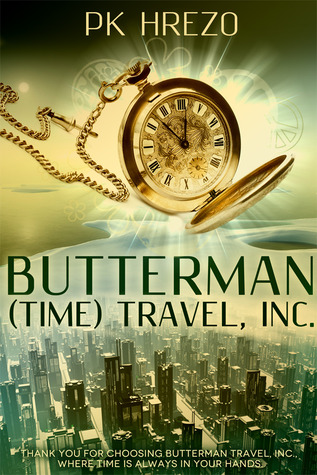
As a plotter myself, I try to add irony into my plotline before ever drafting. For instance, in Butterman (Time) Travel, Inc., the main character, Bianca Butterman, is a futuristic version of a goth-glam girl, who's also somewhat of a control freak. Being as that she's also a time-craft pilot, she has to be. So where is it that the last place an eighteen-year-old futuristic goth chick who spends more time on the web then with real people should end up?

1969 Woodstock ... with free love, drugs, and music, man. Flowers, hugs, and community weed.

And she is 150% uncomfortable. It's why Bianca ended up being the way she is. I knew she'd end up at Woodstock, so I needed her to be the opposite of someone who'd fit in there.

The result is so much fun, and so ironic.

How about a few of these stories and their use of irony?  See if you can name the book, movie, or TV show:

1.  A ruthless serial killer who skins his victims ... and has a cute and cuddly little toy poodle named Precious.

2. A genius diagnostician sought by sick people from around the world for his incredible ability to solve medical puzzles ... and who's addicted to pain pills to the point of being self-destructive and harmful to others.

3. A self-righteous professor who treats students like criminals and inflicts bodily harm on them as punishment for insubordination ... and who has an affinity for sweet little kittens, which she has decorated her entire office with.

4. A recovering alcoholic who owns a bar and serves other people drinks for a living.

5. A single dad whose wife left him, and who also happens to be a divorce lawyer with absolutely no faith in romance or happily ever afters ... and he falls for a beautiful girl right out of fairy tale who sings to animals and who has never said a harsh word to anyone in her entire life.

6. A young scientist with an IQ off the charts, devout atheist, and fully sold on the theory of evolution ... who grew up in Bible Belt, USA with a mother who is even more devout Christian than the Pope.


Some of these are obvious ironies, others more subtle. The point is, they're so much fun, they really give the stories a special twist.

Next time you're plotting or drafting, ask yourself how you can twist it up a little bit and make good use of irony. Try picking it out of the next book, movie, or TV show you watch. The more we notice it, the easier it is to use it in our own work.

So tell me, can you identify these stories? Do you practice using irony? If so, do you have a special technique? If not, what's holding you back? Please share ...   


Tuesday, January 13, 2015

Method Writing

Are you familiar with method acting? Ever applied this vein of thought to your character development while writing?


It's the use of sensory techniques to get into character. Things like drawing on personal emotions and memories, and what's called affective memory. Emotional recall and sense memory use the act of recalling physical sensations surrounding events to apply it to your character's reaction and make your scene real and character believable.

I don't know about you, but since I began actively learning craft, I also began taking mental note of body reactions and facial expressions during certain high intensity moments so that I can use them later while writing. As for the sense memory, friends and family have probably wondered why I stare at them as though I'm studying their every move while in the middle of an emotional conversation. I want to remember how someone looked, sounded, felt, etc. when tension is high.

All for the writer's toolbox.


There's another method I use to stay in character while writing, and this I use mainly when writing first person. I have to be that character while narrating. Think like them, act like them, breathe like them. It's no secret around my house that my lingo changes depending on the story I'm telling. So does what I listen to, what I watch, etc.

Much like method acting, I import the character into my very being so that I can stay in that character's frame of mind while telling the story. If I don't believe I'm the character while writing, then why would my readers believe the narrator is the character and not the author?

Think about it.

How about you? Do you believe in method writing? Do you have any tricks of the trade to stay in character or help develop them in order to tell their story? How do you think writing in third person is different?  

Wednesday, December 31, 2014

Top Ten Operation Awesome Posts of 2014

Tis the season for top ten lists! Look back with me on the top ten Operation Awesome posts of 2014.*

*Does not include critiques or Mystery Agent posts


10. Shifting Publishing Power Structures by Melinda Friesen
Guest blogger Melinda Friesen talks about the steps to getting a book published by a trade publisher and her decision to work with a small press.


9. Behind the Contest - A Few Pointers from a Contest Judge by SC Writer
Guest blogger SC Writer, one of the masterminds behind Nightmare on Query Street, Query Kombat, and other pitch contests talks about what catches his eye.


8. Tomorrow is #MSWL Day! by Amy Trueblood
OA contributor Amy Trueblood reminds us of some guidelines for making use of agents' twitter hashtag, #MSWL (ManuScript Wish List).


7. The Sibyl Reborn by Toni Kerr
OA contributor Toni Kerr interviews author J. Perry Kelly on his urban fantasy novel, The Sibyl Reborn.


6. Platypire World Domination by J. Hooligan
Guest blogger J. Hooligan teaches the world about a fascinating new creature, the playtpire!


5.  Numerical Motivation 2014: Using Spreadsheets to Increase My Word Count by Abby Annis
OA contributor Abby Annis shows how she uses spreadsheets to keep herself organized and accountable for her daily, weekly, monthly, and annual word count goals. Includes links to awesome spreadsheets you can use!


4. Submission Tips from an Editorial Intern by Jennifer Blackwood
Guest blogger Jennifer Blackwood shares the top things she looks for when a submission crosses her desk.


3. The Anchors that Weigh Us Down and How to Break Free by Karen McCoy
OA contributor Karen McCoy talks about the tough task of letting go of a manuscript so that you can move on to better things.


2. Adaptations and Loose Interpretations: Frozen and the Snow Queen by Katrina L. Lantz
OA contributor compares the Disney movie Frozen with the Hans Christian Andersen fairy tale on which it's based.

and finally....

1. Settings that Pop by PK Hrezo
Former guest blogger, now official OA contributor PK Hrezo talks about the settings in her debut, Butterman (Time) Travel, Inc, and how she researched these historical places to make them pop!


Tuesday, December 30, 2014

Reflect, Re-evaluate, Redefine

It's that time again when writers, as well as people in general, take some time to reflect. Maybe your 2014 soared beyond your dreams. Maybe it sank to dismal depths. Or maybe it left you in the same spot you were in this same time 2013.

Regardless your position on this journey through time, another year lived, is another year wiser.


While we should never live in the past, if we don't take notes from it, we're often missing out on vital life lessons. That's why, before I begin setting goals for the new year, I like to take some time for myself to 

Reflect on what I've accomplished thus far.
Re-evaluate what I want for myself, why I'm in this writing gig in the first place.
and Redefine my Big Picture. 


The Big Picture is different for each of us. What we want for ourselves and what we hope to achieve can change with each passing year. That's a good thing, because it keeps us moving forward.

I hope you'll join me in reflecting, re-evaluating, and redefining. Let's not get stuck in the past, or bogged down with what didn't happen for us. Instead, let's figure out how to find true contentment in our writing lives, as well as life in general. Sometimes the things we thought would make us happy, are only detours from our true destination.


Any last minute thoughts you'd like to share on this last Tuesday of 2014? What are your goals? Resolutions? Have you already redefined your Big Picture?  

Tuesday, December 16, 2014

Emotion through Music

Imagine taking a morning walk outside, beside a beach. The day is clear and bright, the salty air, fresh. A breeze kisses your cheeks, and in the background is the soft lull of crashing waves, gulls calling to one another.

Nice, right? Simple and enjoyable.

Now take the same scene, only add in some New Age music. Suddenly that enjoyable experience becomes richer, deeper. Emotional.

Or how about looking outside your window on a stormy day? Dark clouds are gathering, thunder rumbles in the distance. It has a dreary, dismal feel, right?

Now add in a soft classical melody, and the moment becomes soulful and stirring. Tears burn the backs of your eyes, it’s so hauntingly beautiful.

Using music to evoke emotion in our scenes is a tried and true writer’s technique. We all know that in order to connect our readers with our characters we have to make them feel. More than words that tell, we need visceral emotion from our characters.  Have you ever stopped after writing a scene and asked, “Is that intense enough?”

I do all the time. And usually when I have to ask, it’s because I haven’t evoked the emotion the scene needs. Sure, it may pass as okay. But we don’t want okay—we want riveting.  

                                                        Photo Credit: GeEditing.com

Not everyone can write to music, and I get that. Sometimes I prefer silence, or simple background noise like Naturespace. But when I’m struggling with the right mood for a particular scene, I dig into my musical library and sometimes take a good hour to find just the right song, then write the scene with that music playing.

It makes such a huge difference. I have my go-to songs for amping up emotion, whether it be angst or stress or heartfelt moments. And then sometimes a new scene requires something different, and I have to search all over again for just the right one. To me, it’s worth it to take the time to do this, especially when I need to nail a scene. For a scene in Butterman (Time) Travel, Inc., I had a best friends’ moment that really needed something other than a tune that suggested romance, yet I wasn’t evoking the right emotion by writing it in silence or with background noise. I finally found a random song off the Lost soundtrack and played it over and over til my scene was complete.
It gave me exactly the emotion I was looking for.

Ever notice in movies when you’re totally wrapped up in a scene, that it’s the music that’s carrying it? Happens all the time. Usually when I notice this, I make a note to buy the soundtrack, because it’s powerful music.

We can do the same with our stories. When we’re stuck on a scene or just not feeling the moment, we can find the perfect song, listen with our fingers poised over the keyboard. Let the music pull us in and go with the flow. Don’t worry about grammar or spelling, just feel the moment. Corrections can come later.

I prefer instrumental music usually, but there are a few songs with lyrics that have worked for me in the past. Don’t be afraid to experiment. A few of my faves come from these soundtracks:

Legends of the Fall
Gravity
Ender’s Game
Life of Pi
Robin Hood (Prince of Thieves)
Braveheart


How about you? Do you have any favorite go-to songs for evoking emotion in scenes? 

Tuesday, December 2, 2014

A Writer's Garden Party

Hi there! Today is my first official post and I just wanted to tell you how stoked I am to be here! I love that OA focuses on writing because over the past six years that's been my focus too. Which means I have TONS to share with you.


I knew you'd be dancing in your seat about that.

Quick intro -- I have two novels and one novella published, all part of an upper YA / New Adult time travel series. I'm also working on two non-fiction projects--one a memoir for the mom of a survivor, and the other a series of how-to books with another author. You may know me from around the blogosphere as I've been blogging for four years over at PK Hrezo - Fearless Fiction. You can now find me here every other Tuesday.

So what the heck is a "writer's garden party," right??

Allow me to elucidate ... There's an old song called Garden Party by Ricky Nelson. You can watch it on YouTube HERE if you're not familiar with it.

Over the years, this song has become more and more of a mantra for me. Even more so now that I'm a published author. Here are the chorus lyrics repeated over and over throughout the song:

"Well, it's all right now. I've learned my lesson well. You see, you can't please everyone so you've got to please yourself." 

Right? Don't you love that?? And the melody and mood of the song are so mellow and easy, it adds a contented acceptance to the lyrics. No anger. No bluesy melodrama. Just matter of fact and c'est la vie. 

Writing is like that. When we first start out we have so much to learn. We do our time in the trenches of critique purgatory and beta reading boot camp. We grit our teeth and forage through the growing pains because we know it'll make us excellent writers on the other side. We study craft books, attend workshops, sometimes endure a public flogging of our work, all so we can become better.

So others will read and love our stories.

And then there comes a time after all of that when we've earned a writer's garden party. We throw one for ourselves and toss aside all regrets and inhibitions. Because you can't please everyone so ...

                                             PHOTO CREDIT: pottery barn kids

... you've got to please yourself.

Case in point: With my most recent release, Induction Day, I knew there would be some readers who felt the first part was slow. But I also knew that for my story to work, the characters needed to grow a bit more together. My series is character driven. The story is about them, not the other way around. I deliberated over whether or not to cut some of the first part because I was afraid of losing readers. I had one critique partner tell me I should.

I had another critique partner tell me they thought the whole story was fast paced and how much they enjoyed the romance in the beginning.

Has this happened to you before? Conflicting feedback? Most likely yes. It's happened to me plenty of times, and it can be debilitating as a writer. So what did I do?

Threw a writer's garden party because I couldn't please everyone. I did what I wanted to do, which is follow my characters' lead. This felt right to me. I'm pleased with how my story turned out. But I knew when I published it that not everyone else would be.

Case in point number two: On my recent blog tour, one reviewer said the first part of the story didn't hold their attention as much as the second part when the plot really intensified. Another reviewer on the same tour said the exact opposite--that they preferred the beginning of the story when they learned so much more about how the characters intertwine and are bound to one another.

Same book. Different opinions.

This will always be the case with any book, movie, TV show, etc. With any story. Part of becoming an experienced and mature writer/author is learning to trust your instinct despite the naysayers. In the end, it's YOUR story, and only you knows what's best.

Don't get me wrong, I totally believe in getting as much feedback as possible and accepting constructive criticism so that our skills will grow. Chances are, if more than one critique partner or beta reader is telling us the same thing, then we need to listen and heed the advice. But if we're getting conflicting feedback, or if our gut is telling us one thing, and a CP another, then that's grounds for a writer's garden party.

                                          PHOTO CREDIT: animationoptions.com


Go on ahead and throw yourself one. It's fresh and calm and relaxing in there.

"Well, it's all right now. I've learned my lesson well. You see, you can't please everyone so you've got to please yourself." 

So tell me, have you ever received conflicting feedback on your story? How did you handle it? Do you think trusting your gut can be wrong sometimes? Ever thrown yourself a writer's garden party?
Please share ...


Tuesday, July 22, 2014

Settings that Pop - by PK Hrezo (guest post)


A ginormous thank you to the Operation Awesome team for having me here today. Just so you know a little about me, I’ve been writing fiction for six years and recently debuted last November, and have a sequel due out next month. I wanted to take this opportunity to share a little about creating believable settings through research, and how to make your scenes POP!

My last two novels have relied heavily on research. Both of them being YA/NA time travel stories, my main characters travel back to actual historical events. It wasn’t like I could fudge the settings there. These events have been filmed, documented, and are widely known across the globe. Accuracy was vital to making these scenes pop.

Whether you use real life settings or create your own, our job as the author is to make the reader believe these places are real. We can do this through sensory techniques.

·       How does it look?
·       How does it sound?
·       How does it smell?
·       What does it feel like?

All are important questions to answer in each new setting. Mind you, overkill in any of these areas will have the opposite effect. So go with the general rule of “less is more.”

Okay, so right about now you’re saying, “Yeah, yeah I know this already.”

But the trick is not remembering to use these senses, it’s in describing them. And how do you describe somewhere you’ve never been?

Most of us have overactive imaginations, which is why we’re writers, but when it comes to writing real places, we need a bit of research as well.

Photo Credit: Fanpop
In my novel, Butterman (Time) Travel, Inc., I had to recreate the original Woodstock from 1969. I’m not old enough to have been there, and I didn’t know anyone who’d been there either, but I wanted to write my scenes like I had been there. I watched the Woodstock film documentary with a notepad and pen in hand, and opened my mind. (no drugs required btw ;))

I jotted down anything and everything that stood out to me. From clothes to hair to nature. Then I got more specific: heaviness of eyes, color of skin, pitch of voice. Any little detail. Mainly, the unique way I perceived and responded to these details, and I jotted all of it down.

I also described what I felt and saw while the artists performed. I experienced it like I was there and tapped into that writerly toolbox of creative expressions to give my descriptions an artistic flair—one only I can give because it’s unique only to me. Same as your perceptions are unique only to you. When I was finished with the film, I had a list of amazing images, similes, metaphors, etc.

Remember, the key is to jot these ideas like no one is watching or will ever read them, and that will help open your mind and creative side to be free, as well as chase off that pesky left-side of your brain that wants order and logic. That comes later, and left-side will get its chance when you’re structuring your novel and editing for grammar.

When it came time to write the actual Woodstock scenes, I had my notes handy and could feather in these unique details in order to bring the scenes to life. In turn, readers really connected with this part of the book. They experienced it too, and what a great feeling it is to know they felt what I felt. I still get more compliments on the Woodstock scenes than anything else.

Photo Credit: Titanic Recounts
In the sequel, Induction Day, I did the same with the Titanic scenes. For days I watched nothing but documentaries on Titanic, and of course, the actual James Cameron movie. I had my notepad handy and I noted everything I could that stood out to me, down to the embellishment on a hat, or jewel on a brooch, or brass gadgets on the ship’s bridge.

What brings a setting to life is not the general description, it’s the tiny details sprinkled throughout the scenes that stirs an image. Spoonfeeding the reader a laundry list of how something looks is just plain boring to read, and it separates the amateur novelist from the experienced one. If we bog down our scenes with too many details it becomes laborious reading, but just the right amount here and there is an artistic technique that conjures an image easily in the reader’s head, and they begin to notice things as if they ARE the main character.

Likewise, when an author has taken their setting for granted in the story it always shows. It feels generic and stiff. But when they take the time to flesh out a small detail now and then, using the “less is more mentality,” it makes all the difference.

You may not be writing about historical events or places, but every writer needs to experience their setting in a unique way that will allow them to bring it to life on the page. I’ve written fantasy worlds as well, so I know there are some imaginative places we just can’t see or get to, but we can experience them by closing our eyes and letting the world unfold before our mind’s eye, then jotting details down on paper in that artistic, writerly way that makes us an author. Or, spend the day watching fantasy films with a notebook and jot down little worldbuilding details that perk your senses. These can be tweaked later to your own style so they’re unique to your story.

I hope you’ve  found some of this helpful. I’d love to know your own tricks and tips for making settings pop. Please share in the comments, and thanks so much for stopping by! Thanks again to Operation Awesome for having me here today. It’s been a pleasure!

I’d love for you to join my email list for more tricks of the trade, special announcements, giveaways and sneak peeks.  http://eepurl.com/O0s5b


PK Hrezo is the author of the sassy sci-fi romance series, Butterman Travel, Inc. as well as a self-proclaimed chocoholic, guacoholic, and rockoholic. You can find her and her books on her website at http://down-the-rabbithole.com