Showing posts with label Melinda Friesen. Show all posts

Tuesday, December 26, 2017

Operation Awesome's Top Posts of 2017

It's been another fabulous writing year at Operation Awesome. The blog got a much-needed facelift. Our bloggers have hit new writing milestones, and hopefully helped our readers reach some goals as well. Pass Or Pages kept going strong, which was important to our team. We'll be bringing it back again in March 2018!

Here are our top posts of 2017 for you to look back on:

9 Places to Meet Writers and Start Building Your Network


Prioritizing the Writer’s Life via a Business Plan

What reading/writing topics would you like to see Operation Awesome cover in 2018?

Monday, August 21, 2017

Beware of the Overuse of This Type of Word

Beware. Beware. Beware! Of the overuse of the I-N-G verb.

The technical term for this type of verb is present participle. For the sake of this blog post, I’m leaving out gerunds (ING verbs that act as a noun) and limiting this discussion to the present participle.

In many manuscripts, present participle use gets out of hand. While one can still say the language is active, adding the ING is akin to wrapping your trumpet in a towel—it muffles and muddies your once beautiful verb. To be clear, they are useful, but as with most things in life, moderation is key.

Consider the often-used dialogue tag modifier.

“That’s the ugliest sofa I’ve ever seen,” she said, wrinkling her nose.

This is a fine sentence. There’s nothing grammatically wrong with it. However, is there a better way to convey the same idea? As writers, we must be in a constant quest to refine our craft. Consider the following:

She wrinkled her nose. “That’s the ugliest sofa I’ve ever seen.”

Fewer words and we’ve conveyed the same idea but without the ING parasitically attached to our beautiful verb.

How about this pair:

She spent every Saturday cleaning her apartment and running errands.
Vs.
Every Saturday, she cleaned her apartment and ran errands.


Again, same idea, fewer words. So input “ing” into the search function in Microsoft Word, and see where you can strengthen your manuscript by removing the present participle. You might be surprised by how much you’ve overused them. 

***************

Melinda Marshall Friesen writes fiction for young people and the young at heart. She lives in Winnipeg, Manitoba Canada with her family. 

Monday, July 3, 2017

Understanding "Show Don't Tell"

Show don't tell is a mantra among writers. While the phrase is often said, it is seldom understood.

Telling feeds the reader information, while showing allows the reader to gain information through experiencing it themselves. Instead of telling the reader a character is sad, we show the sadness through the characters wrinkled brow and glassy eyes.  Instead of telling the read it's raining, we show the water droplets hitting the character's glasses and dripping onto her cheeks.

The reader wants to feel what the character is feeling. When we "tell," the reader may know what the character feels, but they don't feel it with her. We want to invite readers into the story, not as observers, but as participants. Telling creates narrative distance, while showing places the reader in the protagonist's shoes.

One easy way to tell if you're telling rather than showing is if you name a feeling.

Examples of telling:

The cast walked onto the stage and bowed as Angela clapped with excitement.

Clarence dug his shovel into the earth, exhaustion weighing him down.

In both cases, the feeling is named--excitement and exhaustion. We shouldn't have to tell the reader Angela is excited if she jumps out of her seat and claps and whistles. We know by the context that Angela is excited. In the same way, we can know Clarence is exhausted by the way he wipes the sweat off the back of his neck and how his muscles shake every time he plunges the shovel into the dirt. With that information, we know Clarence is exhausted because we experience the fatigue with him.

Go through your manuscript and find places where you've named the feeling and work toward eliminating those tells by showing the reader what your character is feeling.

****************

Melinda Marshall Friesen writes YA and adult speculative fiction. When she's not writing, she's marketing books for Rebelight Publishing.

Monday, June 26, 2017

Before You Send Your Query Letter

I'm waving at you from beneath the huge pile of virtual papers we refer to as the slush pile. It's massive. It's overwhelming. And yet, I know that it's also a pile of the hopes and dreams of writers like me and you.

When I approach the slush pile, it's with the hope of finding a gem that my company can bring to publication. I strive to give everyone a fair chance. However, time is not only valuable, but it's scarce. I can't devote a half hour to every submission. The pile would grow faster than I could pare it down. Writers only get a couple of minutes to grab my attention. While this can be disconcerting, I believe knowledge is power.

Put yourself the acquisition editor's or literary agent's shoes. What would you want to know about the story? What's most important about your manuscript and you as the author? Get them that important information as quickly as possible.

Here are a few things I want to know right away:

  • Genre
  • Target audience
  • Word count
  • Title

Surprisingly, these items are missing from many submissions I receive. To make matters worse, many writers don't read our submission guidelines to know we don't publish adult fiction, picture books, or non-Canadian writers. These folks are wasting my time and theirs by submitting. The Golden Rule applies. If you were the person feverishly going through hundreds of submissions, what types of submissions would you want to receive?

****************

When Melinda Marshall Friesen isn't writing, she works as marketing director and acquisitions editor at Rebelight Publishing.


Monday, June 12, 2017

Two Easy-to-use Tools the will Dramatically Improve Your Dialogue

Have you considered dialogue tags lately?


I've been editing a piece I wrote almost five years ago. At the time, I'd only been writing for a couple of years, so I had a lot to learn (I still have a lot to learn and I've been at it for seven years). One of my rookie mistakes was too many dialogue tags. As I edit, I'm cutting about 90% of them.

Dialogue adds life and movement to your story, but right smack in the midst of great conversations are these little bits of telling rather than showing--the dialogue tag. The I-said, she-said, he-asked that all of us must inevitably include in our stories.

They may be inevitable, but I argue that they are grossly overused. While we don't want the reader confused, wondering who said what, there are better ways to convey who is speaking.

1.  Stage action--show us what the speaker is doing rather than telling us that she's saying it. This adds context to her speech and interest for the reader.


Clare started the car and rolled down the window. "Don't you dare think you you're going to get away with this."

Willis pulled the butcher knife from the drawer and sliced into the onion. "I don't appreciate your tone."

In both cases above, we know who is speaking because it's the person who is doing the action. 

2. Body language--they say body language conveys more than words, so use it in your writing. Show us the emotion and meaning behind the dialogue. The same piece of dialogue can take on new meaning through the use of body language.


Loretta swallowed hard and scratched her arm. "I'm ready to go."

Loretta hooked her hand on her hip. "I'm ready to go."

Again, we have a clear sense of who said what, but the dialogue is enriched by the emotion and meaning that the body language conveys.

There are places where dialogue tags will be needed. You won't be able to get rid of all of them, but like the dreaded adverb, use them sparingly and only when absolutely necessary.

********

Melinda Marshall Friesen writes sci-fi and urban fantasy for teens and adults from her home in the great white north. 


Monday, April 24, 2017

T is for Think Like a Book Marketer #AtoZChallenge

The #AtoZChallenge 2017 Theme at Operation Awesome is the Publishing Journey.


Authors spend most of their free time in their characters’ point of view. In order to think like a book marketer, consider a book marketer’s point of view. A book marketer’s job is to reach the people who are most interested in your book, and persuade them to buy it. As I’ve said many times before, writing is art but publishing is business and marketing is part of that business.

The problem for many authors is that they view their book as they view one of their children—beautiful and wonderful and loved by all. Of course, authors feel this way. They’ve labored for years and invested their heart and soul into their book.

The truth is, not everyone is going to like your book.

Marketers seek to find a niche market and go after it. They aim to reach the book’s target audience and so should you. That means admitting that your chick lit romance will not be everyone’s cup of tea. You must refine who your audience is. What gender and how old are they? What media and social media outlets do they use and how do they get their information? What do they do in their spare time? Where are they spending their money? How do they usually buy their books? As anti-intuitive as it sounds, you need to narrow your audience to reach your audience. Less is more.

By honing in on your target audience, you spend your time and resources on endeavours that actually reach the specific audience who is interested in your type of book. So, take off your author hat and put on your business hat. While your passion for your book can surely be a great tool in your marketing toolbox, it can also get in the way. Your book is a product with a specific audience. Put together social media posts that appeal to them. Go to events and conferences they attend. Find bloggers and podcasters who your audience follows.

Now, go find your readers!

* * * 

Melinda Marshall Friesen writes sci-fi books for teens and adults. Daily, she removes her author hat, and dons her business hat as the marketing director at Rebelight Publishing Inc..


#AtoZchallenge 2017 Operation Awesome T is for Think Like a Book Marketer #AtoZChallenge

Saturday, April 15, 2017

M is for 8 Misconceptions About Writing and Publishing #AtoZChallenge

Misconceptions about writing and publishing abound. Here are the eight I hear most often.

1.  You wrote a book? You’re going to be rich.
Yes, someone said this to me. It took a huge amount of self-control not to burst out laughing. A small percentage of authors can live off their writing. A much, much smaller percentage get rich from it. Most of us are lucky to get a month’s wages out of a year’s worth of writing income.


2.  Once you get one book published, it’s easy to get published after that.
While it is easier to get the second book published than the first, easy is a relative term. It’s still highly competitive and has to be what the publisher or agent happens to be looking for at the time. Unless you’re a household name, there are no free passes.

3.  If I quickly write a book and upload it to Kindle, the money will just start rolling in.
Kindle is home to millions of books. MILLIONS. The only way readers are going to find your book is if you put in the hard work of marketing to bring it to readers’ attention. About a decade ago, authors were making a bundle on ebooks, but that era has passed.

4.  I managed to get a literary agent, now I’ve got it made in the shade.
Finding an agent who is interested in representing you is a huge feat, and I don’t want to belittle that in any way. However, the agent has to pitch your book to publishers, and if there are no takers, you’re back where you started.

5.  I had a friend who is good with grammar edit my book, so it’s ready for publication.
Editing for grammar, spelling and punctuation is only one small part of the editing process. When people hear the word “edit”, they usually think of copy editing. Your book should undergo four levels of editing before it lands in the hands of readers—developmental, substantive, copy edit and proofread. There’s much more to making your book shine that setting commas in place.

6.  Publishers are crooks who take all the money and give authors a tiny share.
In reality, publishers end up with about the same share of the retail price of the book as authors.  Who takes the largest chunk of money from book sales? Retailers take between 40 and 55%. You must also figure in the costs of printing and distributing the book. The author and publisher end up with what’s left.

7.  I’ve written an awesome book, so I need to get it on the market fast.

Nope. Take your time. Make it the best it can be. You can’t predict trends and behaviors. The book that has the best chance in the marketplace is the book that’s well written, well planned, well edited and well designed and these things all take time. Publishing is a marathon, not a sprint.

8.  I keep getting rejections, so I must not be a very good writer.
Every writer faces this thought. Maybe your book could be better, so learn more about the writing craft, get some honest beta readers, attend a conference or take some classes. If you’ve done those things and the rejections continue to roll in, keep in mind that finding the right agent or publisher on the right day for the right project is all luck. Pure and simple. If you’ve honed your writing and haven’t found a home for your manuscript, keep trying. Eventually, your number will be up. It’s all about perseverance.

What were your misconceptions when you first started writing? Share them in the comments below.

*************

Melinda Marshall Friesen writes sci-fi novels and short stories for teens and adults, and she works as marketing director at Rebelight Publishing Inc. She lives in Winnipeg, Manitoba, Canada with her family.


#AtoZchallenge 2017 Operation Awesome M is for 8 Misconceptions About Writing and Publishing

Monday, April 3, 2017

B is for Building Your Author Brand #AtoZChallenge

Author brand is kind of a nebulous term. We hear of clothing brands and soft drink brands, but people as brands? It may seem odd. Are you a brand? Am I a brand? If you’re an author interesting in marketing your book, then the answers to all those questions are “yes”.

In order to build your brand, you first have to know what it is. So what is your author brand? In her book, Your Book, Your Brand, Dana Kaye states it simply. “. . . You + Your Book = Your Brand. Your brand consists of who you are and what you write.” 


Defining this can be easy if you’re a naturally interesting person and you have one gothic horror you’re marketing. But, what if you don’t know what’s interesting about you, and you’ve written a gothic horror, middle-grade humor, and a young adult romance?

Kaye recommends finding a common theme throughout your work. She encourages authors to go through all of their books, both published and in progress, and list the following:
  1.  Primary themes
  2.  Secondary themes
  3.  One line about the protagonist
  4.  Genre category

When your lists are complete, mark similar answers. From these similar answers, condense the information until you’ve determined your author brand. I recommend picking up this book, so she can walk you through the process thoroughly. Here’s a link: Your Book, Your Brand by Dana Kaye. It's well worth the money and time spent reading.

Once you’ve developed your brand, you’re ready for it to meet the world. This brand will guide every decision you make in your book marketing from the style you choose for your website and promotional materials to where you seek reviews and interviews to which conferences you attend. By knowing your brand, your marketing will be focused, and you'll waste less time on activities that are unlikely to promote you and sell your book.

***********

Melinda Marshall Friesen authored three books that delve into dark futures. When she's not promoting her own books, she's marketing books for other authors as the the marketing director at Rebelight Publishing Inc. 

#AtoZchallenge 2017 Operation Awesome B is for Building Your Author Brand

Monday, March 6, 2017

Teen Writers' Workshop

In mid-March, I’ll be teaching a writers’ workshop for teens ages 14-19. Everywhere I’ve taken my books, I’ve encountered young people who love to write. When I was that age, the writing bug had already bitten me too, though in a different form than what infects me now. I loved writing for my school yearbook and newspaper and hoped, one day, to be a journalist. Fast forward a couple of decades, and I found my true love—writing young adult fiction.


With a strong desire to share what I’ve learned with young writers, I composed a six-part workshop that will cover everything from plot to setting to sentence structure to editing to publishing. Because I believe it’s so important to writers’ careers that they learn to network, I’ve also invited other authors to make guest appearances. In addition, students will have the opportunity to learn how to give constructive critique and receive critique on their work in progress. My publisher, Rebelight Publishing, was excited to work together to bring this course to the teens in my community. 

 I hope that by giving the next generation of writers information and inspiration, they’ll have a good foundation for their writing careers and avoid some common pitfalls.

If you live in Winnipeg or surrounding areas, spread the word. I’m really looking forward to meeting, teaching, and encouraging Manitoba's young writers. Register online: Teen Writers' Workshop

*******

Melinda Marshall Friesen writes sci-fi/dystopian novels for teens and adults. Her most recent release, The High-Maintenance Ladies of the Zombie Apocalypse is equal parts suspence, gore, and humor.  Check out her books here: Books by Melinda Marshall Friesen

Monday, February 20, 2017

Sorry Folks, I Did Not Like Little House on the Prairie

Do you remember the first book that really swept you away? A book that took you to a new world that you never wanted to leave?


I remember the first book that did that for me. I was in grade 5, and I wasn't much of a reader. In fact, I stayed as far from books as I could. In my early elementary years, I struggled to learn to read, so I figured it just wasn't my thing. I'd been given the Little House on the Prairie series. I liked the show, so decided, despite not being a big reader, to give it a try. I read a couple chapters, but didn't like it. So, my young self said, "See, reading is boring." I decided stick to movies and TV. I loved Star Wars, Star Trek, Thunder Cats, Wonder Woman, Buck Rogers and Battlestar Galactica.

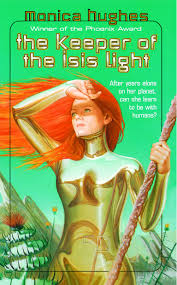
My grade five teacher read to us a couple of times per week which I usually found boring. I'd space out and imagine my own stories. But one day, he started a new book--The Keeper of the Isis Light by Monica Hughes. It didn't take long before the story of a human girl living on the distant planet of Isis with only a robot companion captured me. I started looking forward to story time. I hung on every word and was blown away by the twist ending. My imagination soared. No one had ever told me that the science fiction I loved on TV and in the movies came in book form!

This book opened up a new world for me. It's no wonder that science fiction is now the genre I choose to write most.

Perhaps you know someone who doesn't like to read. This isn't a permanent state of being. Most reluctant readers simply haven't found the right book. Like me, they need to find a story that sparks their imagination. Don't assume reluctant readers will like what you like. Young readers especially need an abundance of choices so they can learn what they enjoy. When reading brings joy, people become lifelong readers.

I'd love to hear which book or series made you fall head over heels for reading or which drove you to start writing in the comments below.


***********

Melinda Marshall Friesen lives in a little house on the prairies where she writes speculative fiction for teens and adults. Check out her sci-fi/dystopian One Bright Future series here: Enslavement and Subversion.

Monday, February 13, 2017

Book Marketing Experiment #782: Wattpad

For me, book marketing has been one experiment after another. I hear of or think of a new idea, then give it a try. Some things have worked. Some haven't, but I'm always willing to try something new.

For the past year, I've been thinking about and researching Wattpad. I've heard of people having success there, but I've been in this business long enough to know that for every wildly successful author out there, there are about 10,000 others who haven't achieved the same results.

I had a few of misgivings about Wattpad.
  1. There are thousands and thousands of stories available which means it's yet another platform where competition is fierce.
  2. It's free. I work very hard on writing and editing my novels, and I feel my time has value. No one would give away a house they built themselves, and we're talking about a similar number of hours invested.
  3. If the novel didn't do well, I ran the risk of never getting it traditionally published because it would be available online for free, which technically means it was previously published.
However, I have this manuscript that I wrote during the 72-Hour Novel Contest (yes, you have 72 hours to write an entire novel). The Typhon Project is a YA Sci-fi apocalyptic read that is complete at 35,000 words, qualifying it as a novella, not a novel. I loved the story, so I'd considered weaving in some subplots to beef it up but, after a lot of thought, came to the conclusion that the story was best served at its present length. 

As I considered trying out Wattpad, I thought of The Typhon Project, a manuscript that I would probably never pursue traditional publication for because of its length. I wanted to share that story and since it was just going to languish on my computer anyway, I decided that Wattpad might be an excellent way for me to get it in front of readers, especially since the platform is hugely popular with teen audiences. 

So, I designed a cover and posted the first couple chapters. I've committed to posting a chapter per week until it is complete. This experiment is well underway, and I'm excited to see how it turns out. If you're curious, you can find it here: The Typhon Project

Since I'm still learning this new platform, I'd love tips from the OA community. If you have any tips or best practices to share with a Wattpad newbie, please post them in the comments below. Thanks!

****************

Melinda Friesen specializes in writing teen fiction. Her first novel, Enslavement, has been nominated for a Sunburst Award as well as a Saskatchewan Young Readers Choice Snow Willow Award.


Monday, January 23, 2017

Is Your Author Page the Place for Political Opinions?

My Facebook feed is full of political opinions and, of course, I have a few opinions of my own. In fact, there are some I feel strongly about, however when it comes to my author page, I never share political posts and rarely do so on my personal page. The reason? I don't want to alienate my audience.

Authors have a public presence. Those who read our books seek us out online and follow us on our social media channels. The last thing I want is to put someone off of reading my books because I came out strongly on one side of a debate. Whenever I consider blogging or posting about something political, I think long and hard about the repercussions. I think about my audience and how it might be construed. Not only could I potentially alienate readers, I could actually hurt them by devaluing something they feel passionate about. 
The opinions we share online are, like it or not, forever in the public eye. They are there for our readers to find and for potential publishers and employers to find. 

I'm not trying to make anyone paranoid. My hope is that you'll think it through thoroughly before you post something you may regret in the future. 

Ask yourself some key questions before you make that next political post on your author page:
  • Who could I be alienating by posting this? 
  • Could my post possibly hurt my audience? 
  • Would I be comfortable with my future readers, publisher, or employer reading this? 
  • Will this post build others up or tear them down? 

When in doubt, don't post it. Let it lie and see how you feel about it in a week or a month. It's better to err on the side of caution than to have regrets.

****************************

Melinda Marshall Friesen writes speculative fiction for teen and adult audiences. She lives in Winnipeg, Manitoba, Canada with her family.


Thursday, December 29, 2016

Operation Awesome's Top Posts of 2016

We had a great year in 2016. We started a new query contest, Pass Or Pages. We started a book club. We ran several flash fiction contests. We welcomed new team members. We celebrated debut authors. We had giveaways! We're hoping for an equally fantastic time in 2017.

These were our top posts in 2016, excluding Pass Or Pages and Flash Fiction contests:

Jeri Baird's Debut Author Spotlight

Guest Post by A.P. Fuchs: Why you should stop selling your book

Interview with the SIRENS anthology authors

Using Punctuation Correctly

Kara Analyzes Pixar Movies: Toy Story 2


What kinds of posts would you like to see more of in 2017?

***********
We're looking for a new blogger to join our team! Details here.

Thursday, July 21, 2016

Collaborative Project: Rough Draft is Complete, So Now What?

Over the past few months, I've been working on a collaborative project with fellow author, Christine Steendam. We come from very different backgrounds in terms of our writing and styles--she writes western romances and historical novels, while I write speculative teen fiction.

We've now completed a rough draft of our top-secret project, a novella different from anything either of us has ever written. We did a little happy dance last week when the final chapter was completed on our rough draft.

But, now what? Do we go in and start editing each other's work? Both of us edit for others professionally, so we're on equal footing in that regards. But, as I stated, this is a rough draft. I really hate anyone seeing my rough drafts, which was probably the hardest part of this whole endeavor--knowing that she'll be reading that primordial ooze that passes for my rough draft.

After some discussion, we decided on our process:


  1. We will go through the document and work on a second draft of our own passages. 
  2. Once both of our passages are brought up to second draft status, we'll edit each other's work. 
  3. After revisions, we'll send it off to an outside editor.
  4. Once the editor's changes are employed, we will each take a turn doing a copy edit.
  5. When we feel it's ready, it'll go into format and from there each of us will do a proofread.

Because of the novella's genre and target audience, we plan to independently publish it, which will be a new venture for me as well.

So far, working collaboratively with another author has been a ton of fun and a great experience. Once the project is complete, I'll share what I've learned.

Have you ever co-written a novel? What sorts of challenges did you face? Do you have any great advice for me? I'd love to hear it.

************************

Melinda Friesen writes novels for teens and is the marketing director at Rebelight Publishing Inc. Her YA dystopian novel, Enslavement has been shortlisted for a Willow Award. Enslavement's sequel, Subversion, is slated for a September launch.


Wednesday, June 29, 2016

Oh the Things I've had to Research!

I don't find that being a writer makes me the life of the party, probably because I'm an extreme introvert. I don't particularly love tooting my own horn, so I actually try to steer clear of talking about what I do in any great detail. However, sometimes my writing becomes the seed for some interesting conversations.

Writers have to research the strangest things. I was with a group of people not long ago, and I'm not sure how we got on the subject, but I started talking about the ecological issues associated with burying dead bodies. I had a rapt audience for a few minutes, then one of the women looked at me skeptically and said, "How do you know that?"

I told her about a website I'd come across for a coroner in Arizona, how they had some really interesting articles posted.

Then the second question came, "What made you want to read a coroner's website?"

Then, I had to explain how I had needed to know what happens to a Jane Doe when no one claims the body for a novel I was writing.

I started considering all the stuff I've had to research for my novels:

  • New York hotels, 1890's (must have balconies)
  • Malignant tumors
  • How fast someone bleeds out from a severed jugular
  • Lilith myths
  • Prion disease
  • Snowmobile mechanics
  • Solar flares
  • Medical nanotechnology
  • Mining in northern Montana
  • Victorian era anesthetic
  • Decay rates of submerged bodies

Just to name a few.

I've talked to a number of writers who are pretty sure they're on a Homeland Security watch list because of topics they've had to Google.

Over and over, my writing has pushed me to learn some pretty unusual things. What types of things have you had to research? What strange knowledge do you now possess as a result of your writing?

******************

Melinda Friesen writes MG, YA, and NA novels. She's anxiously awaiting the release of her YA dystopian novel Subversion, the sequel to award-nominated Enslavement.


Wednesday, June 22, 2016

That Moment When You Want to Quit

I remember my moment well. 

It was September of 2013. I’d just given my first pitch to a literary agent at a conference. For weeks before the conference, I feverishly prepared for that pitch, watching YouTube videos, researching, and gleaning wisdom from others who have pitched before. I wrote and rewrote what I would say. I practiced a dozen times in front of my very-bored children. I walked into that room, nervous, but knowing I’d done absolutely everything I could do to make the pitch the best it could be. I’d packed an atomic bomb’s worth of emotional and mental energy into that moment.

But, bombs have a tendency to explode.


I gave my pitch, but I failed to impress the agent.

I told myself it was okay, that I’d find another way. But, after receiving nothing but rejections on my work for years, I began to spiral downward. I struck the ground hard. I went to my room and detonated. I was done. I couldn’t do this anymore.

I’ve lost count of how many writers and other artists I’ve spoken to who have experienced “that moment.” I’ve watched friends withdraw and become depressed, hopeless. I’ve seen it so many times, that I know what exactly what’s happening to them. The industry has worn them down. Their strength has given out under the constant crushing weight. Their dream to do this thing they love, feels dead.

Have you been there? Are you there right now?

That weekend in 2013, I quit for about two hours. When I got beyond the tears and gnashing of teeth, I realized that, in my quest to be published, I’d lost sight of my first love—writing. Would I still love writing even if my books never achieved publication? Absolutely. I took a little break from querying to heal and focus on my writing.

I started sending work out again, but at a slower pace. I realized that I’d been sprinting and this is a marathon industry. I also realized that I couldn’t hold so tightly to my narrow dreams. Perhaps I needed to broaden them and allow them to take shape within the realm of reality. I invested in positive friendships with other writers for much needed encouragement, shoulders to cry on, and the often needed kick in the pants to keep going.

Most writers have experienced moments where they want to quit. These feelings are normal. The question is, what will you do with that moment? Will you allow it to win? Or will you keep going?

********

Melinda Friesen, author of the dystopian One Bright Future series, writes novels for teens and short stories. She is an avid collector of rejection letters.


Wednesday, May 18, 2016

Are Brick and Mortar Bookstores All They're Cracked Up to Be?

One major goal every author seems to have is getting their books into bookstores. It seems like the holy grail of book sales, but are brick and mortar bookstores all they’re cracked up to be? Will readers walk into bookstores in droves and pull our books from the shelves? If we finally manage to get bookstores to stock our books, will it translate into sales?

My family loves going to the bookstore. My kids could spend hours browsing and looking through their favorite series. As a writer, I longed to one day see my books on those shelves. Well, now they’re there. I can go visit my book baby at a number of local bookstores. Dream come true, right?

Maybe not.

Notice where people tend to shop in those bookstores. They peruse bestseller tables and end caps that feature popular titles, but they tend not to sift through the hundreds of books, spine out, littering the shelves. If you’re a mid-list author, with a small publisher, or self-published, you will likely never end up on the bestseller table because real estate on tables and end caps is purchased. Publishers pay bookstores for their titles to appear in these coveted spots. Unless you can ante up, your book will be relegated to the shelves of obscurity.

So, unless someone walks in the door in search of your book, they likely won’t buy it, which also means your time on those shelves is limited. No sales, means no new orders and, in fact, can mean the return of unsold merchandise.

All my bookstore sales have resulted from signings, launches, or people walking into the store asking for my title as a result of my or my publisher’s marketing efforts. I’ve seen sales spikes after radio interviews and newspaper interviews. My bookstore sales as a result of Enslavement sitting on a shelf and just happening to get noticed have been next to zero.

I have to reach people before they set foot in the bookstore.

So, while I like seeing my book inside bookstores, its presence is not a goal in and of itself. My goal is the sale of that book, so that retailers want to continue to carry it. My focus has shifted from getting my book into stores, to introducing it to readers because if they want it, they’ll find it.


What are your thoughts on brick and mortar bookstores?

* * * * * * * * * * 
Melinda Friesen writes short stories and novels for teens.


Thursday, March 10, 2016

Four Reasons Why Your MS May Have Been Rejected That Have Nothing to do with Your Writing.

Who hasn’t been discouraged by rejection letters at some point?

Today, I’ve removed my author hat and donned my publisher hat to give you four reasons why your MS may have been rejected that have nothing to do with how well you write. First the disclaimer. My views may be different than other publishers. I can only speak to the processes of Rebelight Publishing.

Upon receiving a rejection from a publisher or agent, authors often blame themselves, rationalizing that the problem must be their writing skills. While that could be, often it isn’t the case.

When I dive the slush pile, I first go after manuscripts that fit our publishing needs. As a company, we look at our book list and identify the holes. A few months ago, we determined a need for middle grade manuscripts under 30,000 words. I went to the pile, read those submissions, and dealt with those queries first. We requested fulls, read, and signed a couple authors. If you submitted a YA manuscript to us at that point, you’d be hearing crickets in your inbox. We had a need, and it was my job to fill it. That means those MG manuscripts had to take priority.

We are a small publishing house, and we don’t want to compete with ourselves, which is why we’ve
chosen to publish multiple genres. During each cycle, we try to publish a variety of books—some MG, some YA, some historical, some speculative, some contemporary. If you send us a YA high fantasy, and we’ve just signed a YA high fantasy, you’ll likely receive a rejection for the sole reason that we’ve already filled that spot. This has nothing to do with the quality of writing, the story, or your value as the author.

Another reason you might receive a rejection is that writing style isn’t what we’re looking for. We have a certain type of book we publish at Rebelight. That does not mean other styles are wrong or lesser. This is simply our preferences, and what we’ve found does well in the marketplace. While your style may not suit us, it may suit another publisher just fine. This is why you should query widely. You never know when what you’ve written is just what a certain publisher or agent is looking for.

Ooh, I said that word—marketplace. While writing is an art, publishing is a business. We want to sell book—lots of books. We have to make a judgement call about each book we publish. We make a huge investment of time, money and resources into each book. We have to determine if this is a book we can fully get behind and market. If we feel we can’t, no matter how great the writing, the manuscript is going to get a rejection.

However, sometimes it is the writing. If you are receiving a lot of rejections, enlist additional beta readers to see if there’s something you’ve missed. It never hurts to have an extra set of eyes on a manuscript. I’m just hoping that as you read this you realized there are a lot of different scenarios in play. The best thing to do is not take it personally.

It’s human to get discouraged, but don’t give up!

Thursday, February 18, 2016

Solving Story Flow Issues


My first novel had flow issues. Other novels I was reading at the time seemed to flow so easily from one idea to the next–like a slinky walking down the stairs, but mine was more like a dollar store slinky–it would make it to the second step and just roll the rest of the way down. I wanted that smooth flow for my book, but couldn’t put my finger on the problem or decipher what made those other books work.

A couple years ago, I took Advanced Fiction Writing with Steve Alcorn--which I highly recommend--and in one of the lessons he presented the Scene and Sequel technique. I doubted him. In fact, I told him how wrong he was and set out to prove it. But, I soon realized, much to my irritation, he was right. Scene and Sequel not only remedied my story flow issues, but has been the technique that has most transformed my manuscripts.

If I were naming this technique I would have called it "Action and Reaction." It’s a way of keeping
tension and action at a high level, while giving your character a chance to react to what’s going on. In every book there are hundreds of scene and sequel pairs and may be multiple pairs within each chapter.

An individual scene or sequel can be long or short depending on your genre and target audience. It can even be applied in dialogue.

Here’s how it works:

Scene:
  • Goal– What the character hopes to accomplish, big or small. 
  • Conflict– A point of tension in reaching the goal or conflict with the goal itself. 
  • Disaster– A setback, big or small, that increases tension. Can even be a reverse disaster, a too good to be true moment. 
After the disaster we give our character a chance to react, which brings us to the Sequel.

Sequel:

  • Emotion– Reveal how the character feels (remember to show not tell) 
  • Thought- What’s your character thinking at that moment? 
  • Decision– How will they handle the conflict? Remember that making no decision is still a decision 
  • Action– What course of action will they take as a result? 
This action will lead into the next scene.
Here’s a simple example:

Laura snatched her keys off the kitchen counter and ran for the front door. (Goal) A brisk arctic wind smacked her in the face when she stepped outside. She trudged through knee deep snow to her car, her nose already stinging from the cold. (Conflict) Out of the wind and tucked inside her car, she slid the key into the ignition and gave it a crank. Click. She turned the key again, pumped the gas. Nothing but clicks of automotive death and dim dashboard lights. (Disaster)

Laura pounded her fists on her steering wheel. (Emotion) Not today! She’d been waiting months for this interview. (Thought) She dropped her forehead against the steering wheel. She couldn’t give up, couldn’t let this beat her. (Decision) She grabbed her purse and ran for bus stop. (Action)

Take a piece of your own writing and give it a try. With repeated use, it becomes second nature--the logical way to organize a novel. Check out Crossing the Threshold for a deeper discussion of Scene and Sequel.

************************

Melinda Friesen writes novels for teens and short stories. You can find her first published novel, Enslavement, here. Unfortunately, she is all too familiar with automotive clicks of death.

Wednesday, February 3, 2016

Re-imagining a Book Title

Novel titles are not my strong suit. Writing 80,000 words—no problem. Coming up with a couple words to encapsulate those 80,000 words—huge problem. Titles present a ton of pressure. The title must hook the reader, stand out, look good on a book cover and reflect the tone and themes inside those covers.

Think of your favourite books. The title is part of what makes them awesome. Would The Hunger Games have caught on if it had been called The Volunteer? Or if The Fault in our Stars had been called Augustus and Hazel’s European Vacation? Title are important. The pressure!

A couple years ago, I wrote a blog post about my novel-naming woes called, “No Name Novel.” I wish I could say that in those years I somehow mastered the art of titles, but it’s just as much of a struggle as ever.

So when my publisher approached me and asked to change the name of the second book in my One Bright Future series, I wasn’t surprised. The first book, originally titled The Enslavement of Rielle James, was trimmed down to Enslavement. I’d given the second book the working title of Captivity, which had grown on me as I worked through the edits.


A new title was suggested, but I wasn’t keen on it for a number of reasons. I did an Amazon search to see how many other books had that title or something similar. There were a lot! So, rather than coming back to my publisher and shooting down their idea, I decided to put together a list of titles I could live with. I brainstormed on my own, then with some writer friends. When I’m serious about brainstorming ideas I like to write them on my hand and wrist. Don’t ask me why.
So, with a list of about 15 titles scrawled on my skin, I narrowed it down to three. Writers are word people, so to me, each title word not only had a unique definition, but had nuances, undertones and a shape (dull, sharp, round, jagged) that played into my decision.


I presented my reasons for not wanting their suggestion along with the short-list of my suggestions to my publisher. After some back forth via email, we settled on the new title. It’s taken some getting used to and some habit breaking, but I’m thrilled with this new moniker. What did we agree upon? Book two in the One Bright Future series will be called Subversion. And it’s the perfect title for this book.

* * * * * *
Melinda Friesen writes novels for teens and short stories from her basement in Winnipeg, Manitoba Canada. Presently, she's trying to pretend there's something outside besides snow and ice.