I'm bad at making decisions. Bad at changing my life, doing things that will be hard for me (even if they're good for someone else), putting the wheels in motion to alter my reality.
Sometimes though, you know in your gut it's the right choice. And as hard as it is, you have to just dive in, no matter how breath-stealingly cold the water is, and hope you're able to swim rather than sinking.
Yes, friends, this probably terrible metaphor means one thing: I've made the decision to leave the Operation Awesome team.
I applied to be an OA blogger last February because my friend, Jaime Olin (remember her? She's awesome!) was on the team and has posted there was a vacancy. At the time I was unemployed, depressed, bored, anxious for more writing projects to help me fill the void in my life.
And I was excited to be a part of something, to not be alone anymore on this writing journey. I think that's the thing about being a writer, even a blogger, that can be hardest, if you're just starting out or unsure how to navigate all the churning waters of Twitter, Instagram, BookTube...it's the eternal question of where do I belong? who will I sit with at lunch?
Operation Awesome was my lunch table for a little over a year. I wasn't always the best lunch-table-person: I got distracted by a new job, and then I got depressed (really, really depressed), but I tried. And I found that my lunch table partners are good partners. They were always there to support me, to tell me it was okay if I fell off the grid for a bit; that it's okay to be depressed; that it's okay to not be perfect.
These are the truths I tell others; sometimes it's nice to hear them myself.
Oh man, as far as blog posts go, this one has been all over the place!
I guess what I want to really say is this: sometimes we do things not forever, but for a period. We join a group blog and we hope it'll last forever but circumstances change and it wouldn't be fair to the rest of the team, so it's in everyone's best interests to leave. And decision-making might be so hard for me, but in the end it was realizing I was letting the team down that pushed me to say, "okay, it's time to go."
And the other is: put yourself out there. If you feel scared or alone or lost in the big wide world of writing, find a team. It helps.
Love y'all, can't wait to see where things go with the rest of the OA crew!

Showing posts with label depression. Show all posts
Showing posts with label depression. Show all posts
Monday, June 10, 2019


Monday, November 19, 2018
A Depressed Writer: I've Been Dropping the Ball
I've been meaning to write this post for ages — since the end of September, at least. Or that's when I first had it scheduled. I probably could have penciled it in even before then, though.
It just seems like I've been floundering everywhere lately. No matter how great my intentions and my desire to be healthy, whole, balanced, productive, happy, I seem to keep shirking at least one if not most of my promised duties.
There's just so much that I wish I could take on and commit to:
It just seems like I've been floundering everywhere lately. No matter how great my intentions and my desire to be healthy, whole, balanced, productive, happy, I seem to keep shirking at least one if not most of my promised duties.
There's just so much that I wish I could take on and commit to:
- Work full-time so I can pay my bills, have a fulfilling career, make friends with a totally new set of people I never would have crossed paths with otherwise but whom I adore.
- Write all the time, jotting down ~1,500 words a day on whatever novel I'm drafting and still have time to pen the occasional essay, plus my weekly blog post here, as well as on my personal blog...and don't forget the poems!
- Read allllll the books! The new ones that come out every week in YA, my preferred age category, as well as the occasional foray into Adult. But I also have so many friends who are writers, and I want to read their manuscripts! Oh, and don't even get me started on all the biographies, memoirs, history books, and celebrity humor books I want to devour...
- Socialize literally every day of the week, either before or after work and for at least four hours a day on my "weekends." I'm an extrovert, so being around others energizes me, and it's the best way for me to process my life, but it's also one of the ways in which my mental health stays regulated. For some reason I need human contact to stay mentally healthy.
- Sleep, like, eight or nine hours a night and wake up fully refreshed.
- Watch TV and have other "down-time" to do fun stuff that's hobby-like...including, you know, finding a hobby for the first time in my 25 years. Guys, I don't have any quirky talents other than writing and being snarky. Which means the way I pass the time in my off hours is to keep working, and bite the heads off my friends. Not that I don't enjoy it, I just think maybe they don't, you know? 😂
- Self-care! The basics plus whatever fun advanced stuff there is, like go for a manicure, get a haircut, go shopping...whatever!
That's my list. For the past few months I've consistently succeeded at not shirking one and only one of those bullet points: the job one.
Granted, it's a ridiculously important one! I'm never gonna be one to tell you not to prioritize your career, not just because it's a responsibility you've agreed to but also because of the aforementioned it's how you pay your bills and keep a roof over your head, clothes on your body, food in your belly. But there are seven items on that list! I'm doing one? Something's wrong here.
Again, I've been trying to write this post for almost two months. And somehow, two months later, I still don't know what I'm trying to say with it.
Except I guess, here I am, confessing: I'm failing this. I'm overworked, overcommitted, under-energized, stressed out, harried. I haven't written in ages. I decided I would do NaNoWriMo this year, and here it is the 19th day of the month and not only have I not so much as announced my novel, I don't even have a freaking title for it!
Self-care? What's that! I shower sometimes. I drop my clothes off at the laundromat. That's about it.
A manicure, a salon, shopping? Ha! When my clothes get worn through I order new ones online and hope they fit.
I do watch too much TV, but that's just because I can't work and sleep all the time, and I'm too tired to read or write in the other hours.
What I'm saying is: I've dropped the ball, hard. In fact, I've dropped it so hard, I honestly don't even know where it rolled off to. It's entirely possible I dropped it out of the subway on the bridge during a thunderstorm like a month and a half ago and it was swept away to the depths of the East River.
At the same time, I also managed to stay alive. And that's a shockingly big deal. During the same two months I've been thinking of writing this post about how I've failed, I missed an appointment with my doctor and started becoming truly depressed. Eventually I ran out of medication, which exacerbated the depression.
TRIGGER WARNING: discussion of mental illness and suicidal ideation/attempt to follow for the next two (2) paragraphs. Please skip to the *** if you will be triggered by that discussion!!
I reached the lowest point, of wishing I were dead. Of wandering around wondering how to become so. And then a few hours later...I saw someone try to die. In a manner I had often fantasized about acting upon, three years ago
It horrified me, it sent my body into shock, but once I recovered from that (thanks in part to knowledge that the person was somehow physically safe), I was jolted into a renewed desire to take care of myself.
*** So here I am, a few feet above that rock-bottom, feeling lucky to be alive and realizing that, okay yeah, I did drop the ball, but I also survived.
I believe I'm what's considered highly-functional depressive, which means that no matter how bad things get, I keep on trucking — until suddenly I don't. My depression doesn't disrupt my day-to-day very much, until it does in a big way, with, say, a hospitalization. People at my jobs often haven't even known I'm diagnosed unless I tell them or there's a crisis.
But it's a reality, and because I am high-functioning, anything that isn't strictly necessary for survival gets shunted to the side. As much as writing is part of my lifeblood, it doesn't quite pay my bills yet. So my novels, my essays, my blogs...they go to the back burner.
I hate that.
At the same time: I refuse to beat myself up for this reality. I did not choose to be depressed. I did not walk into it, I did not do anything to bring this diagnosis upon myself. I'm 25, and I'm imperfect, but I'm doing my best.
Have I been dropping the ball? Yes.
Am I going to strive to pick it back up again, starting now? You bet.
 |
| This image is only relevant because it's of me (hiiiiii friends!!) but also it's of me in New York City and honestly? That has always and likely will always mean conquering to me: my fears, the struggles of not getting a job, and freaking high rent. |
Hey. Love you guys. If there are any areas where you feel like you're dropping the ball, I want you to know it's okay to show grace you yourself. Life is hard, and busy, and there's demands on our time. We're in this together.
What's some advice you wish someone would give you, that you'd love to pass on to someone else? Share in the comments!
Oh, and if you are dealing with depression or another mental illness and wish to speak with someone, I urge you to reach out to a friend, local doctor, therapist, trusted family member, or the National Suicide Prevention Hotline, which is available 24 hours a day in the US at 1-800-273-8255.
Monday, July 30, 2018
A Depressed Writer: Taking Small Steps
When I first decided to write about being a depressed writer on this platform, all the way back in March, I didn't expect that it be more than four months before I wrote another installation in the series.
Yet here we are, the end of July, and I'm just now checking back in. That delay, in part, is of course due to the "creativity coma" that I talked about two weeks ago.
And now that I'm finally feeling better, creatively, in the sense that I want to write again, that I have ideas for writing again, I'm slamming into another wall: my depression.
The symptoms of my mental illness are something that I encounter, in some mutation, on pretty much a daily basis. Whether it's lethargy pushing me to hit the snooze for three hours; anxiety keeping me awake even though my eyes are so tired they burn; or a general sense of malaise, like the end of the world is nigh and my doom is imminent; on any given day, I am fighting off my depression and anxiety.
It's constant. And it's exhausting.
I feel like being, or at least pretending to be, "well" takes up so much of my energy. And the time! Between personal hygiene, and rest, and eating, and being social, and reading, and relaxing, and also spending 45 hours a week at work (plus commute!), what time is left to be creative?
And yet creativity, writing, is such an integral part of my mental wellbeing. It's how I express myself, yes; it's how I communicate with people, yes; it's how I hope to change the world, of course.
But in so many ways, writing is how I learn. About myself, and about others.
So often, when I sit down to write an article or a blog post, it's because I'm trying to explore an idea, an issue, a scenario.
It's the same with novels. They start as an image, or a certain feeling I want to explore.
An image: A girl standing in the midst of a crowd of people singing her praises, making eye contact with the one person who's always had the ability to make her doubt herself.
A feeling: A girl in her mid-20s, trying to achieve her dreams and have it all, wondering why her life doesn't look like the TV shows, wondering where her "Friends" are.
I write because it's how I process, and I write because it's how I survive.
Depression clouds that. It makes me forget that I even want to write, much less be able to do so well.
And so being a depressed writer is a combination of taking breaks and allowing yourself to rest, and then, eventually, just forcing yourself to do it. Because in the end, you know it's what's best. It's what you need to do. To survive. To come out, in any way, ahead.
And sometimes, "just doing it" means taking it slow. It means sitting down to write, scrounging out 500 or 1,000 words, and celebrating that fact with a slice of cake or, if you're me, an episode of Brooklyn Nine-Nine.
Taking it slow means relieving the pressure, the wildly fake pressure, that there is a timeline by which you need to "make it." And it means rethinking what "making it" looks like at all. It means diving into the fact that I'm 25, three years out of college, have completed four novels and don't have an agent yet. And here I thought I'd be signing my book deal before graduation...
And sometimes, it means thinking ahead: I began writing this post on Thursday morning, knowing I wanted to publish it on Monday morning. I wrote it in chunks over the weekend. And here it is, ready for you, as scheduled. Because I knew if I waited until the last minute, something would come up — something always does.
You get better with time, at being a depressed writer. The more you get to know yourself and your depression, the more you can deal with it. But if you're overwhelmed — when you're overwhelmed — it's important to go back to the basics: small steps. One thing at a time.
You'll get through it. I believe in you. I believe in me. We've got this.
Yet here we are, the end of July, and I'm just now checking back in. That delay, in part, is of course due to the "creativity coma" that I talked about two weeks ago.
And now that I'm finally feeling better, creatively, in the sense that I want to write again, that I have ideas for writing again, I'm slamming into another wall: my depression.
The symptoms of my mental illness are something that I encounter, in some mutation, on pretty much a daily basis. Whether it's lethargy pushing me to hit the snooze for three hours; anxiety keeping me awake even though my eyes are so tired they burn; or a general sense of malaise, like the end of the world is nigh and my doom is imminent; on any given day, I am fighting off my depression and anxiety.
It's constant. And it's exhausting.
I feel like being, or at least pretending to be, "well" takes up so much of my energy. And the time! Between personal hygiene, and rest, and eating, and being social, and reading, and relaxing, and also spending 45 hours a week at work (plus commute!), what time is left to be creative?
And yet creativity, writing, is such an integral part of my mental wellbeing. It's how I express myself, yes; it's how I communicate with people, yes; it's how I hope to change the world, of course.
But in so many ways, writing is how I learn. About myself, and about others.
So often, when I sit down to write an article or a blog post, it's because I'm trying to explore an idea, an issue, a scenario.
It's the same with novels. They start as an image, or a certain feeling I want to explore.
An image: A girl standing in the midst of a crowd of people singing her praises, making eye contact with the one person who's always had the ability to make her doubt herself.
A feeling: A girl in her mid-20s, trying to achieve her dreams and have it all, wondering why her life doesn't look like the TV shows, wondering where her "Friends" are.
I write because it's how I process, and I write because it's how I survive.
Depression clouds that. It makes me forget that I even want to write, much less be able to do so well.
And so being a depressed writer is a combination of taking breaks and allowing yourself to rest, and then, eventually, just forcing yourself to do it. Because in the end, you know it's what's best. It's what you need to do. To survive. To come out, in any way, ahead.
And sometimes, "just doing it" means taking it slow. It means sitting down to write, scrounging out 500 or 1,000 words, and celebrating that fact with a slice of cake or, if you're me, an episode of Brooklyn Nine-Nine.
Taking it slow means relieving the pressure, the wildly fake pressure, that there is a timeline by which you need to "make it." And it means rethinking what "making it" looks like at all. It means diving into the fact that I'm 25, three years out of college, have completed four novels and don't have an agent yet. And here I thought I'd be signing my book deal before graduation...
The only way to survive as a depressed writer, I've found, is to acknowledge reality, including my limitations, and eventually embrace overcoming them.
And sometimes, it means thinking ahead: I began writing this post on Thursday morning, knowing I wanted to publish it on Monday morning. I wrote it in chunks over the weekend. And here it is, ready for you, as scheduled. Because I knew if I waited until the last minute, something would come up — something always does.
You get better with time, at being a depressed writer. The more you get to know yourself and your depression, the more you can deal with it. But if you're overwhelmed — when you're overwhelmed — it's important to go back to the basics: small steps. One thing at a time.
You'll get through it. I believe in you. I believe in me. We've got this.
Monday, April 16, 2018
N is for Never Giving Up #AtoZChallenge
I suddenly have the song "I Want it That Way" stuck in my head. It could be thanks to Brooklyn99. Or it could be because I typed the word "never" and my brain leapt at the chance to torture me for a few hours. Regardless, neither of those things have anything to do with this post, but I had to get them off my chest.
The truth is, I want to talk about giving up because I'm a quitter. I'm the first one to abandon a ship when it starts to sink. I've quit more things in my life than anyone my age should reasonably have begun. I quit music, sports, friendships, schools, cities, churches...you name it, I've quit it.
There's one thing I haven't quit, though: writing.
I was in second grade when I first told someone I was going to be an author when I grew up. That same year, I began writing my first "novel." It was atrocious and I don't think it was longer than five pages, but I never stopped.
At one point, I counted 17 novels-in-progress on my computer. This was in middle school.
By the end of high school, I had more than 300 poems in a folder. I didn't think this was a lot, until one of my peers told me how prolific she was at poetry: she had written 100 of them!
In college, I majored in creative writing and journalism. I wrote at least one article for the newspaper per week, in addition to stories and poems for class, in addition to a 250-page novel and a 100-page partial novel. Which frankly isn't that much.
In grad school, I wrote and edited novels and articles.
Since then, I have drafted and edited two full novels, published dozens of personal essays, and written maybe 100 or so blog posts.
I say all this for two reasons:

The truth is, I want to talk about giving up because I'm a quitter. I'm the first one to abandon a ship when it starts to sink. I've quit more things in my life than anyone my age should reasonably have begun. I quit music, sports, friendships, schools, cities, churches...you name it, I've quit it.
There's one thing I haven't quit, though: writing.
I was in second grade when I first told someone I was going to be an author when I grew up. That same year, I began writing my first "novel." It was atrocious and I don't think it was longer than five pages, but I never stopped.
At one point, I counted 17 novels-in-progress on my computer. This was in middle school.
By the end of high school, I had more than 300 poems in a folder. I didn't think this was a lot, until one of my peers told me how prolific she was at poetry: she had written 100 of them!
In college, I majored in creative writing and journalism. I wrote at least one article for the newspaper per week, in addition to stories and poems for class, in addition to a 250-page novel and a 100-page partial novel. Which frankly isn't that much.
In grad school, I wrote and edited novels and articles.
Since then, I have drafted and edited two full novels, published dozens of personal essays, and written maybe 100 or so blog posts.
I say all this for two reasons:
- To brag. And for you to tell me I'm great. I crave approval at all times, from all people, on all fronts.
- Because it's shocking. That I, who have quit so many things, have not quit writing? That blows my mind.
There's something about writing, the act itself of typing and the emotional relief of sharing, that has sunk its way into my soul and will not release me.
For the months of October and November, 2016, I didn't write. I was off my medication and I sank into a depressive state so thick, so cloying, that I could not produce a single creative work. I was stagnant, and stifled.
The day I wrote for the first time, toward the end of November, I remember my heart beating faster, my palms clammy, and a smile on my face. It was the first smile that wasn't caused because of a funny joke on Brooklyn99 or a book I was reading or a friend cheering me up. It was real, genuine happiness exhibiting itself through my facial features.
I have always written. I hope I always will write.
I think when I started writing this post, I was going to talk about how important it is, if you want a career as a writer, to never give up. Through rejections from agents, editors, readers, reviewers, if you want to make it, you have to keep on keepin' on. Just lower your head and charge forward like a freaking bull.
And that's true. It's 100 percent true and valid.
But I'm a little moody today. I'm in Manhattan, where there's a flash flood warning, and even though it's almost 10 a.m. we've barely achieved 7 a.m. light outside. I have a window cracked and the sounds of the city are filtering in, the men grumbling outside as they take away the trash, the cars swishing through puddles, the rain falling on the fire escape. I'm feeling introspective and thoughtful.
So if you take anything away from this post, let it be this: find what drives you, what moves you, what makes you smile when nothing is going your way. And cling to it. Never give it up.
If that thing is writing: awesome.
If writing is your career and the thing that makes you grin like a toddler eating his first cookie is, like, bicycling or synchronized swimming or mushroom-collecting, hold onto that. Cherish it. Never give it up.
There's just so much stress in this life. So much that's hard. So many, many reasons to throw our hands in the air and say, "I can't. I can't do it anymore. I give up."
I was there last week. I was distraught, emotional, depressed. And through this blackest of moods, a tiny ray of sunlight filtered in, telling me: "If you give up on life, you don't get to write anymore."
My dreams are vast and ambitious, but the thing that drives me? It's love of writing. It's passion for the craft. It's desire to tell stories.
What is the thing that drives you?
Never give it up.
Monday, April 2, 2018
B is for Besting Bipolar Blues #AtoZChallenge
Oy, what a weekend.
Hey, y'all, and welcome to April! It's snowing here in New York. What a world we live in. Because it's April, here at OA we're participating in the #AtoZChallenge, where each day we post on a theme relating to a certain letter of the alphabet!
Now that the intro is out of the way, I'm here to talk about, you guessed it, mental illness and writing. The title is about "besting" the blues of bipolar disorder, which it's a good possibility I have but no doctor has ever fully diagnosed me and stuck with it (long story), but really this post is an exploration of how to do that.
Because I'll be honest with y'all: I haven't done such a great job at besting bipolar blues lately. I've sunk into and embraced them. I have barely written, except to work on two pieces related to THE ASTONISHING COLOR OF AFTER, which is a moving book about grief that's tearing me apart.
As for my novel, or poems, or the essays I'm trying to submit for my 100 Rejection Challenge? Nah, brah. Haven't touched them in ages.
It's 100 percent because I've sunk into a terrible depressive episode. So bad, that this weekend I walked around midtown Manhattan in such a funk I didn't even have the energy to pick my feet up. I literally dragged them after me. I won't go into all the gory details of my state, but rest assured, it isn't great.
And I've had a hard time beating it back in order to be productive. Which sucks, because one of the things I was going to write about for OA was how to write with depression. And here I am, abjectly failing at writing through depression.
Except.
Except maybe I need to reevaluate failure. See, all this time I've thought of failure as any inability to produce. I've thought success was being active, productive, and seeing results from my work.
But maybe failure isn't as all-consuming and omnipresent as I've thought all these years. I'm so quick to jump on anything as a "failure," but maybe the only failure is the absence of existence.
Let's put it more bluntly: maybe I'm not failing at being a writer with depression as long as I'm breathing. I may not be writing every day; may not have cracked open my WIP in more than a month; may not have an agent, or an editor, or a book deal; but I am still alive, and therefore I am still dreaming. I am still plotting. I am still aching.
And I'm still writing something. This blog post is a thing. The article I have coming out tomorrow is a written thing. The ones I'm writing about THE ASTONISHING COLOR OF AFTER, as depressing and morbid as they may be, are written things.
People always say success looks differently than you expect. But maybe failure does, too.
Maybe the only way to fail is to fully give up. And I haven't done that yet. So, in a way...I am besting my bipolar blues.

Hey, y'all, and welcome to April! It's snowing here in New York. What a world we live in. Because it's April, here at OA we're participating in the #AtoZChallenge, where each day we post on a theme relating to a certain letter of the alphabet!
Now that the intro is out of the way, I'm here to talk about, you guessed it, mental illness and writing. The title is about "besting" the blues of bipolar disorder, which it's a good possibility I have but no doctor has ever fully diagnosed me and stuck with it (long story), but really this post is an exploration of how to do that.
Because I'll be honest with y'all: I haven't done such a great job at besting bipolar blues lately. I've sunk into and embraced them. I have barely written, except to work on two pieces related to THE ASTONISHING COLOR OF AFTER, which is a moving book about grief that's tearing me apart.
As for my novel, or poems, or the essays I'm trying to submit for my 100 Rejection Challenge? Nah, brah. Haven't touched them in ages.
It's 100 percent because I've sunk into a terrible depressive episode. So bad, that this weekend I walked around midtown Manhattan in such a funk I didn't even have the energy to pick my feet up. I literally dragged them after me. I won't go into all the gory details of my state, but rest assured, it isn't great.
And I've had a hard time beating it back in order to be productive. Which sucks, because one of the things I was going to write about for OA was how to write with depression. And here I am, abjectly failing at writing through depression.
Except.
Except maybe I need to reevaluate failure. See, all this time I've thought of failure as any inability to produce. I've thought success was being active, productive, and seeing results from my work.
But maybe failure isn't as all-consuming and omnipresent as I've thought all these years. I'm so quick to jump on anything as a "failure," but maybe the only failure is the absence of existence.
Let's put it more bluntly: maybe I'm not failing at being a writer with depression as long as I'm breathing. I may not be writing every day; may not have cracked open my WIP in more than a month; may not have an agent, or an editor, or a book deal; but I am still alive, and therefore I am still dreaming. I am still plotting. I am still aching.
And I'm still writing something. This blog post is a thing. The article I have coming out tomorrow is a written thing. The ones I'm writing about THE ASTONISHING COLOR OF AFTER, as depressing and morbid as they may be, are written things.
People always say success looks differently than you expect. But maybe failure does, too.
Maybe the only way to fail is to fully give up. And I haven't done that yet. So, in a way...I am besting my bipolar blues.

Monday, March 19, 2018
A Depressed Writer: Introduction
There are two aspects that have come to define who I am, in my own mind at least: I am a writer. I am depressed.
The way these two identities interact and play with each other in order to create who I am on a daily basis is...honestly, I think I could write an entire thesis or dissertation on it. Not that anyone would necessarily want to read that, but I could still write it.
In lieu of a dissertation, I thought I would use this platform to regularly explore what it looks like to a be a writer who is depressed. I should note that this is my experience only: I'm not trying to claim some sort of universal depressed writer way of living; and the things that work for me may not work for someone else! I do hope, though, that my openness and exploration of this topic will help you as you seek to make sense of your own life, calling, and illness.
I've considered myself a writer since I was a small child. I think I was in second grade the first time I told someone I was going to be an author when I grew up? It's just an aspect of myself that I've accepted and grown comfortable with for a long time now. I write not just because I have something to say, but also because, well, I have to. It's a compulsion, a need, a fierce burning in my chest that only grows hotter if I don't let the words come out.
That said, it took years for me to call myself a "writer," not just "aspiring" or "someone who writes." But once I accepted that this is who I am, not just what I do, it became so much easier to fall into this identity.
The depression was a different story. Not that it took me a long time to accept it, because I think that as soon as the symptoms began and the thought occurred, "maybe this is depression," I allowed it in. More that: I have a significant trove of memories that are un-depressed. I actually lived a life before Depression.
It's been about 10 years since the two have converged. Writer Karis met Depressed Karis and the two became one. It's not a happy marriage.
See, both of these selves want to be the one. The one [self] to rule them all. The king under the [brain]. (Listen, I don't know if these references are working so I'll just come out and clearly state: I am reference The Lord of the Rings. I am doing this for the laughs. Please let me know if you do laugh, as that will be a great boon for my Humor Self.)
There are periods in which I give myself over to one identity. I write and am not depressed. I am depressed and I do not write.
Most of the time, though, I straddle both identities. I write in spite of my depression. I am depressed despite my writing.
It's...a monumental struggle. When things are super bad, depression-wise, it's honestly the hardest thing in the world to do the bare minimum of getting out of bed. Eating, putting on clothes: those are worthy of a medal. Then if I'm actually productive? At that point, I may as well award myself the Nobel Prize for Achievements through Depression.
Through this series, A Depressed Writer, I want to explore the different nuances of writing while depressed; chat about a few things that have helped me cope with depression while remaining productive as a writer; and generally dive into this subject which is so personal to me for so many reasons.
I hope you'll enjoy, learn a lot, and be encouraged!
The way these two identities interact and play with each other in order to create who I am on a daily basis is...honestly, I think I could write an entire thesis or dissertation on it. Not that anyone would necessarily want to read that, but I could still write it.
In lieu of a dissertation, I thought I would use this platform to regularly explore what it looks like to a be a writer who is depressed. I should note that this is my experience only: I'm not trying to claim some sort of universal depressed writer way of living; and the things that work for me may not work for someone else! I do hope, though, that my openness and exploration of this topic will help you as you seek to make sense of your own life, calling, and illness.
I've considered myself a writer since I was a small child. I think I was in second grade the first time I told someone I was going to be an author when I grew up? It's just an aspect of myself that I've accepted and grown comfortable with for a long time now. I write not just because I have something to say, but also because, well, I have to. It's a compulsion, a need, a fierce burning in my chest that only grows hotter if I don't let the words come out.
That said, it took years for me to call myself a "writer," not just "aspiring" or "someone who writes." But once I accepted that this is who I am, not just what I do, it became so much easier to fall into this identity.
The depression was a different story. Not that it took me a long time to accept it, because I think that as soon as the symptoms began and the thought occurred, "maybe this is depression," I allowed it in. More that: I have a significant trove of memories that are un-depressed. I actually lived a life before Depression.
It's been about 10 years since the two have converged. Writer Karis met Depressed Karis and the two became one. It's not a happy marriage.
See, both of these selves want to be the one. The one [self] to rule them all. The king under the [brain]. (Listen, I don't know if these references are working so I'll just come out and clearly state: I am reference The Lord of the Rings. I am doing this for the laughs. Please let me know if you do laugh, as that will be a great boon for my Humor Self.)
There are periods in which I give myself over to one identity. I write and am not depressed. I am depressed and I do not write.
Most of the time, though, I straddle both identities. I write in spite of my depression. I am depressed despite my writing.
It's...a monumental struggle. When things are super bad, depression-wise, it's honestly the hardest thing in the world to do the bare minimum of getting out of bed. Eating, putting on clothes: those are worthy of a medal. Then if I'm actually productive? At that point, I may as well award myself the Nobel Prize for Achievements through Depression.
Through this series, A Depressed Writer, I want to explore the different nuances of writing while depressed; chat about a few things that have helped me cope with depression while remaining productive as a writer; and generally dive into this subject which is so personal to me for so many reasons.
I hope you'll enjoy, learn a lot, and be encouraged!
Wednesday, January 17, 2018
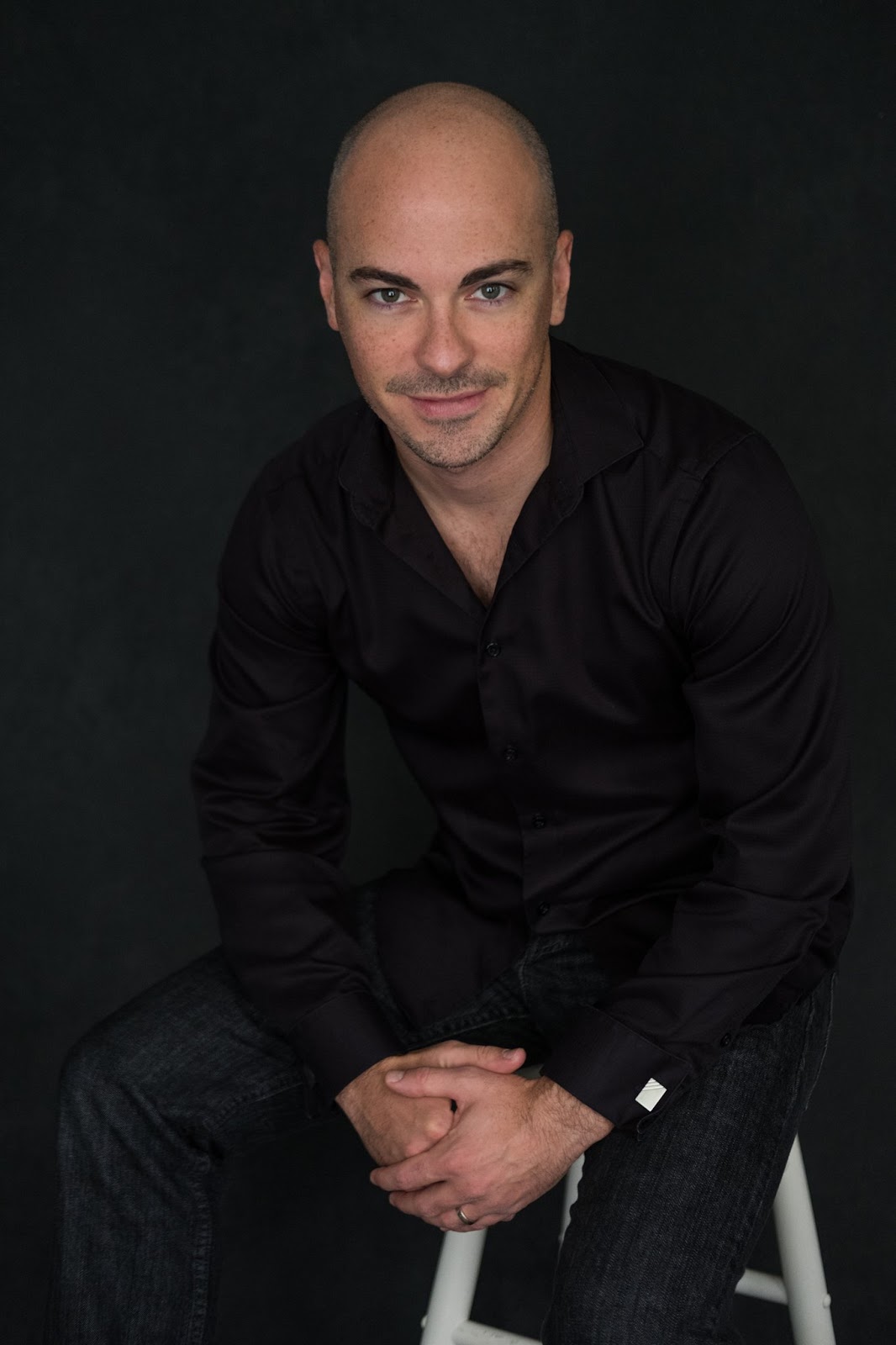
Meet David Donaldson in this Debut Author Spotlight
We Follow the Dying Light
1- Have you any New Year's Resolutions you can share with us?
Well I recently cancelled my gym membership so we can exclude the most obvious choice. My resolution would be to take at least a minute once a day to slow down and live more fully in the present moment and soak up the world around me. It’s so easy to get wrapped up in living a busy life and forget to appreciate life and the world around me as I bounce from task to task.
2- What five words represent your most notable characteristic or values? #In5Words
#AlwaysKeepingAnOpenMind
3- What ignited your passion for writing?
My imagination tends to run in overdrive all the time, so I’ve never had a shortage of ideas to write about. What I lacked was the focus to dedicate myself to one idea full time. When I started to struggle with anxiety and depression after some difficult life events collided, my imagination became a curse. It would take a simple thought and turn it into something catastrophic. To battle this anxiety I started to write about it and developed that writing into a story about a psychiatrist trying to help others as she struggled under the weight of her own mental illness. When the writing helped me improve my mental health, the story changed with it, morphing from something deeply introspective, but without a well constructed plot to a significantly tauter thriller as I realized there was a more exciting book buried within all the words I had written.
4- Would you share a picture with us of your book in an interesting setting?

In this photo, my book is next to a cookie a local baker made for me with the cover on top. I gave these out to anyone who asked a question during the Q&A at my book launch. They were a big hit and the Q&A ended up being the best part of the event.
5- What are some of your short and long term writing goals?
In the short run I want to do a book tour for We Follow the Dying Light, continue to produce flash fiction for my blog at http://www.daviddonaldson.ca , and finish the sequel. I’m over 43K words towards finishing a first draft. Because I don’t write full time, I have to be realistic with myself in terms of how quickly I can do all of this while maintaining a day job.
6- What is your favorite book (by someone else), and what do you love most about that book?
No Country for Old Men by Cormac McCarthy. McCarthy’s writing is incredibly poetic. He picks words out of the air and strings them together in these magical ways. Yet, in No Country for Old Men, it’s embedded in this great suspenseful crime story about a man on the run that keeps you turning the pages. That is no small feat in my opinion.
7- Who is currently your biggest fan? What does that person love most (or "ship") about your debut novel?
My readers are only just starting to provide their feedback as my book only came out in November and the book launch was held December 12th. But I actually had a cousin who works for an airline come to my launch while she was in Toronto on a layover between India and France. And she doesn’t even live in Toronto. If that’s not a super fan, I don’t know what is.
8- In what ways is writing a mute character easier than a speaking one? In what ways is it more difficult?
Great question! Dialogue is often how a character’s emotions and motivations are revealed in a story, as they interact with other characters. A character that is mute doesn’t have that ability, so you need to work harder to write down actions, facial expressions, and other features that elicit the same information for the reader.
9- What emotions do you hope your book will evoke for the reader, and is there a particular scene you hope will resonate with readers?
The journey I take the protagonist through is not only a suspenseful ride through a broken man’s traumatic memories, it’s a walk through someone’s struggles with immense guilt. I hope the readers feel dread, fear and sadness as they explore what haunts the characters, but also feel an optimism about the future and one’s ability to stand up to their past and find closure.
10- In short, what is the Vancouver opioid crisis?
In Canada, Vancouver is the epicenter of Fentanyl related overdoses and deaths. The East Hastings region of the city in particular is known for its problems with poverty and drug addiction, and when Fentanyl started to surface, it was this area that was hit hardest. When I started the novel I read about the staggering number of overdose deaths and the way it was overwhelming the city’s capacity to deal with the issue. If the technology Dr. Chambers uses really did exist, I envisioned Vancouver being a city where they would try anything to get ahead of a problem that isn’t slowing down.
11- What most helped you to improve your writing craft?
Working with an editor was a huge help. I had plenty of experience writing with my day job so being concise and knowing how to pull various ideas together was not an issue. But knowing how to structure a piece of fiction, what parts you need to include, what parts don’t contribute to the plot…all these elements is where the fact I was a first-time author shined through. But my editor had so much valuable feedback to provide and I’m immensely grateful for the work she did on the book. Now that I’m working on the sequel, these new skills are making the process far more productive than my first novel.
12- What is the most memorable trait or visual oddity of one of your characters?
The antagonist has a pair of pale blue eyes that look like ice on a frozen lake. His eyes seem vacant, cold, dead, and they fill the protagonist with an immense dread every time she catches his gaze.
13- #DiversityBingo2017 Which squares does your book cover on the card?
MC with an invisible disability MC with chronic pain
14- Which character has your favorite Personality Contradiction?
My protagonist for sure. She maintains a strong sense of duty towards her patients and pours all of her energy and resources into seeing them get well, but by the same token, she convinces herself her lies, theft and manipulation of others is a justifiable means to this end.
15- Can you think of any small change in the world you could make to benefit hundreds of other authors or readers potentially?
My book touches upon different aspects of mental illness, including PTSD, anxiety, depression, addiction and suicide. If the book or anything else I have to say on mental health can remove the stigma surrounding it, that would be a small change with big ramifications. Just like we can become physically ill, we can become mentally ill, and there’s no reason we should judge one differently than the other. #sicknotweak
16- As a reader, what most motivates you to buy a new book to read?
The back-cover blurb is what will typically seal the deal. If it gives away most of the plot I will put the book back on the shelf. That’s like a movie trailer that gives away all the best scenes. Conversely, a two line blurb from an author I’m not familiar with isn’t enough to make me a buyer. I spent more time writing and re-writing my back-cover blurb for these reasons. And I’m still not convinced I nailed it.
17- How will you measure your publishing performance?
I have no illusions about winning any writing awards and never set out to write the next great piece of literary fiction. I think I still have a long way to go as a writer before I can stand in that kind of company. Obviously selling a boatload of books is a good barometer of success, but more importantly would be strong reviews from influential critics in literature as well as important people in topical fields which my book touches upon.
18- What was the deciding factor in your publication route?
We Follow the Dying Light is self-published. A few pieces of information came together to convince me to go this route. 1) Tellwell Talent, a Canadian company, had a service offering that took all the work out of the areas of self-publishing I knew nothing about. Their pricing structure meant they didn’t take any royalties, given they also didn’t take any of the risk in writing and investing in the book. 2) The statistical probability of landing a deal as a first-time author with a traditional publisher are very low, and if you do win a deal, it could still take years before your book sees the light of day. 3) Small presses don’t have significant marketing budgets, leaving most of that work on the author. Given this is what I would consider the most valuable part of having a publisher (since you can outsource editing and cover design yourself) it didn’t make sense to me to give up a large percentage of royalties and still have to do all that work.
19- What's the best book marketing strategy you've come across?
The best strategy will depend on your book and its target audience. Social media is an inexpensive method to get a massive global reach. On the flip side though, you’re competing with a lot of eyeballs and attention spans spread across a lot of other marketers doing the same. If your novel deals with topical issues, then you have a much better chance of landing an interview with mainstream media as part of their coverage. That’s the route I’ll be taking in the new year. As powerful as social media is becoming, I still think people are more likely to make a purchase decision hearing about an author on mainstream media than they are through social media. It helps establish an extra trust factor.
20- What is one question or discussion topic which you would like the readers of this interview to answer or remark on in the comments?
I would be interested to hear about how reading and/or writing fiction helped other readers and authors deal with PTSD, anxiety and depression and what books were particularly important to them in this regard.
21- Anything else you would care to share about your book and yourself?
I can be found on:
Twitter @AuthorDonaldson - https://twitter.com/AuthorDonaldson
Facebook at the page David Donaldson – Author https://www.facebook.com/DavidDonaldsonAuthor
or directly at my website http://www.daviddonaldson.ca
One of my favorite excerpts from the novel is below:
A thick cord stretched into the darkness at the edge of the lattice. I pulled myself along its length. The lattice grew dark as I wandered into a nebulous, suppressed place. Gavin's trauma loomed immense before me: a black orb of epic proportions haloed in a ring of light. Its watery surface undulated, as if bodies were struggling to breach the memory for a breath of air. Long tendrils emanated in all directions, stretching for miles to wrap around the healthier parts of Gavin's mind.
A chill ran up my body as I tried to mentally prepare myself for entry. To enter is to breach the event horizon, to say goodbye to Catarina as she is, for I never exit quite the same. A piece of me is left inside the memory, a piece of my patient comes out.
I placed my hand against the orb in front of me and my acusensory suit grew hot as the edges of the memory opened. The lattice let out a low, rhythmic pulse. Negative energy rippled out of the trauma as the gates of Gavin's hell opened.
We Follow the Dying Light
Wednesday, June 22, 2016
That Moment When You Want to Quit
I remember my moment well.
It was September of 2013. I’d
just given my first pitch to a literary agent at a conference. For weeks before
the conference, I feverishly prepared for that pitch, watching YouTube videos,
researching, and gleaning wisdom from others who have pitched before. I wrote
and rewrote what I would say. I practiced a dozen times in front of my very-bored
children. I walked into that room, nervous, but knowing I’d done absolutely
everything I could do to make the pitch the best it could be. I’d packed an
atomic bomb’s worth of emotional and mental energy into that moment.
But, bombs have a tendency to explode.

I gave my pitch, but I failed to impress the agent.
I told myself it was okay, that I’d find another way. But,
after receiving nothing but rejections on my work for years, I began to spiral
downward. I struck the ground hard. I went to my room and detonated. I was
done. I couldn’t do this anymore.
I’ve lost count of how many writers and other artists I’ve
spoken to who have experienced “that moment.” I’ve watched friends withdraw and
become depressed, hopeless. I’ve seen it so many times, that I know what
exactly what’s happening to them. The industry has worn them down. Their
strength has given out under the constant crushing weight. Their dream to do
this thing they love, feels dead.
Have you been there? Are you there right now?

That weekend in 2013, I quit for about two hours. When I got
beyond the tears and gnashing of teeth, I realized that, in my quest to be
published, I’d lost sight of my first love—writing. Would I still love writing
even if my books never achieved publication? Absolutely. I took a little break
from querying to heal and focus on my writing.
I started sending work out again, but at a slower pace. I
realized that I’d been sprinting and this is a marathon industry. I also realized
that I couldn’t hold so tightly to my narrow dreams. Perhaps I needed to
broaden them and allow them to take shape within the realm of reality. I
invested in positive friendships with other writers for much needed
encouragement, shoulders to cry on, and the often needed kick in the pants to
keep going.
Most writers have experienced moments where they want to
quit. These feelings are normal. The question is, what will you do with that
moment? Will you allow it to win? Or will you keep going?
********
Melinda Friesen, author of the dystopian One Bright Future series, writes novels for teens and short stories. She is an avid collector of rejection letters.
Thursday, August 14, 2014
Depression, Suicide, and Mork & Mindy.
I am going to stray from normal writing things today, and open myself up a bit. I hope you don't mind me sharing this sensitive topic.
On Tuesday, my husband and I took a three hour trip to get our fingerprints taken. We’re updating our adoption paperwork, and we are required to go to the FBI and make sure we haven’t turned into hardened criminals since last year.
We randomly stopped at a restaurant call Buzzard Billy’s which serves Cajun/American food. (And, btw, the food was excellent.) The restaurant is decorated in retro pictures, and each table had different themes. Our small square table was decorated with trading cards from the 70s TV show Mork & Mindy.
Have you heard of it?
This, of course, started a discussion about the program, and how it brought Robin Williams out in the public—and yes, I am old enough to remember watching the show with my family. And I know what “Na-nu Na-Nu” means.
So needless to say, when I came home that evening, I was more than shocked to find out that, at the moment we were reminiscing about Robin Williams during our meal, talking about how far he has come and fondly remembering him, was a few short hours before he was found dead. We could have been even praising his talents the moment he took his life.
That was a very sad and surreal moment.
Robin Williams had depression, like lots of people.
Depression is HORRIBLE.
I know.
I've been there.
I lived in a dysfunctional home and was bullied at school. I felt so completely ugly and unlovable, that I wanted my pain to end. I hated myself. My acne was so bad that every day I layered on foundation to cover my skin. At night, I didn't have the courage to wash it off, because I couldn't stand to see what I really looked like underneath.
This, of course, perpetuated the situation, and my skin would only get worse. The vicious cycle continued until the day when my “friend” gave my school pictures (you know, the one you exchange to each other) to some of the bullies. They proceeded to write all over my pictures. UGLY. PIZZA FACE. DOG. ZIT FACE. BITCH. What smidgen of my self esteem I had left crumbled to dust. It was that event that pushed me over the edge.
I ran to the office sobbing, trying to find someone to talk to.
They did nothing.
I went home, trying to talk to my family.
Nothing.
The problem is when your family is also depressed and suffering, sometimes they don’t have the strength to help you either. So I found myself alone, contemplating ending it all, standing in front of the bathroom medicine cabinet trying to figure out what might get the job done. I had to make a choice. Life or attempt death.
I chose to keep going.
Poor Robin. My heart aches for him. He had wealth and fame and people loved him—just as we were talking about him that very day. But he too was putting on his humor, much like I applied foundation to my skin, to try and cover up what he was truly feeling.
I can’t say I still liked myself the next day after I chose life. I still felt ugly. I still hated myself. My faith is what slowly pulled me out of that darkness of self-loathing. And now, at the ripe “old” age of 42, I like myself. I'm not perfect, by any means, but that's ok with me. Nobody is perfect. And I would've missed out on a ton of things if I had listened to that depression screaming in my ear.
I still have emotional battle scars. I still struggle with forgiveness—and have yet to attend one of my class reunions. But I also have more empathy for the underdog. I feel passionate about anti-bullying. I am more aware of people's feelings. My experience helped me become a better person today.
I've seen a lot of people tweet about “talking to people”. And YES PLEASE DO! Go to your doctor. A counselor. A friend. You might need some medical help. A friend of mine talks about her "happy pills" and says they make all the difference for her. But sometimes even if you try to talk to someone, such as I did, you fail. Or if you are in a situation where you are alone in this fight, or have yet to find help, know that ...
You are important.
You are special.
You add value to this world.
You make a difference.
You were put on the earth for a purpose, even if you don’t see it right now.
It may be hard to keep going, and you may not see how things can change, but it can.
Things WILL get better.
Keep going.
Choose LIFE.
Get HELP
You won’t regret it.
On Tuesday, my husband and I took a three hour trip to get our fingerprints taken. We’re updating our adoption paperwork, and we are required to go to the FBI and make sure we haven’t turned into hardened criminals since last year.
We randomly stopped at a restaurant call Buzzard Billy’s which serves Cajun/American food. (And, btw, the food was excellent.) The restaurant is decorated in retro pictures, and each table had different themes. Our small square table was decorated with trading cards from the 70s TV show Mork & Mindy.
Have you heard of it?
This, of course, started a discussion about the program, and how it brought Robin Williams out in the public—and yes, I am old enough to remember watching the show with my family. And I know what “Na-nu Na-Nu” means.
So needless to say, when I came home that evening, I was more than shocked to find out that, at the moment we were reminiscing about Robin Williams during our meal, talking about how far he has come and fondly remembering him, was a few short hours before he was found dead. We could have been even praising his talents the moment he took his life.
That was a very sad and surreal moment.
Robin Williams had depression, like lots of people.
Depression is HORRIBLE.
I know.
I've been there.
I lived in a dysfunctional home and was bullied at school. I felt so completely ugly and unlovable, that I wanted my pain to end. I hated myself. My acne was so bad that every day I layered on foundation to cover my skin. At night, I didn't have the courage to wash it off, because I couldn't stand to see what I really looked like underneath.
This, of course, perpetuated the situation, and my skin would only get worse. The vicious cycle continued until the day when my “friend” gave my school pictures (you know, the one you exchange to each other) to some of the bullies. They proceeded to write all over my pictures. UGLY. PIZZA FACE. DOG. ZIT FACE. BITCH. What smidgen of my self esteem I had left crumbled to dust. It was that event that pushed me over the edge.
I ran to the office sobbing, trying to find someone to talk to.
They did nothing.
I went home, trying to talk to my family.
Nothing.
The problem is when your family is also depressed and suffering, sometimes they don’t have the strength to help you either. So I found myself alone, contemplating ending it all, standing in front of the bathroom medicine cabinet trying to figure out what might get the job done. I had to make a choice. Life or attempt death.
I chose to keep going.
Poor Robin. My heart aches for him. He had wealth and fame and people loved him—just as we were talking about him that very day. But he too was putting on his humor, much like I applied foundation to my skin, to try and cover up what he was truly feeling.
I can’t say I still liked myself the next day after I chose life. I still felt ugly. I still hated myself. My faith is what slowly pulled me out of that darkness of self-loathing. And now, at the ripe “old” age of 42, I like myself. I'm not perfect, by any means, but that's ok with me. Nobody is perfect. And I would've missed out on a ton of things if I had listened to that depression screaming in my ear.
I still have emotional battle scars. I still struggle with forgiveness—and have yet to attend one of my class reunions. But I also have more empathy for the underdog. I feel passionate about anti-bullying. I am more aware of people's feelings. My experience helped me become a better person today.
I've seen a lot of people tweet about “talking to people”. And YES PLEASE DO! Go to your doctor. A counselor. A friend. You might need some medical help. A friend of mine talks about her "happy pills" and says they make all the difference for her. But sometimes even if you try to talk to someone, such as I did, you fail. Or if you are in a situation where you are alone in this fight, or have yet to find help, know that ...
You are important.
You are special.
You add value to this world.
You make a difference.
You were put on the earth for a purpose, even if you don’t see it right now.
It may be hard to keep going, and you may not see how things can change, but it can.
Things WILL get better.
Keep going.
Choose LIFE.
Get HELP
You won’t regret it.
Monday, May 12, 2014
Mental Illness and Fantasy Fiction

In the course of the Big Picture edits for my YA UF novel, Crow's Rest, one of the aspects my editor Owen Dean and I talked about is the handling of mental illness. I would never want anyone to feel like I was minimizing their experiences, or treating a mental illness like a funny character quirk, so I offered up some lengthy comments in the notes I returned to him.
I shared how I've struggled with depression my entire life, along with its close companion, anxiety. Like other members of my family, I also have a learning disability and sensory issues. And then to cap it all off, I was on the verge of being diagnosed as bipolar, before we figured out it was a thyroid issue.
Now I know it’s a matter of getting my thyroid meds correct (not an easy task in itself) and it’s mostly leveled out, but it was a very scary and helpless-feeling way to find that out. I'm actually kind of glad that I didn't get all the other diagnoses when I was a teen--the depression was quite enough to deal with as they tried various medications on me and we failed to find a good match.
As it was, much of my love of reading and writing fantasy fiction stemmed from a heartfelt wish that my depression could be easily explained some other way--and therefore easily cured. What if it was actually a magical curse, and all I needed to do was find an antidote? What if some unseen creature was responsible for how I felt (Dementors, anyone?), no matter how I worked to stay upbeat?
I’m aware that I can’t play the “what if” game without the expectation of sensitive issues (and my handling of them) being brought up, but I’m okay with that. I don't expect this book to be labeled a realistic view of the experience of mental illness (there are certainly books out there that accomplish that), nor is it meant to be. It's absolute wish fulfillment for my teenage self, and I like to think there's room for that too.
Any dialogue that helps get people talking about the ramifications of mental illness is for the better, in my view. And if reading my book helps a teen feel not quite so alone with a struggle, or helps them escape their worries for a time, then I've paid it forward from all the authors who accomplished that for me.
Subscribe to:
Posts (Atom)