Showing posts with label anxiety. Show all posts

Thursday, September 10, 2020

Dear O'Abby: Help! I've lost my creativity!


Dear O’Abby,

This year seems to be taking a toll on my creativity.  I’ve always managed to juggle a full-time job, kids and enough of a social life to keep connected with my friends and family and writing a minimum of two books a year.  This year all that has gone out the window, and I don’t quite understand how.  I actually have more hours in the day to work with because I’ve been working from home and don’t have to negotiate the hour or so commute each day, plus all my kids’ after-school activities have been on hold, so I don’t have to rush from ballet to soccer practice to karate.

Yet I still can’t seem to find time to write, and it’s beginning to really stress me out.
Do you have any tips for me?

Yours,

Slumped

Dear Slumped,

I don’t think you are alone in feeling this way. In fact, I feel like I may have covered this topic already this year, but no matter. It's important enough we can cover it again. 

COVID-19 has disrupted our lives in a massive way, and the constant uncertainty over the situation is affecting people in numerous different ways.  Even if you are lucky enough to be able to work from home and are not feeling the economic pinch of having lost a job, there is still a level of anxiety about just living in this current world.

And while working at home is saving you commuting time, it’s not giving you the separation between your workplace and your home life that you are probably used to.  Where I live, we were only in lockdown for a couple of months, but I really struggled to write during this period because all of a sudden, my creative space also became my workplace.  And after spending all day working in that space, the last thing I wanted to do after that was to go back there to write in the evening.

If you can, separate the place you do your day job from the place you do your creative writing.  Maybe you usually write in your office, but this office has now been taken over by your day job.  When you want to do creative writing, move your laptop out of the office and work somewhere else in the house.  Or if you don’t have a laptop, maybe try writing longhand in a notebook instead.  The physical act of handwriting is often a great creative exercise.

Another option is to try writing at a different time of day.  In my day job, I do a lot of writing and often find that by the end of the day, I’m out of words and struggle to get anything down when I sit down and open up my manuscript.  To counter that, I started getting up an hour or so earlier in the morning and using that time to write, before the rest of the day took over and sapped my creative energy.  It took a little time to get used to because I’ve always been a night owl and wrote into the night, but I’ve discovered I actually write better in the mornings.

Another thing you could try is taking short breaks throughout the day to write.  Set a timer and take a 20-minute break from whatever else you are doing and just write.  Don’t edit or read over what you have written, just write until the timer stops.  Do this three or four times during the day, and you may find you’ve done as much, if not more, than you would have if you’d given yourself 90 consecutive minutes at the end of the day.

But if none of these things work for you, don’t stress out.  Maybe your body is telling you to take a break.  Even if you’re not feeling particularly anxious or stressed about everything going on, it will be affecting you.  Perhaps this lack of creative energy is how it is manifesting in you.  If you can’t write, don’t try and force it.  Use that time to exercise, get outside in your garden, soak in a bubble bath, or read a book.  When you’re ready to write again, you’ll write.  The story you want to tell will still be there, and it may even be better and easier to get onto the page because you’ve given yourself time to relax and breathe.  And maybe think through things in the story you may not have considered had you not given yourself that time.

Remember, you can still be a writer even if you are not actively sitting down and pounding the keyboard each day.  A lot of writing happens in our heads, and it’s not going be any good if our heads are fogged with stress and anxiety.

Hope this is helpful!

X O’Abby

Wednesday, January 17, 2018

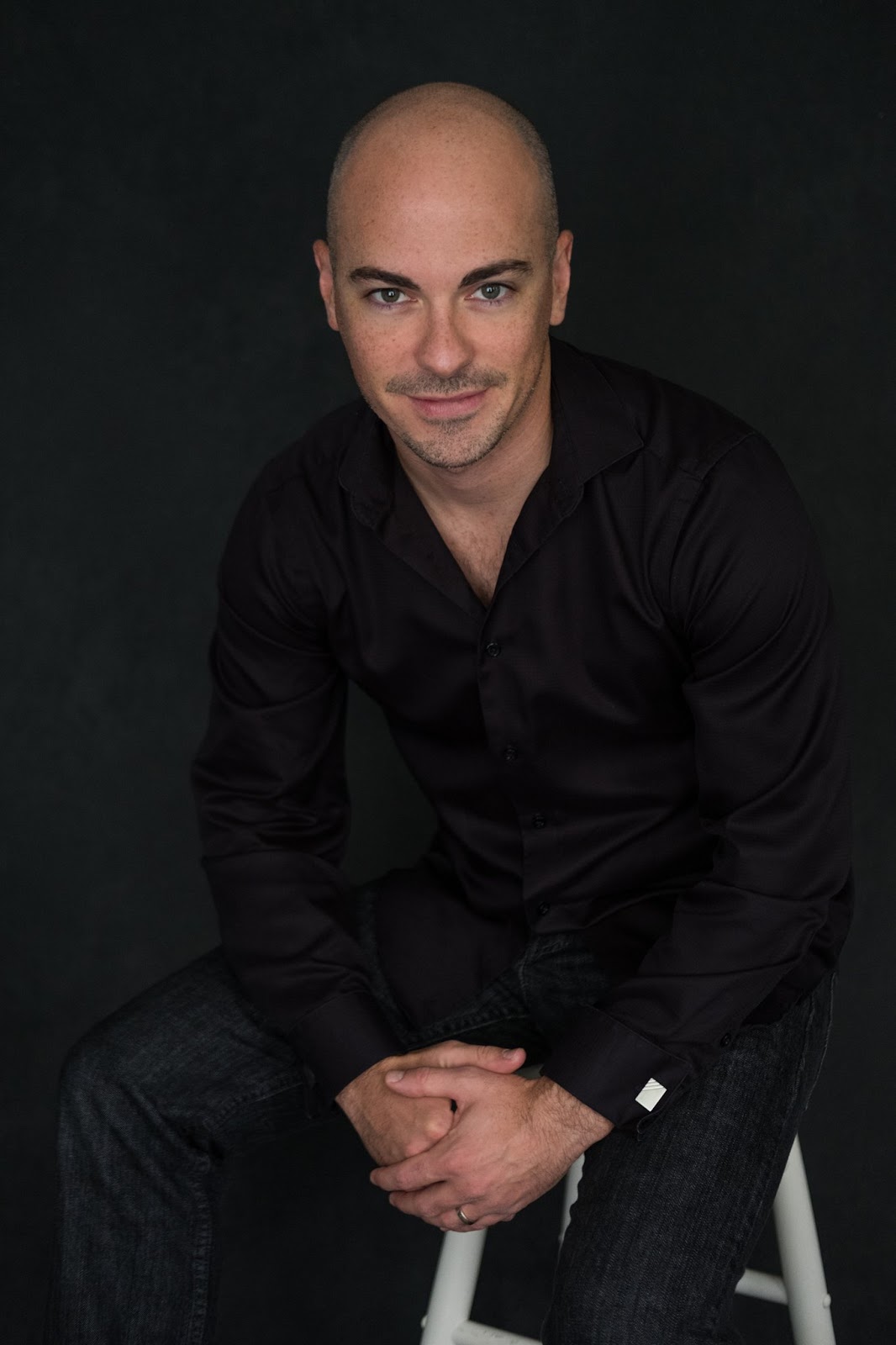
Meet David Donaldson in this Debut Author Spotlight

Debut Author Spotlight from @JLenniDorner on @OpAwesome6

We Follow the Dying Light


1- Have you any New Year's Resolutions you can share with us?

Well I recently cancelled my gym membership so we can exclude the most obvious choice. My resolution would be to take at least a minute once a day to slow down and live more fully in the present moment and soak up the world around me. It’s so easy to get wrapped up in living a busy life and forget to appreciate life and the world around me as I bounce from task to task.

2- What five words represent your most notable characteristic or values? #In5Words

#AlwaysKeepingAnOpenMind

3- What ignited your passion for writing?

My imagination tends to run in overdrive all the time, so I’ve never had a shortage of ideas to write about. What I lacked was the focus to dedicate myself to one idea full time. When I started to struggle with anxiety and depression after some difficult life events collided, my imagination became a curse. It would take a simple thought and turn it into something catastrophic. To battle this anxiety I started to write about it and developed that writing into a story about a psychiatrist trying to help others as she struggled under the weight of her own mental illness. When the writing helped me improve my mental health, the story changed with it, morphing from something deeply introspective, but without a well constructed plot to a significantly tauter thriller as I realized there was a more exciting book buried within all the words I had written.

4- Would you share a picture with us of your book in an interesting setting?
Meet David Donaldson in this Debut Author Spotlight

In this photo, my book is next to a cookie a local baker made for me with the cover on top. I gave these out to anyone who asked a question during the Q&A at my book launch. They were a big hit and the Q&A ended up being the best part of the event.

5- What are some of your short and long term writing goals?

In the short run I want to do a book tour for We Follow the Dying Light, continue to produce flash fiction for my blog at http://www.daviddonaldson.ca , and finish the sequel. I’m over 43K words towards finishing a first draft. Because I don’t write full time, I have to be realistic with myself in terms of how quickly I can do all of this while maintaining a day job.

6- What is your favorite book (by someone else), and what do you love most about that book?

No Country for Old Men by Cormac McCarthy. McCarthy’s writing is incredibly poetic. He picks words out of the air and strings them together in these magical ways. Yet, in No Country for Old Men, it’s embedded in this great suspenseful crime story about a man on the run that keeps you turning the pages. That is no small feat in my opinion.

7- Who is currently your biggest fan? What does that person love most (or "ship") about your debut novel?

My readers are only just starting to provide their feedback as my book only came out in November and the book launch was held December 12th. But I actually had a cousin who works for an airline come to my launch while she was in Toronto on a layover between India and France. And she doesn’t even live in Toronto. If that’s not a super fan, I don’t know what is.

8- In what ways is writing a mute character easier than a speaking one? In what ways is it more difficult?

Great question! Dialogue is often how a character’s emotions and motivations are revealed in a story, as they interact with other characters. A character that is mute doesn’t have that ability, so you need to work harder to write down actions, facial expressions, and other features that elicit the same information for the reader.

9- What emotions do you hope your book will evoke for the reader, and is there a particular scene you hope will resonate with readers?

The journey I take the protagonist through is not only a suspenseful ride through a broken man’s traumatic memories, it’s a walk through someone’s struggles with immense guilt. I hope the readers feel dread, fear and sadness as they explore what haunts the characters, but also feel an optimism about the future and one’s ability to stand up to their past and find closure.

10- In short, what is the Vancouver opioid crisis?

In Canada, Vancouver is the epicenter of Fentanyl related overdoses and deaths. The East Hastings region of the city in particular is known for its problems with poverty and drug addiction, and when Fentanyl started to surface, it was this area that was hit hardest. When I started the novel I read about the staggering number of overdose deaths and the way it was overwhelming the city’s capacity to deal with the issue. If the technology Dr. Chambers uses really did exist, I envisioned Vancouver being a city where they would try anything to get ahead of a problem that isn’t slowing down.

11- What most helped you to improve your writing craft?

Working with an editor was a huge help. I had plenty of experience writing with my day job so being concise and knowing how to pull various ideas together was not an issue. But knowing how to structure a piece of fiction, what parts you need to include, what parts don’t contribute to the plot…all these elements is where the fact I was a first-time author shined through. But my editor had so much valuable feedback to provide and I’m immensely grateful for the work she did on the book. Now that I’m working on the sequel, these new skills are making the process far more productive than my first novel.

12- What is the most memorable trait or visual oddity of one of your characters?

The antagonist has a pair of pale blue eyes that look like ice on a frozen lake. His eyes seem vacant, cold, dead, and they fill the protagonist with an immense dread every time she catches his gaze.

13- #DiversityBingo2017 Which squares does your book cover on the card?

MC with an invisible disability MC with chronic pain

14- Which character has your favorite Personality Contradiction?

My protagonist for sure. She maintains a strong sense of duty towards her patients and pours all of her energy and resources into seeing them get well, but by the same token, she convinces herself her lies, theft and manipulation of others is a justifiable means to this end.

15- Can you think of any small change in the world you could make to benefit hundreds of other authors or readers potentially?

My book touches upon different aspects of mental illness, including PTSD, anxiety, depression, addiction and suicide. If the book or anything else I have to say on mental health can remove the stigma surrounding it, that would be a small change with big ramifications. Just like we can become physically ill, we can become mentally ill, and there’s no reason we should judge one differently than the other. #sicknotweak

16- As a reader, what most motivates you to buy a new book to read?

The back-cover blurb is what will typically seal the deal. If it gives away most of the plot I will put the book back on the shelf. That’s like a movie trailer that gives away all the best scenes. Conversely, a two line blurb from an author I’m not familiar with isn’t enough to make me a buyer. I spent more time writing and re-writing my back-cover blurb for these reasons. And I’m still not convinced I nailed it.

17- How will you measure your publishing performance?

I have no illusions about winning any writing awards and never set out to write the next great piece of literary fiction. I think I still have a long way to go as a writer before I can stand in that kind of company. Obviously selling a boatload of books is a good barometer of success, but more importantly would be strong reviews from influential critics in literature as well as important people in topical fields which my book touches upon.

18- What was the deciding factor in your publication route?

We Follow the Dying Light is self-published. A few pieces of information came together to convince me to go this route. 1) Tellwell Talent, a Canadian company, had a service offering that took all the work out of the areas of self-publishing I knew nothing about. Their pricing structure meant they didn’t take any royalties, given they also didn’t take any of the risk in writing and investing in the book. 2) The statistical probability of landing a deal as a first-time author with a traditional publisher are very low, and if you do win a deal, it could still take years before your book sees the light of day. 3) Small presses don’t have significant marketing budgets, leaving most of that work on the author. Given this is what I would consider the most valuable part of having a publisher (since you can outsource editing and cover design yourself) it didn’t make sense to me to give up a large percentage of royalties and still have to do all that work.

19- What's the best book marketing strategy you've come across?

The best strategy will depend on your book and its target audience. Social media is an inexpensive method to get a massive global reach. On the flip side though, you’re competing with a lot of eyeballs and attention spans spread across a lot of other marketers doing the same. If your novel deals with topical issues, then you have a much better chance of landing an interview with mainstream media as part of their coverage. That’s the route I’ll be taking in the new year. As powerful as social media is becoming, I still think people are more likely to make a purchase decision hearing about an author on mainstream media than they are through social media. It helps establish an extra trust factor.

20- What is one question or discussion topic which you would like the readers of this interview to answer or remark on in the comments?

I would be interested to hear about how reading and/or writing fiction helped other readers and authors deal with PTSD, anxiety and depression and what books were particularly important to them in this regard.

21- Anything else you would care to share about your book and yourself?

I can be found on:
Meet David Donaldson in this Debut Author Spotlight

Twitter @AuthorDonaldson - https://twitter.com/AuthorDonaldson

Facebook at the page David Donaldson – Author https://www.facebook.com/DavidDonaldsonAuthor

or directly at my website http://www.daviddonaldson.ca

One of my favorite excerpts from the novel is below:

A thick cord stretched into the darkness at the edge of the lattice. I pulled myself along its length. The lattice grew dark as I wandered into a nebulous, suppressed place. Gavin's trauma loomed immense before me: a black orb of epic proportions haloed in a ring of light. Its watery surface undulated, as if bodies were struggling to breach the memory for a breath of air. Long tendrils emanated in all directions, stretching for miles to wrap around the healthier parts of Gavin's mind.

A chill ran up my body as I tried to mentally prepare myself for entry. To enter is to breach the event horizon, to say goodbye to Catarina as she is, for I never exit quite the same. A piece of me is left inside the memory, a piece of my patient comes out.

I placed my hand against the orb in front of me and my acusensory suit grew hot as the edges of the memory opened. The lattice let out a low, rhythmic pulse. Negative energy rippled out of the trauma as the gates of Gavin's hell opened.


We Follow the Dying Light

Wednesday, June 10, 2015

Always Know Yourself Before...

During my trip to New York, I saw a lot of interesting sites, and had a great conference experience at Book Expo America.

Before visiting the city, I had a chance to go to Caffe Lena in Saratoga Springs, where the likes of Bob Dylan and other folk musicians have performed. That night, it was a unique blend of blues--sliding guitar, tuba, and trombone. But most fascinating was what I encountered in the bathroom:

"Always know yourself before making a decision that may change your life"
While the walls were covered in inspirational quotes, I picked this one above the others because it's so deceptively simple: "Always know yourself before making a decision that may change your life." Because better decisions are made when you have your own best interests in mind. And knowing what those interests are is key in determining whether a decision is a good fit.

As with anything, this can be applied to writing at all levels:

Crafting stage: When you are still in the process of editing your work, and getting it critiqued by others, make sure feedback resonates with the story you want to write. Don't assume that someone knows more than you, or that negative feedback means you have to change the story entirely.

How to Know Yourself: Think, reflect, and figure out which feedback resonates with you most. Be with it for awhile to see what sticks and what doesn't. That way, you can save having to revert to a previous draft when someone else's recommendations aren't working (though this isn't unheard of--I've had to do it myself).

Agented/publishing/selling stage: From what I understand, this can be a perilous stage because it involves a lot of waiting. And waiting can inevitably morph into unnecessarily questioning yourself. Or settling for a deal that might not be right for you in the long run in order to relieve immediate stress.

How to Know Yourself: Be sure of the direction you want your career to go. Make the decisions that honor that, even if it means waiting to see yourself in print. Because settling for something lesser means possibly having to undo it later on--and that isn't always an option.

What about you? In what ways do you know yourself? And how do these inform your decisions going forward? 

Monday, February 9, 2015

Lessons Learned: Writing as Performance Art

Last week, I heard a presentation that discussed performance anxiety, given by music professor John Masserini. As I listened, I realized the tips he gave could also be applied to writing. Because all creative pursuits, whether they be art, music, or theater, share the same anxieties.


Translating this...
       
...to this. 

And as artists, we can use these anxieties and translate them into bigger truths. Such as:


1. You are the vessel.

This was probably the most useful tip of all. When John coached his music students on performing, he reminded them they were just a vessel for the music--that the audience wouldn't be focused on them--but on the music itself. It was the the notes, instead of the person playing them, that truly mattered.

And it got me thinking about how nervous I've gotten when putting my writing out there, and worrying about what people will think of me. When all this time, I've only been a vessel for the words that choose to come through my fingers and onto the page. This helps takes the onus off me as a person, and puts it where it belongs--on the story.

Elizabeth Gilbert alluded to this sort of thing during this fabulous TED Talk (it's lengthy, but definitely worth watching):


It's worth mentioning that Elizabeth Gilbert's use of "vessel" (8:41) is different from what I'm implying. I'm treating vessel as a conduit, a way to sail somewhere, rather than the full vat of creativity, or, the boat itself. As writing vessels, we write the words, but they do not necessarily always come directly from us.


2. Establish a routine.

This seems pretty basic, and as writers we hear it a lot, but John took it a bit further in his talk. As in, when his students are preparing for a recital for 7 p.m. on a Friday, he advises that they run through the repertoire at the same time (7 p.m.) on the Monday, Tuesday, Wednesday, and Thursday before the performance. That way, by the time Friday rolls around, the student's brain will be attuned and accustomed to running through the repertoire by the time they have to do it in front of a crowd.

In writing, the equivalent of this is anything potentially big that could happen along the way (meeting with an agent, editor, or perhaps pitching at a conference). So, for example, if you have a pitch appointment with an agent at noon, run through your pitch at noon as many days as you can before that meeting. Then, it will seem like it's old hat.

One final note about routine: even though we often hear that we "should" establish some sort of routine, it can sometimes be easy to brush off as, "Well, that's not my process." I told myself that for years. "I'm not an early riser, so I'll write at night." But recently, one of my MFA writing instructors recommended writing with the "best brain"--which means first thing in the day. And after trying that for the past few weeks, I've realized how much of a positive difference it makes. By getting my writing done in the morning, I get to do the thing I love most first--and then I'm not as resentful of the time taken away by other things throughout the day.


3. The art is in the recovery.

As a former pianist, one of my biggest anxieties was making a mistake during a recital. John admitted that mistakes were inevitable, but he advocated going on anyway. "The art is in the recovery," he said. A bad note may happen--but it's the notes that come afterward that count.

And of course, this can be applied to all stages of writing. Rejections at the query stage--what writers do afterward is what counts. Do they quit? Or do they hunker down at the desk and strive to write something better? Same goes for abysmal sales. What does the writer do next? Give up? Or write the next book?

Mistakes, nerves, and insecurities are inevitable in music, art, writing and life. But if we can learn ways around them, and not make them a hindrance, we'll go farther than we thought possible.

What about you? What are your fears? Where is your focus? When are you at your best? And how does all this translate to your writing?


Monday, May 12, 2014

Mental Illness and Fantasy Fiction


In the course of the Big Picture edits for my YA UF novel, Crow's Rest, one of the aspects my editor Owen Dean and I talked about is the handling of mental illness. I would never want anyone to feel like I was minimizing their experiences, or treating a mental illness like a funny character quirk, so I offered up some lengthy comments in the notes I returned to him.

I shared how I've struggled with depression my entire life, along with its close companion, anxiety. Like other members of my family, I also have a learning disability and sensory issues. And then to cap it all off, I was on the verge of being diagnosed as bipolar, before we figured out it was a thyroid issue.

Now I know it’s a matter of getting my thyroid meds correct (not an easy task in itself) and it’s mostly leveled out, but it was a very scary and helpless-feeling way to find that out. I'm actually kind of glad that I didn't get all the other diagnoses when I was a teen--the depression was quite enough to deal with as they tried various medications on me and we failed to find a good match.

As it was, much of my love of reading and writing fantasy fiction stemmed from a heartfelt wish that my depression could be easily explained some other way--and therefore easily cured. What if it was actually a magical curse, and all I needed to do was find an antidote? What if some unseen creature was responsible for how I felt (Dementors, anyone?), no matter how I worked to stay upbeat?

I’m aware that I can’t play the “what if” game without the expectation of sensitive issues (and my handling of them) being brought up, but I’m okay with that. I don't expect this book to be labeled a realistic view of the experience of mental illness (there are certainly books out there that accomplish that), nor is it meant to be. It's absolute wish fulfillment for my teenage self, and I like to think there's room for that too.

Any dialogue that helps get people talking about the ramifications of mental illness is for the better, in my view. And if reading my book helps a teen feel not quite so alone with a struggle, or helps them escape their worries for a time, then I've paid it forward from all the authors who accomplished that for me.