Dear O'Abby,
As you are probably aware, NaNoWriMo starts next week. I've thought about doing it in the past, but I'm a pretty methodical writer and I like to research and edit as I go, so I've always thought it wouldn't suit me.
Now I'm published and on deadline for my next book, I'm wondering if doing NaNo might be a way to get this second book my publisher is expecting finished.
Should I give it a shot?
X NaNoWaRy
Dear NaNoWaRy,
NaNo isn't for everyone and it's really up to you to decide if it is for you. Personally, I love it, but I'm a 100% pantser and have no problem at all with reaching a point where I need to research something and just leaving myself a note in red or highlighted in yellow saying "look up the Korean word for Grandma" or "do combine harvesters really work like this?". If this kind of thing is going to drive you batty and keep you up at night because you don't feel you can keep writing until you're certain you got that detail correct, NaNo might not be for you.
NaNo is a great way to vomit up what I like to call a "zero draft". It's not even a first draft, really. It's a bunch of words that may one day end up as a story. It's a way to get that story out of your head and onto the page where it can begin its life.
Some people outline and prep meticulously before NaNo begins, and I imagine they might write something closer to a first draft during the month because they know what they're going to write ahead of time and have, in some cases, outlined exactly how their book will be structured and how to fit writing 1,667 or so words a day into that structure.
If you're someone who likes to go back and read over what you wrote yesterday and polish it up, moving commas and removing extra words, NaNo might not be right for you.
But as I say, it's a personal choice. Maybe trying something different might be good for your creativity. And you know what? It doesn't matter if you don't make it through the whole month. At least you've started. You've written something. Those words don't disappear at the end of November when you don't "win" NaNo. You've started your book, and that's the best way to get to the point of finishing it.
So good luck, whatever you decide to do. I've rather stupidly signed up to do NaNo again this year, so I'll be in the trenches with you, trying to write a book that at the moment has an outline that says only, "Fifteen years after Chasing the Taillights, Lucy and Tony are still struggling with their relationship".
Let's catch up in December to see how we did.
X O'Abby

Showing posts with label rough draft. Show all posts
Showing posts with label rough draft. Show all posts
Thursday, October 24, 2019


Thursday, July 21, 2016
Collaborative Project: Rough Draft is Complete, So Now What?
Over the past few months, I've been working on a collaborative project with fellow author, Christine Steendam. We come from very different backgrounds in terms of our writing and styles--she writes western romances and historical novels, while I write speculative teen fiction.
 We've now completed a rough draft of our top-secret project, a novella different from anything either of us has ever written. We did a little happy dance last week when the final chapter was completed on our rough draft.
But, now what? Do we go in and start editing each other's work? Both of us edit for others professionally, so we're on equal footing in that regards. But, as I stated, this is a rough draft. I really hate anyone seeing my rough drafts, which was probably the hardest part of this whole endeavor--knowing that she'll be reading that primordial ooze that passes for my rough draft.
Because of the novella's genre and target audience, we plan to independently publish it, which will be a new venture for me as well.
So far, working collaboratively with another author has been a ton of fun and a great experience. Once the project is complete, I'll share what I've learned.
Have you ever co-written a novel? What sorts of challenges did you face? Do you have any great advice for me? I'd love to hear it.
Melinda Friesen writes novels for teens and is the marketing director at Rebelight Publishing Inc. Her YA dystopian novel, Enslavement has been shortlisted for a Willow Award. Enslavement's sequel, Subversion, is slated for a September launch.
 We've now completed a rough draft of our top-secret project, a novella different from anything either of us has ever written. We did a little happy dance last week when the final chapter was completed on our rough draft.
But, now what? Do we go in and start editing each other's work? Both of us edit for others professionally, so we're on equal footing in that regards. But, as I stated, this is a rough draft. I really hate anyone seeing my rough drafts, which was probably the hardest part of this whole endeavor--knowing that she'll be reading that primordial ooze that passes for my rough draft.
After some discussion, we decided on our process:
- We will go through the document and work on a second draft of our own passages.
- Once both of our passages are brought up to second draft status, we'll edit each other's work.
- After revisions, we'll send it off to an outside editor.
- Once the editor's changes are employed, we will each take a turn doing a copy edit.
- When we feel it's ready, it'll go into format and from there each of us will do a proofread.
Because of the novella's genre and target audience, we plan to independently publish it, which will be a new venture for me as well.
So far, working collaboratively with another author has been a ton of fun and a great experience. Once the project is complete, I'll share what I've learned.
Have you ever co-written a novel? What sorts of challenges did you face? Do you have any great advice for me? I'd love to hear it.
************************
Melinda Friesen writes novels for teens and is the marketing director at Rebelight Publishing Inc. Her YA dystopian novel, Enslavement has been shortlisted for a Willow Award. Enslavement's sequel, Subversion, is slated for a September launch.
Monday, September 21, 2015
Major Rewrites: Revising in Layers or Moving Mountains One Stone at a Time, Pt. 2
 Welcome to part 2 of Revising in Layers or Moving Mountains One Stone at a Time.
If you have major novel rewrite ahead, the task can seem overwhelming. My goal with these posts is to break the process down in order to make your revisions less daunting.
If you didn't read part 1, you can find it here. Last week I outlined the first four steps:
- Brainstorming
- Outling the existing manuscript
- Thinning
- Subplotting
5. Integrating
This is where the layers come in. One subplot or character at a time, I add the subplot outlined items to my manuscript outline. For me, this is just a couple words with an arrow pointing to where I'll insert it. In this step, I can arrange and rearrange the new subplot points until I have them where they make the most sense.
 When I'm pleased with my outline, I add the new writing to the manuscript. Depending on how extensive my new subplots and characters are, this can entail anything from a couple sentences to entirely new scenes.
I continue this process until each and every new character and subplot is added to the manuscript. During this process, I don't worry about whether or not it flows. I'm simply add the information I need.
By working in layers, I can concentrate on one subplot or character at a time which allows me to fully enrich each new item and add necessary depth.
6. Comprehensive Editing
I now view the manuscript as a rough draft, so it's time to do a thorough edit with a critical eye. I need to see how it flows, if the new plot points and characters ended up in a logical place, if there are any places I need to insert new information. I need to examine if the new characters are in all the scenes they need to be in, and to look for proper transitions, pace, tone, and appropriate shifts in existing text.
7. Polishing
After making the necessary changes, I always do a second edit to ensure it's ready for an editor's or beta readers' eyes.
 8. Happy Dancing
This was a huge undertaking. You overcame the discouragement, dug in and got the job done. Everybody click here to do the dance!
The words, "major rewrite" are the last thing most writers want to hear, but I hope that by having the tools to conquer what can seem like an impossible task, you can approach the process with a can-do attitude. And that's what I'm here to tell you--you CAN do it! So, get offline and start brainstorming!
Melinda Friesen, author of Enslavement, writes novels for teens and people like her who love to read YA. In two weeks, her daughter is getting married, so her writing time is succumbing to wedding planning.
Friday, October 12, 2012
Permission to Write Crap
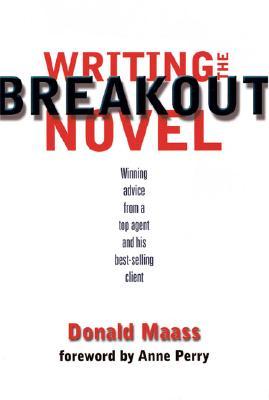
I just finished reading Writing The Breakout Novel by Donald Maass, and dove right into Nail Your Novel: Why Writers Abandon Books and How You Can Draft, Fix, and Finish with Confidence by Roz Morris.
Both are excellent books! The first one deals with everything that makes a story breakout material, from unique premise to sympathetic characters to high stakes to symbols and setting. I highly recommend it.
The second deals with fixing and finishing a book. So, while the first is all about craft, the second (includes tips about craft but) is really about method. That's an important distinction for me because I've been studying the craft of writing for a long time. Years and years. What was missing from my self-education was the study of METHOD.
Roz Morris understands that you can know all about character arc, plot, and theme, and still have trouble working through an entire novel. She understands that you can write an entire first draft (or six) and still feel like a failure, like your book is somehow unfinished. Her book offers insights into the methods that can help you work and rework your novel until it's one you can be proud of.
I expected tips on organizing the plot and filling impossible holes, which I got. What I didn't expect was this insight about writing first drafts:
Dream your way through it. Your dream self isn't criticizing the dream you're having. You're just exploring it, letting your mind fill in the details as you go along (paraphrased from the book).
Sure, I'd heard people say, "Turn off your internal editor," but that never worked for me. My internal editor is sort of my best friend when I'm writing. It's really hard for me to turn it off. Roz Morris' way of putting it - dream your way through the first draft - reached me where I was.
I still feel compelled to edit as I go along if I see those horrible red squiggly lines. But I'm learning that it's okay to let your rough draft be... well, rough.
Roz Morris gave me permission to write crap. Now I'm passing that permission along to you.
Kind of liberating, isn't it?

p.s. Our January 4th-6th New Year's Revisions Conference will be totally free and totally online. We'd love to see you there and we're lining up a fantastic collection of authors, agents, and editors to give us a million new perspectives on the all-important steps of revision. Our agent Q&A is now open for questions. Email your revision questions to OperationAwesome6 (at) gmail (dot) com before October 31st. (Limit one question per person, please.)
 |
| On goodreads |
 |
| On goodreads |
Both are excellent books! The first one deals with everything that makes a story breakout material, from unique premise to sympathetic characters to high stakes to symbols and setting. I highly recommend it.
The second deals with fixing and finishing a book. So, while the first is all about craft, the second (includes tips about craft but) is really about method. That's an important distinction for me because I've been studying the craft of writing for a long time. Years and years. What was missing from my self-education was the study of METHOD.
Roz Morris understands that you can know all about character arc, plot, and theme, and still have trouble working through an entire novel. She understands that you can write an entire first draft (or six) and still feel like a failure, like your book is somehow unfinished. Her book offers insights into the methods that can help you work and rework your novel until it's one you can be proud of.
I expected tips on organizing the plot and filling impossible holes, which I got. What I didn't expect was this insight about writing first drafts:
Dream your way through it. Your dream self isn't criticizing the dream you're having. You're just exploring it, letting your mind fill in the details as you go along (paraphrased from the book).
Sure, I'd heard people say, "Turn off your internal editor," but that never worked for me. My internal editor is sort of my best friend when I'm writing. It's really hard for me to turn it off. Roz Morris' way of putting it - dream your way through the first draft - reached me where I was.
I still feel compelled to edit as I go along if I see those horrible red squiggly lines. But I'm learning that it's okay to let your rough draft be... well, rough.
Roz Morris gave me permission to write crap. Now I'm passing that permission along to you.
Kind of liberating, isn't it?

p.s. Our January 4th-6th New Year's Revisions Conference will be totally free and totally online. We'd love to see you there and we're lining up a fantastic collection of authors, agents, and editors to give us a million new perspectives on the all-important steps of revision. Our agent Q&A is now open for questions. Email your revision questions to OperationAwesome6 (at) gmail (dot) com before October 31st. (Limit one question per person, please.)
Subscribe to:
Posts (Atom)