Showing posts with label first draft. Show all posts

Tuesday, November 26, 2019

"Write a Solid First Draft, Get Feedback"

For a few months this year, I worked as a technical writer at a software company. I did things like write update notes and make decisions about what a particular button was going to say. When I first started there, though, I felt SO MUCH impostor syndrome. I had this nagging feeling that I'd somehow conned my way into this job - through three hiring exams, a phone interview, and an in-person interview - and that any second it would all come crashing down around me as it was revealed that I was, in fact, a giant fraud.

I'm easily stressed out, in case you can't tell. Hooray for CBD.

However, the higher-ups in my department had dealt with this sort of thing before. Tucked away on our server was a PowerPoint titled "Dealing with Impostor Syndrome." So of course, I downloaded it. (If nothing else, I can admit when I need help.) It was only four slides long, and three of them were company-specific, but there was one so helpful that I put it on a sticky note on my computer: "Write a solid first draft, get feedback."

Photo: sticky note with "Write a solid first draft, get feedback" on it.
This now lives in my writing notebook.

When I first saw this, I thought, ugh, OBVIOUSLY that's how writing works, thanks for the hot take. But I hadn't really internalized this fact or made an effort to understand it. I had been given a simple update note to write, and I kept finding myself staring blankly at a blinking cursor. I realized that I was putting off even starting because I was so caught up in the shining idea of this beautiful final version that would go out to customers. It took a lot of effort to refocus from what I knew I needed to produce to the simple fact that I needed to produce something and start somewhere. I wouldn't know if I was on the right track unless I wrote something and got some feedback on it.

So, I wrote something basic. I simply looked at the facts of what was different and what the customer needed to know, and got that down. Then, once I had some real content to work with, it was so much easier to make some simple revisions and duck into the office next door to get my coworker's take on what I'd written. When I got my first draft to my mentor, he was really impressed. He said most new people spent way too much time on their first draft by trying to make it a final draft right off the bat, but I was in a good position because I hadn't sunk too much time into it or made it too technical. I wish I could tell you I won employee of the month or something, but nah. I got some nice self-satisfaction, though.

So what should you take away from this week's anecdote? Well, when it comes to your writing - and to things like NaNoWriMo, for instance - something is better than nothing. You're never going to finish if you don't even start. You don't have to get it perfect on the first try, because that's what CPs and betas and revisions are there for. Instead, just write a solid first draft, and then get feedback. 

Monday, June 29, 2015

First Drafts: Camp NaNoWriMo!


Today, I'm wrapping up our July writing tips on first drafts by talking about one of my favorite times of the year to hammer out a first draft: Camp NaNoWriMo!

For those of you for whom November means the stress and chaos of holidays and/or school year obligations, the lovely folks of NaNoWriMo (that's National Novel Writing Month) offer two additional opportunities for the camaraderie and excitement of the NaNoWriMo challenge: one "camp" in May and another in July.

Unlike regular NaNoWriMo, in which all participants are encouraged to write a 50,000-word novel in the 30 days of November, in Camp NaNoWriMo writers can set their own goals. Feel like writing a 25,000-word MG novel? Great! Want to challenge yourself to a 100,000-word high fantasy novel? Go for it! Determined to finish a 1,000-word flash fiction piece each day? That works, too!

What's more, in Camp NaNoWriMo, you can choose to be placed in "cabins" -- groups of up to 12 writers (either invited by you or randomly picked) who share their own private chatroom that allows these small teams to cheer one another on throughout the month.

Just like NaNoWriMo, the camps help writers stay on track with their daily writing goals, provide encouragement and support, and facilitate opportunities for writers to connect with others who enjoy writing, too -- locally and around the world!

You've still got a few days to sign up -- just head on over to the Camp NaNoWriMo website and join the fun!

Monday, June 15, 2015

Maximizing Productivity on First Drafts: The NaNo Way

Katrina did a great job of covering how she does first drafts. I'll expand by how I get through my first-draft explorations by maximizing productivity. Keep in mind, my way isn't the right or only way; it's just what's worked for me.

Like Katrina, I begin with Save the Cat beat sheets, but add a Fiction University twist on the Three-Act Structure. And, because characters don't always come as quickly as my worlds and plots do, I also draft character profiles on a master sheet, including a character poem for the protagonist.

I borrowed the character poem idea from author Shelley Coriell.  It works great for figuring out a character's likes, dislikes, weaknesses and flaws early on. And whenever I add a new character while writing (I'm more of a pantser than a plotter) they also go on the master sheet. I'm also playing with the idea Stephsco brought up on Katrina's last post because a character arc beat sheet would better show how characters grow and develop as a result of story events. It's not just about what happens, but how the characters react and change throughout their journeys.

Once my beat sheet and character profiles are done, I usually dive in full force. I borrowed a NaNoWriMo spreadsheet from a fellow writer back when I wrote my second novel and have used it ever since. The first column is for minimum word count per day required for a NaNo win (50,000 words in one month), the second is for actual word count, and the third is to measure the difference between the two (all Excel formulas have been calculated beforehand, so the spreadsheet automatically determines the differences between counts). I don't fill out the sheet daily (just during each draft session), but it encourages me to get words out as often as I can. I also do virtual writing sprints with people to motivate me to keep working when the going gets tough.

Here's a word-count sheet from my last (fifth) novel (notice I expanded the formula from 50,000 to 80,000):


Green indicates when my word count exceeded the NaNo measurement, and dashes show when I broke even. Luckily, this last go-round, I went above and beyond the minimum more often than not. This is rare, but shows I'm getting better (and quicker) at drafting which each new novel.

But I also need to point out the dramatic down-side to this method, one I've seen in my writing after the fact. Paying too much attention to word count causes my first drafts to be too skeletal. Things happen way too quickly (or are inconsistent throughout the story), and transitions are often rushed and forced. So just be cautionary if you choose this method--don't be afraid to take your time, flesh out details, and let the novel romp around in the mud as much as it wants to. See where the words take you!

What about you? What has helped your productivity during a first draft?

Monday, June 8, 2015

First Draft: A Process of Evolution

FIRST DRAFT
For June, we get to talk about the glorious first draft phase of writing a novel. I love first drafts! Until I hate them. But today, I'm just going to write about the fun part: beginning.

The sparkly new idea begins like a flower, a bud full of possibility. I wait for it to open a bit before I sit down to write, but as soon as I can see the unfolding of petals, I begin.

My bud looks like a title and a main character with a challenge, so I have a big job ahead of me. I have to flesh out the setting (my kryptonite), other characters, and their full character arcs.

I begin with Save the Cat beat sheets. That's my initial pre-writing. Usually, I have to do this more than once because the first one isn't completely right. It takes me a while to put those pieces together. At the same time, I allow myself to have some fun with character dialogue, as I mentioned in my Pre-writing post last month.

By the time I have these snippets of dialogue and a beat sheet, I have a pretty good idea how my story is going to go. I'm excited. I'm filled with the sense of mission that goes with a new project.

Following my beat sheet/outline, I start at the beginning. I try to follow the advice of The First Five Pages by avoiding passive language, starting with a lead-in to the main conflict, and keeping a feeling of forward motion.

But beyond that, I let myself go a little bit. I have my beat sheet within easy access but I am not its slave. It's my servant. I let the dialogue take me to places the beat sheet wasn't quite prepared for, and I edit the beat sheet as I go. I'm more of a pantser at heart.

About midway through the novel, I hit my crisis. The best way for me to describe this moment is to use a running analogy. During a race of 3 miles or longer, there is a wall. Pushing through that wall is the hardest part of the race, but if I just stick it out, the wall is behind me and then comes euphoria, the runner's high. I feel the same thing once I've worked through the plot issues, the character inconsistencies, or the general malaise of being almost done. On the other side of that wall is the feeling of completion.

The in-between-the-wall portion of my first draft writing is the time I get up from the computer. I have to sit at the dining table staring off into space, or think about the big picture while I shower. I have to let it simmer until the flavors magically merge into something wonderful.

And when I type the final words of the final chapter, it feels amazing. I post it to facebook and twitter and celebrate with ginger ale. And I don't even look at it again... for a while.

Because the time for revision will come, and it will come all too soon. Then I'll see all the flaws afresh. But for now, I just get to enjoy the creation of something that didn't exist before, something that I willed into being.

That's my first draft, baby!

How do you first draft?


Sunday, November 16, 2014

NaNoWriMo Tips- Fresh Eyes

A little while ago, I talked about fast drafting and ways to power through a draft without second guessing yourself. One of my tips was turn your inner editor off.

Well, as I've discovered this NaNoWriMo, that advice is much better applied to completely new projects. When a project is fresh, its a lot easier to go crazy without checking back to make sure you're pacing it right or that your characters are likable. Though I always say outlining helps a lot with NaNoWriMo, no matter how much you outline, the story is still a surprise. You have nothing to compare it to yet. The editor in you won't really make an appearance until a few months later.

Not so with rewriting. This month, I decided to finally rewrite, from scratch, my first ever novel. This is my baby. The thing that, in effect, has been in progress since seventh grade. Yeah. That long. Seven years I guess. I didn't actually finish the first novel until I was fifteen, and ever since then I've been editing and rewriting and trying new things with it.

Well, this month I said, enough. I decided I would look on the story with fresh eyes and write it completely from scratch. But its hard to do that when the story is so close to your heart. You already know your characters and story so well, you judge every single word you write. Several times over this month, I've wanted to change things because I didn't feel like my characters were coming across in the right way. Four days into NaNoWriMo, I completely started over to change the point of view. Usually, starting over is a big no, no. And while I like the changes I'm making, writing them can be like wading through mud some days.

Long story short, I won't be using NaNoWriMo for a big redraft like this again. While I have powered through and I expect to hit 50,000 words today (thanks in part to a few 10,000 word sprints that have left me in a writing coma), its been a lot more of a struggle than usual. Next NaNoWriMo, I'm definitely going to start with a fresh concept.

So what is easiest for you to fast draft? Do certain genres work better for you when you speed write? And how is NaNo going for you so far?

Soldier on writers! You can hit that 50,000 words! And if you don't, that's okay too. At least you wrote something, and that is always a thing to be proud of.

Sunday, October 19, 2014

The Key to Speed Drafting

Taking a break from my usual Reasons for Requesting or Rejecting, let's talk about speed drafting. We are, as we all know, only a couple weeks out from the start of National Novel Writing Month. The month of November in which every writer loses their social life. Everywhere, aspiring and established authors sit down in coffee shops or libraries or the isolation of their own bedrooms and try to crank out 1,667 words a day. Its a pretty daunting task, especially if you're not used to speed drafting.

But for me, speed drafting is the only way to write a book. Its just how my mind works. I tend to be very ADD and a book that sparks my fancy one month might lose my interest in the next. As such, I need to set goals for myself or I'd never finish writing a book. For every MS I've written, I have always written the majority of the first drafts in one month.

In fact, for the third year now, I am doing Octowrimo in addition to Nanowrimo. Its become an odd tradition now for me to have a 'Two book Autumn'. The first year, I started writing a novel in October and ended up finishing it because I wanted to start fresh on something for November. The second year I just got so excited about one new idea that I wrote it before September was out. I did Octowrimo after that and ended up getting too burned out to do Nanowrimo that year. And this year its Octowrimo again. I've done a lot of speed drafting so let's look at a few tips for how to crank out words fast.

1) Know Everything
Yep. Just know everything ever. Just kidding. But you do have to know everything about your world in characters. Establish everything in your head and get a good feel for the story you want to right. The better you understand your characters, the better they'll speak to you when you have to write about them. Your character might surprise you in the midst of the writing process. That's just what characters do. But you can at least TRY to know everything about them. Knowing your characters will especially help the dialogue flow. And knowing your world will make descriptions go a lot faster.

2) Outline
Seriously. I know that there are probably a lot of pantsers out there and if you absolutely, one hundred percent, can't outline, then don't. HOWEVER knowing the basic trajectory of your story can be very useful. For one thing, it influences how you write your beginnings, but more importantly, it gives you the ability to skip around.

For example, say you're having a lot of trouble writing this one scene. Its just not flowing at all. You're not in the mood. But there's this scene later in the book that you REALLY want to write at the moment. If you've outlined and you know where this scene fits in the story you can jump ahead and write that one. You can go back and fill in the blanks later. As long as the draft gets done, who cares what order you write it in. You're going to end up editing the crap out of it later anyway. And speaking of which...

3) Turn off that Inner Editor
Your speed drafts will be crap. This is a fact of life. The MS I'm writing right now? Hate it. Its awful. The dialogue prattles on for too long and there isn't nearly enough description. I use 'was' maybe ten times a page. I haven't even bothered to check on my punctuation.

But does that matter? Nope. Because the first draft isn't about making it perfect. Its about getting the thing down on paper. Your inner editor will be tempted to fix things. 'PLEASE let me go back and rewrite this chapter,' it will say. But you have to squash that voice down. Accept that your first draft will be crap, and you can let yourself go.

4) Find your Writing Time
In the end, none of this matters if you can't carve out a decent writing time. Find the place and time of day when you are most productive and lock yourself in. Inform your friends and family that you love them dearly but that you have to write. If they know you, they'll probably understand. And hey, if you write fast enough, you'll have time to spend with them later. But be intentional about when you are going to write. Don't dawdle and drift to youtube to watch cat videos. Sit down and get yourself typing. Because at 1,667 words a day, you'll have a novel by the end of the month. And that's pretty cool.

So are you prepping for Nanowrimo? If not, you really should try it out. Speed drafting might not be for you but at least you can say you tried it. And most people can't even say that. Happy typing!

Wednesday, July 9, 2014

Blast from the OA Past: Embrace the Suck!


There are certain things that are a given:

1) Day turns into night.

2) I like chocolate. And cookies. And cake.

3) First drafts can suck!

I know suck may be a harsh word, but they call them first drafts for a reason. They have a certain amount of suckage built into them.

Why?

The pacing may be off. You might introduce a secondary character but forget about them halfway through. Oops. Hasty addition time! Have you been calling your love interest Jensen for 20k, but then discover your MC making out with some dude called Jake? Hmmm. There could be scenes that don't advance the plot. Adverbs bleeding from the page. Purple prose. That brilliant plot twist doesn't quite fit. Darn it. Who says it needs to be logical? 

What to do?

Write on! Embrace that suck. Get the words out. 

There's a reason books get polished in revision. You can't revise an empty page, but you can revise through the roadblocks and errors to uncover the shiny prose beneath. 

Just remember:


Happy writing!

Tuesday, February 5, 2013

Where's the Love?


I thought I'd start my OA posting history with where I am right now in my writing life. My first novel is due to be released into the wild this November, and for now, it is in the hands of an editor. So I got organized and developed a fantastic idea for a shiny new project (something to keep me busy while I wait).

All of my characters showed up the first day, each dutifully carrying note cards with character traits and arcs and a very clear outline of my expectations. And after the first 1,500 words, they got up and left.

Hello!? I need this first draft by the end of February! My goal seems completely reasonable, and I know I can write awesome first drafts—I've got one simmering as proof! What's going on here?  

Let's call my characters Team A and Team B. Team A has been around for years. They check in at all hours of the day and night, and I can count on them being ready to go at 5am, when I write best. They'll do anything I ask, and I don't argue when they say I'm wrong. Heck, even when I'm pretty sure what they want will be nothing more than a "candy bar" scene, I'm always willing to let them have a little fun. They've earned it!

Team B? They have no clue what's going on. Sometimes I think they sleep in 'til 3pm. Don't they know I'm long-gone by then, picking up the kids from school? Sheesh! And their eagerness to correct me all the time is not helping this first draft, it's putting a screeching halt to it.

So, I came to the creative conclusion that this issue is not about my skills as a writer (thank goodness). It's about the relationship I have with this new set of characters. They don't know me, I don't know them. I assumed they'd have the same work ethic as Team A, because, you know, I'm the author! I am not going to change what I've been doing successfully for years and years. Am I?


So, Team B and I got together for a pow-wow session and here's what I learned:

1. Where Team A was love-at-first-sight, Team B is more like an arranged marriage. We're going to have to get to know each other before we can expect to make anyone truly happy.

2. Team B is tired of being compared to Team A.

3. Team B doesn't reject my overall plan, but they don't trust me with the details.

4. With every wrong assumption I make in this first draft, they lose respect and motivation to participate. (Apparently, I've been wrong quite often)

5. They want more freedom and I'm not trusting them to stick to the plan. (Yeah, that's true.)

6. They don't like acoustic guitar, nor do they like silence. They want upbeat dance music during writing sessions (ugh).

7. Relaxing candle scents make the two youngest characters gag.

8. They don't care if my work space is organized, and get annoyed by the unnecessary delay if I take a moment to put things away. So basically, if I'm not ready when they are, they're not going to be ready when I am, just to make their rebellious point. (This one makes me mad—total lack of respect.)

9. They like chaos and crowds of people. If I can't find them when I need them, they will NOT be waiting in the orchard next to the river for a private pep-talk. They will be at the mall with their friends, one in the arcade, the other in the food court, texting her best friend who's sitting at the same table.

But the most important thing I learned from this WiP time-out, is that I'm trying to write this first draft as if it was a final draft, wasting precious time guessing at details I can't possibly know yet. The point of this draft is to test the overall plot and get to know the characters, to see how much stress each one can handle. Because nothing is set in stone at this point—not my writing routine, the PoV, personality traits, voice... not even the main character.

I never thought I'd say the characters aren't important, but maybe Team B should play elsewhere while I work out these first draft details—that way I can test some ideas without being ridiculed to death. (I swear they're worse than the "internal editor". SO dang picky.)

Right now, my only goal is to write the bones. I'll be more than happy to let the characters add heart, soul, and flesh to the story on the very first round of editing, after I've gotten to know them on a more personal level. I might even let them add a few scenes as incentive if they'll agree to keep quiet for now.

Anyone else having first draft issues, where everything is an obstacle and there's no love or motivation to make it work?

And here's a funny thing... this quote found its way to me today. ‎"We should be taught not to wait for inspiration to start a thing. Action always generates inspiration. Inspiration seldom generates action," Frank Tibolt

As of this moment, I would reply with, "But action seems so pointless when there's no inspiration."
Fake it 'til you make it? 

Friday, October 12, 2012

Permission to Write Crap

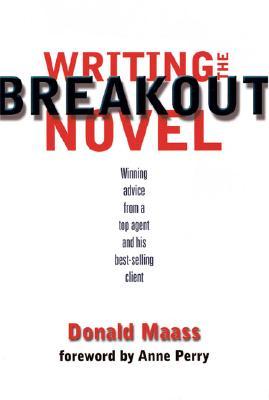
I just finished reading Writing The Breakout Novel by Donald Maass, and dove right into Nail Your Novel: Why Writers Abandon Books and How You Can Draft, Fix, and Finish with Confidence by Roz Morris.
On goodreads
On goodreads


Both are excellent books! The first one deals with everything that makes a story breakout material, from unique premise to sympathetic characters to high stakes to symbols and setting. I highly recommend it.

The second deals with fixing and finishing a book. So, while the first is all about craft, the second (includes tips about craft but) is really about method. That's an important distinction for me because I've been studying the craft of writing for a long time. Years and years. What was missing from my self-education was the study of METHOD.

Roz Morris understands that you can know all about character arc, plot, and theme, and still have trouble working through an entire novel. She understands that you can write an entire first draft (or six) and still feel like a failure, like your book is somehow unfinished. Her book offers insights into the methods that can help you work and rework your novel until it's one you can be proud of.

I expected tips on organizing the plot and filling impossible holes, which I got. What I didn't expect was this insight about writing first drafts:

Dream your way through it. Your dream self isn't criticizing the dream you're having. You're just exploring it, letting your mind fill in the details as you go along (paraphrased from the book).

Sure, I'd heard people say, "Turn off your internal editor," but that never worked for me. My internal editor is sort of my best friend when I'm writing. It's really hard for me to turn it off. Roz Morris' way of putting it - dream your way through the first draft - reached me where I was.

I still feel compelled to edit as I go along if I see those horrible red squiggly lines. But I'm learning that it's okay to let your rough draft be... well, rough.

Roz Morris gave me permission to write crap. Now I'm passing that permission along to you.

Kind of liberating, isn't it?


p.s. Our January 4th-6th New Year's Revisions Conference will be totally free and totally online. We'd love to see you there and we're lining up a fantastic collection of authors, agents, and editors to give us a million new perspectives on the all-important steps of revision. Our agent Q&A is now open for questions. Email your revision questions to OperationAwesome6 (at) gmail (dot) com before October 31st. (Limit one question per person, please.)