Showing posts with label small presses. Show all posts

Thursday, February 16, 2023

Dear O'Abby: What happens next?

 Dear O'Abby,

I just got a publishing contract from a small press.  I'm super excited because this is the first time I've had a novel accepted after querying agents and publishers for over five years and with three different books.  I've signed the contract and sent it back and they've sent me a fully executed one so it's all real!

But what happens next?  I know you have published with a small press, so I'm wondering if you can share the next steps with me?  I hate not knowing what to expect.

Sincerely,

Almost There

Dear Almost There,

Congratulations!  I know how amazing it feels to finally get a yes after years and years of no.  And it will be even more amazing for you once you finally get to hold a copy in your hand!  Assuming, of course, yours is not an e-book only publisher.  But even that's pretty darn exciting!

In terms of next steps, the first one is waiting. Sorry, I know you've probably already done a ton of that, but there's more.  I don't know how quickly your publisher turns things around, but mine is fairly quick and generally I get a first round of edits from the editor assigned to me within 6-8 weeks of having a book accepted. Once I've turned those around, a second round of edits tends to happen fairly quickly afterward.

In terms of edits, don't worry too much about them.  I've published with two small presses now, and neither of them have asked for anything substantial in terms of edits; it's mainly been just fitting things to their style guide.  I've never had to substantially change anything (other than a character's age once, which I rankled at a little).

Once you've turned around your edits, you will likely be told when the book is due to come out.  And not long after that, you should get cover art to look at and approve.  My current publisher is really responsive to feedback on covers and has completely re-done two of mine because I really wasn't happy with the first attempt.  I'm lucky in that sense.  I don't believe all publishers are that collaborative, but if you hate what they send, let them know.  Don't just accept it.

My publisher tends to publish e-book first, followed by print a few weeks later.  So not long after you approve your cover art, you should get e-book files and, if your publisher creates them, some marketing materials.  Once you have these things, you can kickstart your promotional campaign.  Most small presses don't do a whole lot of promo for you, so the bulk of marketing and publicity will fall to you. 

 It's good to make sure you have a decent amount of lead time available once you have your cover art and e-book files because this is the really time consuming part.  You will want to contact reviewers and book bloggers and anyone else who can help you get the word out about your book before it releases.  I've even asked my publisher to hold back the release date in the past, just because I know I need at least 6-8 weeks to get this work done - even with a really good database of people who have reviewed my stuff before.

And then...  You're book is out.  And hopefully reviews start coming in.  And readers respond to it in the way you want them to.  

Best of luck!  And do write back and let us know when the book is available.

X O'Abby


Thursday, June 2, 2022

 Dear O'Abby,

I have a friend who has written a book.  She's just discovered she has terminal cancer and the one thing she wants more than anything else is to hold a copy of her published book in her hand. The doctors say she has anything between six and eighteen months left.  

My question is, can she get a book published in this timeframe?  How long does it generally take?

Sincerely,

Out of Time

Dear Out of Time,

So sorry to hear about your friend.  That is sad news and not something anyone ever wants to hear.

On a more positive note, yes, your friend can hold her published book in her hand within this timeframe.  Just probably not if she wants to be traditionally published by one of the big publishers.

To get published by a traditional publisher, in most cases you need an agent.  And to get an agent you need to query.  Querying is a time consuming exercise because you need to research which agents might be looking for books like the one you've written, tailor each query to said agent (and they all have slightly different requirements) and then wait for responses.  And once you start getting them, if they are mainly rejections (and I'm afraid they usually are), you may need to tweak your query to make it stronger and more appealing.  The whole querying process can take months, if not years, and there is no guarantee of success.

If you do manage to get an agent, you will likely need to do a round or two of revisions with her before she'll take the book out on submission.  And there is no guarantee that the book will sell in the first round of submissions.  Another round or two of editing may be required based on feedback from this first submission round before the agent will go out again.

And then, even if an editor does love the book and manages to get it through the company's editorial board, the publication date is likely to be at least 18 months away.  Publishing is glacially slow.

So I don't think your friend can realistically expect to be traditionally published and still have the chance to hold the book in her hands.

Luckily, there are other options.  Many small presses have much shorter editing time built into their release schedules and do edits simultaneously with cover design and creating marketing materials.  My publisher tends to get books from signed contract to print within 6 months.  I've actually had to push back my release date a couple of times just to get enough lead-in to set up decent publicity and marketing.

And there is always the option of self-publishing which is the fastest way to get that book into her hands.  She will need to pay for her own editing and cover design in this case, but if holding that book is as important to her as you make out, then she won't resent it.

Hopefully this is helpful.  I wish you all the luck in the world with helping your friend achieve this lifelong dream.

X O'Abby

Thursday, September 16, 2021

Dear O'Abby: Can I query agents and publishers at the same time?

 Dear O'Abby,

I took part in a Twitter pitch contest a couple of weeks back, and was super excited to get a few hearts!  Upon closer investigation, I discovered two of the people who liked my pitch were not agents, but editors at small presses.

I have been querying agents for a few moths now, but had only a couple of partial requests.  I'm a little wary about sending material to publishers at the same time as agents, but want to keep my options open here, and give my book the best chance at being published.  

So I was wondering if it is okay to send material to these small presses at the same time as I am sending queries and material to agents?

All the best,

Hearted.


Dear Hearted,

Generally speaking it is better not to query publishers at the same time as agents, especially if your goal is to be traditionally published.  Most major presses won't take submissions without an agent attached, and small presses that do take submissions direct from authors are often digital only or have limited distribution.

But at the end of the day, it's your choice.  If you would be happy being published by a small press that may be digital only, or doesn't have the ability to get your book into major bookstores, then go ahead and send your materials.  If you get an agent offer before they have responded, you can always withdraw your submission.

Just don't think that you can use an offer from a small press to try and leverage an offer from an agent.  I know writers who have done this, and it has backfired badly for all involved.  An offer from a small press is great if this is what you want, but an agent isn't needed to broker the deal in most cases.  Most small presses don't offer advances, and there is usually very little room for negotiating the contract.  Royalties tend to be low too, and the agent's commission cuts into the author's share without it being really worthwhile for the agent either.  So neither party ends up being happy with the situation.

So think hard before you send anything to these small presses.  Think about what you want for your books and your career and make the choice that's going to make you happiest in the long term.

X

O'Abby

Thursday, June 17, 2021

Dear O'Abby: Tell me about querying

 Dear O'Abby,

I'm a pretty new writer in terms of looking toward publishing a novel and so I've been thirstily sucking up all the information I can about the process.  I've been reading this blog for a few weeks and have been interested in the number of posts referencing querying.

I know what querying is in a pretty basic way - it's pitching your book to an agent or publisher - but I'm looking for a little more information about the process.

Is that something you can help me with?

All the best,

Uncertain


Dear Uncertain,

Querying is a pretty big topic, but I'll try to keep things fairly high level for now.  There are a lot of resources out there to help you, so I'll share some of the ones I find most useful.

You're right about what querying is - a pitch to agents or publishers.  It is important to decide which because you don't really want to be trying to get a publisher and an agent at the same time.  It's important to be clear in your own mind what you want from your book and what route is the best one to take to get that.

If you want to be traditionally published by one of the major publishing houses, you will need an agent.  When querying agents, it's important that you research each one to make sure your book fits with them.  A quick way to get a pile of rejections is to query agents who don't represent the genre or category your book fits into.  You want to find an agent who loves your book and will champion it to publishers on your behalf. I suggest spending time at MS Wish List, researching what different agents are looking for and compiling a list of the ones that would be a good fit for your story.

It's important that your book is ready before you start querying.  Yes, you will likely do revisions once you have signed with one, but your best chance of getting one in the first place is to have a well polished manuscript.  There are a lot of books being queried at any one time, and if yours looks like it needs more work than others that come across an agent's desk, it will have to be pretty darn spectacular to get picked up.  And most agents won't look at a book they've rejected again, even if you've done substantial revisions since the last time you queried it.  Make sure your book is as good as you can get it before you dive into the trenches.

If you're not sure traditional publishing is the right thing for you, you may want to look at small presses instead.  Some of these require an agent too, but there are a large number you can submit to directly.  Small presses generally don't pay advances and the amount of publicity and marketing you get can be limited, so be prepared to have to do a lot of that work yourself if you sign with a small press.  Their distribution channels can also be rather limited, so if your dream for your book is for it to be in bookstores and libraries worldwide, small press publishing might not be for you.  If this is the route you want to go, there is great information about small presses that accept un-agented submissions at Authors Publish.  You need to subscribe, but subscription is free.

If you like to be in control of everything, you might be better off self-publishing.  That way you can be in charge of when your book releases, what it looks like, and how it is marketed to readers.  Self publishing is a lot of work, but the stigma that used to be attached to self-pubbing is wearing off and numerous writers are building successful careers for themselves this way.  It's more work, but you also get more of the money from each book sold than you would get through traditional or small press publishing.  

Hopefully that helps you decide the best path for your work.  My only other advice is to always be courteous with the people you deal with along the way.  Publishing is a small world and one mis-step can derail your whole career.  You will get rejections along the way, and they will hurt.  You will get criticism you disagree with.  Restrain from lashing out at those who give you this.  It won't help you in the long run.

Good luck.  I'll probably see you out there in the trenches.  And join Operation Awesome's query support group so you don't feel so alone as your rejection emails start piling up.

X O'Abby


Thursday, May 20, 2021

Dear O'Abby, How do I publish my poetry?

 Dear O'Abby,

I'm a poet and I have a whole bunch of completed poems, some which have been published in magazines and literary journals, and a lot that haven't.  I'd like to publish a collection of poetry, but I can't seem to find any agents who seem to represent poets.

Can you help?

All the best,

Bemused.

Hi Bemused,

I think the reason you can't find an agent who represents poetry is because in general, agents don't represent poetry.  Not unless it's in the form of a novel-in-verse.

Most poets approach poetry publishers directly with their work as they tend to be small presses and often quite specialised.  I suggest visiting your local bookstore or library and browsing the poetry section.  If you find a book of poetry that feels similar to yours or covers similar subject matter, look at the publisher information and you can then look them up and find out if they are accepting submissions, and how to submit to them.

I found this list of poetry publishers, but I don't know much about them, so do your research before you submit.

You mention that you have had poems published before, so if you do end up getting a publishing deal for the collection, you will need to check your contracts to make sure you have the right to offer re-print rights to your publisher.  Most contracts for journals etc I've seen allow this to happen, but may require a note saying "first published in X" and sometimes a date and/or issue number.

You will need to make sure of your rights even if you decide to self-publish a collection of your poetry, which is an equally valid option.

Or you could just continue to submit your work to magazines and journals as you have clearly been doing quite successfully.  Having work in these publications often raises your profile as a poet because people who don't habitually read poetry might stumble across your work, read and enjoy it even if they have never set foot in the poetry section of a bookstore.

You can also do all these things.  Being a poet allows you a lot of flexibility in the ways you make your work available, even if poetry tends to be a fairly niche market.

Hopefully this helps!

All the best for your ongoing publishing journey, whichever direction you choose to go in.

X O'Abby


Thursday, May 13, 2021

Dear O'Abby - Can my publisher drop me for writing reviews?

 Dear O'Abby,

I was inspired to write in when I saw that you and the team were doing book reviews throughout the A to Z.  You see, I have a question about writing reviews.  Or maybe not a question so much as a problem...

My first book is due to come out this year with a small press.  Wanting to be supportive of my fellow authors, I bought a few books published by this press that looked like they'd be up my alley and read them with the intention of leaving reviews on as many platforms as possible.

The first book I read was okay.  Not great, but okay.  I gave it a three-star review and pointed out the book's strengths and weaknesses in my review.

The next day I got an email from my publisher asking me to remove the review or to rewrite it to be more positive - at least four-stars.  It wasn't a really threatening email, but it irked me.  I gave my honest opinion of the book and was generous in giving it three stars.  It was NOT a four-star read for me.

So I wrote back and told the publisher that the review was my honest opinion and that I was uncomfortable with the idea of changing or removing my review.  I have written book reviews for years and nobody has ever asked me to change one before.  I review pretty much every book I read on Goodreads, and when I remember, I post to other platforms too.

About an hour later I got another email from the publisher saying it was not company policy to leave reviews for fellow authors that were below four stars.

This was not something I remembered reading - if I had, it would have been a big red flag for me -  so I went back to look at the publishing contract and other documents I'd received when I signed my book to this press.  Nowhere did it say anything about writing reviews or that there was any policy regarding writing reviews.  So I wrote back and pointed this out to the publisher.

I heard nothing more, so I figured the matter was settled.  I read a bunch more books, not from this publisher (and reviewed them honestly), leaving the other ones I'd bought unread on my Kindle.  A month or so later I was away on a business trip and ran out of reading material, so opened up another one of the books from my publisher I'd bought.

It was terrible!  I could not believe that anything so badly written could possibly have been through an editor.  The tense changed constantly for no reason, characters names changed from chapter to chapter, and there were some massive punctuation errors that made it almost impossible to read.  And don't get me started on the actual story!

I finished the book and wrote an honest review in which I pointed out the inconsistencies and editing errors.  I hesitated before publishing it for a moment, but then went ahead because the book was so bad, I didn't want anyone else to make the mistake of paying good money for it.

The next day I got an email from my publisher saying they were sorry, but an editor working on my book, which was due to release the following month, had found some problematic material in it, and that they felt that without substantial editing, it was not suitable for their imprint.

Now I'd been through edits with an editor from this press and she'd mentioned nothing about problematic material.  I couldn't even imagine what could possibly be construed as problematic in my book.  Certainly none of my beta readers or critique partners had found anything problematic, and my crit group is extraordinarily diverse.  I asked what the issue was, and got no concrete answer.  Shortly afterward I received notification that my publishing contract had been terminated and the rights to my book returned to me.

Now, I admit I probably made a mistake in publishing that bad review, especially after being warned, but this feels very much like censorship.  And I'm angry because I don't believe a publisher has the right to do something like this.  I love writing book reviews and I like to think my reviews help people make informed decisions about what they might like to read.  And I'm angry because pulling the book less than a month before release is a shitty thing to do.  Especially since this small press does very little marketing and promotion and I'd done a ton of work in that area.

Sorry... This has ended up being a stupidly long letter. What I'm wondering, is if there is anything I can do now?

Regards,

Censored

Dear Censored,

I'm so sorry to hear that this has happened to you! What a horrible experience.

Frankly, while I know it's disappointing, I feel like you may have dodged a bullet with this one.  You got your rights back without a protracted legal battle, and you're not bound in any way to a publisher who is not only wholly unethical, but obviously doesn't take a lot of pride and care with the books they publish.

I have never experienced something like this, but I have heard rumours of it happening at at least one small press (which could be the one we're talking about here, or may be another one) and just reading about it left a bad taste in my mouth.  Like you, I write a lot of book reviews and rate everything I read on Goodreads even if I don't write a full review.    And I don't always write good reviews.

I don't know if you're the kind of person who likes to make waves, but it might be worth reaching out to other authors published by this publisher to find out if any of them have had similar experiences.  I would also suggest getting in touch with Victoria Strauss at Writer Beware and flagging this with her.  She may already be aware of problems with this publisher, but if she isn't, it would be worth getting this on her radar so she can keep an eye on them in case there are other unethical things they might be doing.

I don't know where in the world you are, or where the publisher is, but there may be a legal case to be had too, given how close to publication your book was.  I'd be cautious in taking this route though, because legal battles are costly, and even if you are in the right, it might not go in your favour.

It's probably cold comfort, but if you managed to get a book accepted once, you can do it again.  Or if you're feeling gun shy  (and you have every right to be after this experience), you can self-publish and keep control in your own hands.  

And whatever you do, don't stop writing reviews.  You're entitled to your opinion of what you read as much as anyone else and I reject the idea that writers shouldn't write reviews (even bad ones) because they might upset publishers or agents who might be considering your project. Reviews - good or bad - are part of the business, and not every person is going to love every book.  It's just something you deal with in publishing.  

And writing honest, constructive reviews is very different to the Goodreads pile-ons I sometimes see where people rush to condemn something they haven't read just because someone else says it's problematic.  That's just as bad as what your publisher did.

I hope this helped, and I wish you all the best in finding a new (and better) home for your book and any future books.

Do keep in touch to let us know what happens.

X O'Abby


Thursday, December 5, 2019

The Next Step...


Welcome to December!

Hopefully those of you who were doing NaNo achieved your goals. And even if you didn’t get to 50K, you still have more written than you did on 31 October which is a win  in my book! I surprised myself and managed just under 60K in November.  My book isn’t finished yet, but I figure I have only another 15K or so to go.  I aim to be done by Christmas so I can enjoy my summer holiday (I live in New Zealand so Christmas is in summer) without that hanging over me.

Last week O’Abby had a question about what to do once you’ve finished your NaNo book and I outlined some ideas about revising that first draft (here) and promised we’d talk about the next step this week.  So here goes.

Once your book is revised and polished and your readers can’t find any more major flaws, you need to decide what publishing route is right for you and your book.

If you want to be traditionally published by one of the big publishing houses you will need to find a literary agent as most of these publishers don’t accept manuscripts directly from authors.  There are numerous agents and they all represent different types of books.  Research is required to ensure you find one who will be able to sell your book.  There are a number of websites that can help you with your search.  I would recommend Query Tracker as a useful tool, and for finding our what different agents are actively looking for, MSWL.  Once you’ve found a few agents you’re interested in, I suggest you follow them on Twitter to see what they’re looking for and if you think you might be compatible with them.  Picking the wrong agent is worse than having no agent, so it’s worth going in with as much knowledge as possible.

If you are someone who likes control, self-publishing might be the best route for you.  It’s hard work because every part of the process is in your hands, from editing, to cover design to publicity and marketing.  But you get a bigger cut of the royalties from your sales and you can control when your book releases, what it looks like, the price and pretty much everything else about the process.  I would suggest though, you get a professional editor and cover designer to work with you because readers notice shoddy editing, and a bad cover gives the wrong first impression of your book and can kill sales.

The third option is to publish with a small press.  Most of these do not require an agent to submit so you can contact them directly.  There are a large number of small presses, some which specialize in particular genres and styles and others that publish a broad range of titles.  Some are digital only which means if you’ve always dreamed of having your book on library and bookshop shelves, this isn’t going to happen.  Like everything else, I suggest you do your research before sending your manuscript to any small press.  Some have very limited distribution channels and some only do print copies on demand.  Some have hidden costs associated with their services and should be treated with care.  You will also likely have to drive the bulk of marketing and publicity yourself as most small presses have limited resources for this.

How you publish is not a decision to take lightly, so take your time and do your research.  And don't get discouraged by rejections.  They are just part of the process and while they sting, they won't kill you.  After a while you will be able to brush them off like any other annoyance, as crazy as that might sound to you now.  I can say that because I've had close to 300 rejections in my writing career, and expect more each and every time I send a new manuscript out into the world.

And I'm still breathing!

Feel free to get in touch if you have any follow-up questions.

X O'Abby

Thursday, July 11, 2019

Dear O'Abby - Querying when I've already had an agent

Dear O'Abby,

Three years ago the agent I'd been working with left agenting and passed me and my books over to one of her colleagues.  Said colleague wasn't really interested in the genre I primarily write, so the decision was mutually made for us to part ways.  Since then, I've been working with a small press and have published four novels with them.

Now I've finished a new book, and I want a shot at bigger sales and better distribution than I've been getting with the small press.  So it's time to start looking for a new agent.  Is there any advice you can give me about querying when you've already had an agent?  And already have books out there?

Sincerely,

Old Hand

Dear Old Hand,

The best thing to do in this situation is to be completely honest.  Obviously in a query letter you don't have a lot of space to go into detail, but there is room for you to mention your small press books and the fact you have been agented previously.  Just a single line like "having parted amicably from my previous agent, I'm seeking new representation for Shiny New Book," would be enough.  You can explain the situation in more detail if the agent is interested and you have a call to talk about the book and her vision for it.

You're actually in a better position than most querying writers in that you already have experience with an agent and have probably figured out what you liked and didn't like about the experience.  You will have learned what you expect and want in an agent and can now narrow your list of potential agents accordingly.

Do your research with that in mind.  Was your previous agent slower to respond to emails than you liked?  Did she offer helpful editorial feedback or did you feel like she was trying to make your book something different to what you intended it to be?  Was she upfront about where she was subbing your work and the responses to it?  Did she send you that feedback or was she reticent to do so, even when you said you wanted to see it, warts and all?  Did you feel like she truly loved your work? Are you planning to keep writing books like the one you're querying or do you have ideas for books in other categories or genres?

Query with these things in mind, and when you have the call, ask the questions that will help you decide if this is the right agent for you based on what you already know about your preferences.

You also have a track record with publishing so understand about deadlines, and edits and dealing with editors whose ideas might not gel 100% with your own.  Not to mention you've done this before, so will be no stranger to rejection.  Knowing that you are resilient enough to pick yourself up after rejections or bad reviews or poor sales is something an agent will appreciate.  And seeing that you still have the drive to keep writing and knocking on publishing's door after all that is also a plus for you.

So from my perspective, you're in a very strong position right now.  Go forth and query. And good luck.

X O'Abby


Thursday, June 20, 2019

Dear O'Abby, Punctuation woes

Dear O'Abby,

I'm published by a small press and have discovered during the editorial process that they have a style guide that forbids the use of semi-colons in their books.  Now, I don't over-use semi-colons, but I do use them where it's appropriate, and I like the feel and rhythm they give my prose.  Having removed them all for my editor, I feel like several passages now feel wrong.  The rhythm is off.  The meaning, of those sentences hasn't changed exactly, but has subtly shifted.

Do you have any advice? I mean, why have a policy like that in the first place?

Yours,

Semi-Punctuated

Dear Semi-Punctuated,

I don't think there is anything you can do in this situation. It's frustrating, I know. My small press publisher has the same policy and it irritates me every time my editor removes one of my lovingly placed semi-colons.

If you want to continue writing for this publisher, you will need to work within their style guide.  Maybe try writing your next book without any semi-colons.  Or edit them out yourself before you submit the manuscript so at least you have control over the way the sentences sound and feel without the semi-colons.

Or of course, you could look for a different publisher for your next book.  But you may find other publishers have the same style-guide.  And if not using semi-colons is the only complaint you have about your publisher, you might want to think long and hard about this option.  If you're happy with everything else they do, is this really a deal breaker?

As for why a publisher might have a policy like that, I can only hazard a guess that they were getting too many manuscripts in which authors over-used semi-colons or mis-used them frequently.  Or perhaps the editors themselves are unsure about how to use them properly and felt it was easier to just say no than to try and figure out if each one a writer uses is correct or not.  I don't know.

I know this doesn't solve your issue, but hopefully you now know you are not alone in this boat.

X O'Abby


Thursday, February 7, 2019

Dear O'Abby - I think my publisher is going under

Dear O'Abby,

I've been with a small press for three books now, with my fourth supposed to be published last month.  They have always been really responsive, but recently my emails have not been answered, my release date has come and gone without my book showing up on any vendor sites and I didn't receive any royalty statements for the last quarter.

I've heard about other small presses going under, and these seem like alarm bells to me.What is your advice?

Regards,

Frightened


Dear Frightened,

You're right to feel nervous.  Those things set the alarm bells off in my head too.  It upsets me when I hear stories like this.  My first publisher closed its doors a few years back, but it was very civilized and within a couple of days of the announcement, I had a letter stating my rights had reverted and all final royalties were paid within a month or two.

Are you in touch with any other authors who are with this press?  If so, I suggest you contact them and ask if they are getting the same treatment.  One missed royalty statement could be a mistake, or it could have disappeared into your spam and been deleted by accident.  If lots of authors are missing statements it points to there being a problem.  Especially when added to the missed release day.  Although there could be a good reason for this too.

If other authors are unhappy and frustrated too, and no one is receiving replies to communication, I would suggest all is not well with your publisher.

You should also read over your contract.  There should be a clause in there about what happens if the company becomes insolvent.  There should also be a clause regarding termination and how to go about it if you decide you wish to cancel your contracts with this publisher and get the rights to your work back.

Unfortunately, your publisher needs to respond for you to be able to exercise this.

It may be that this is just a bump in the road.  Some small presses work with a skeleton team behind the scenes and it only takes one person to be out with the flu for a couple of weeks to throw everything off kilter for a while.  But if the pattern continues and new books aren't releasing on time or at all, emails continue to be ignored and royalties are not being reported or paid, you may need to get legal advice.

Even if you never manage to recover the missing royalties, you will want to get the rights to your work back so you can find new homes for your books.

I have my fingers crossed that this works out for you.  Do let us know...

X O'Abby

Thursday, October 25, 2018

Dear O'Abby: Is a Small Press Right for Me?

Dear O'Abby,

Your column last week about getting an agent before signing a contract with a small press made me think a lot about small presses.  I have had offers from small presses in the past and turned them down because that wasn't my dream.  Now, several years on, having been agented, on submission for many months without a sale and ultimately dropped by my agent, I'm wondering if I might have been too hasty in dismissing those small press offers.

Do you have any advice?

Regards,

Hasty


Dear Hasty,

This isn't an easy question to answer because this is your career, and in reality, only you can make that decision.  But I can give you some information about small presses that might help you make it.

There are a lot of small presses out there, so before you leap into signing with any of them, do some checking to make sure the one that has offered you a contract is reputable and stable.  There have been too many horror stories about small presses closing and authors struggling to get their rights back and stories about small presses not paying their writers the royalties they've earned.

Writer Beware is a good place to search for red flags, and there is lots of useful information in the forums at Absolute Write, although you will have to trawl through a lot of chatter to get there.  Preditors and Editors was always my go-to, but they seem to be undergoing some changes right now.  But it looks like they will be up and running again soon, so that may be another useful resource.

If you have done your due diligence and think you might be interested in a particular small press, make sure you know what they are offering, both in terms of the percentage of royalties you will be receiving, and services.  Some small presses publish e-books only, so if your dream is to hold a copy of your book in your hot little hand and ruffle through the pages, this isn't going to fulfill that dream.

Most small presses expect you to do the majority of the marketing of your book yourself.  They may send out to a select group of reviewers, splash your cover around in a few social media posts and on their blog, but most of the work will be on your shoulders.  Small presses make their money by publishing a lot of books, so your title will only get pushed until the next one comes along.  And some small presses publish a book a week, or more.  Yours will get lost in the noise unless you have a plan for getting it seen, and probably some money to put behind it.  And the chances are you still won't sell thousands of copies.

So you have to weigh up whether it's worth it.  Self publishing is increasingly simple, and if the small press is only going to format your e-book, assign it an ISBN, give it a cover and load it up on e-book retail sites, you have to consider if the percentage of royalties you are giving the publisher is value for money.  Some small presses have great editors who will help you polish up your book until it's better than the one you submitted, but others do little in the way of editing and the finished products wind up as riddled with errors as some self-published titles.

Another thing to consider is distribution.  If your small press does do print books, how do they get the books into bookstores?  Many small presses rely on print-on-demand (POD) to keep their costs down, which means there are no copies available until they are ordered.  Sure, you can buy a box of your own books and sell them to the stores in your local area, but this isn't an effective distribution method and can often end up with you actually losing money on every book sold.

Yet there is still a certain stigma about self publishing.  Some reviewers refuse to consider self-published titles.  It's a struggle to get self-published books on shelves in stores, and even harder to find an effective way to distribute your self-published novel outside your own local area.  So there is definitely some value in having a publisher's name behind your title.

At the end of the day, you need to weigh the pros and cons of each method for yourself.  And remember, small presses and self publishing aren't your only options.


Wednesday, April 13, 2016

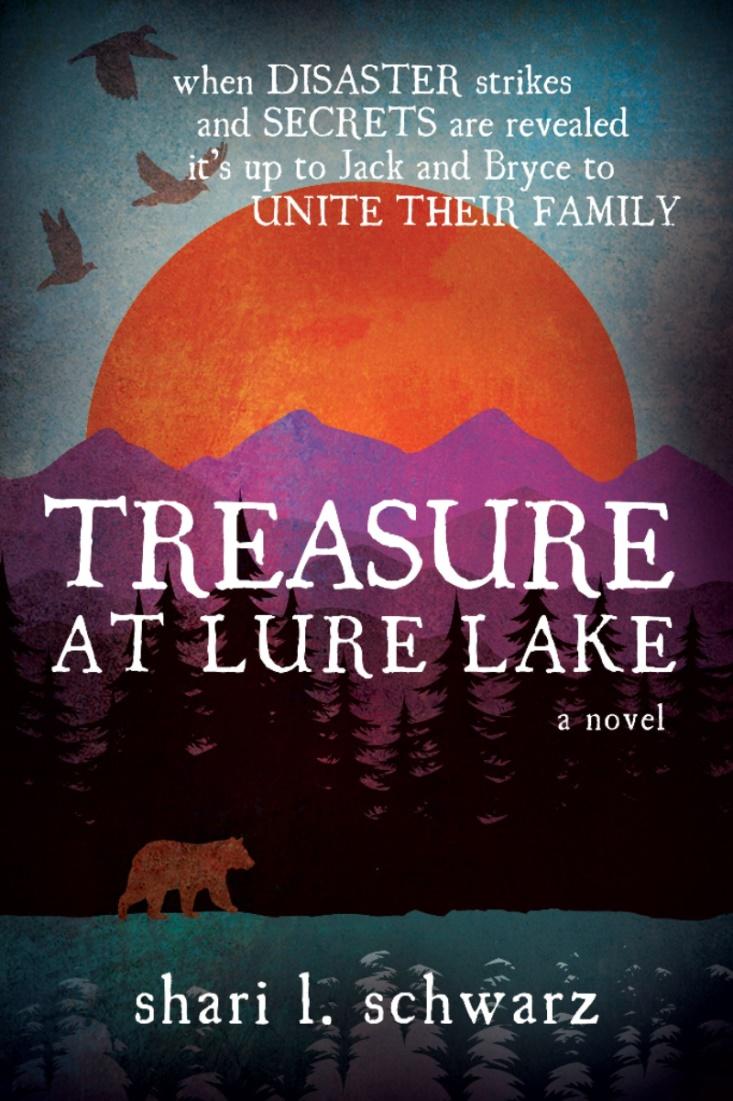
Wednesday Debut Interview: TREASURE AT LURE LAKE by Shari Schwarz

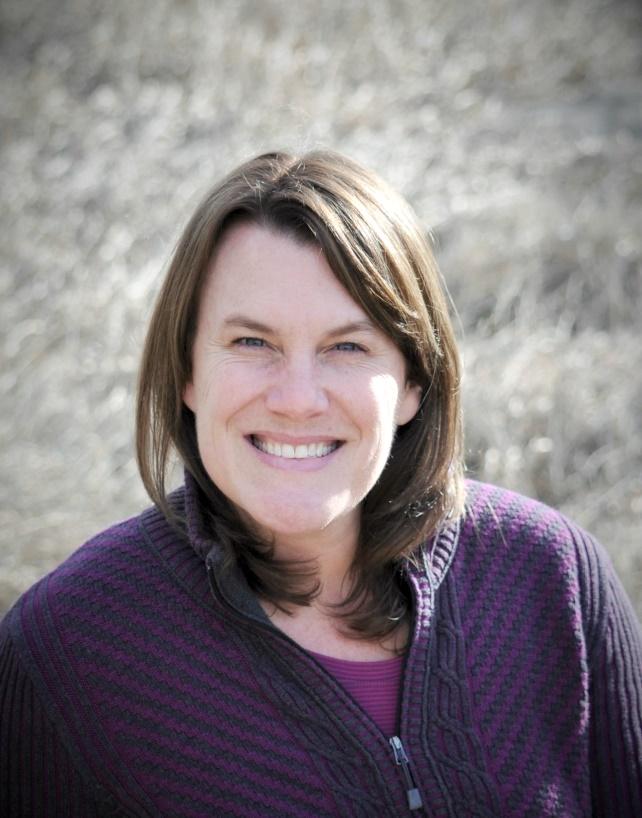
For today's Wednesday Debut Interview, Shari Schwarz will be talking with us about her debut MG novel, TREASURE AT LURE LAKE


First off, tell us a bit about yourself!
Thank you for having me on Operation Awesome! I love visiting this blog and even was a winner of one of your Mystery Agent contests a while back, so I’m a huge fan!

I’m a wife and mom of four boys ages 16, 14, 11 and 4. We live in Ft. Collins, Colorado and love being so close to the mountains where we like to hike and camp. I grew up in Batavia, IL, a suburb of Chicago, but my family would often vacation in Colorado, so I had a love for rock-climbing, mountain biking and hiking early on. Before I started writing in earnest, I coached gymnastics for several years, and then I got my teaching degree and worked as an elementary librarian and started a garden at the school. Now I stay home with our youngest, write and freelance edit.


Tell us about your book. What's your elevator pitch for TREASURE AT LURE LAKE?
If I pitch to someone who I know is a reader or writer, I say it’s HATCHET + IF I STAY. Otherwise, I say it’s about two brothers who have never understood why they don’t get along. They go on a backpacking trip into the wilderness with their grandfather, and when disaster strikes, the boys have to learn to work together to survive.


Is Lure Lake a real place? Is it based on somewhere in particular?
No one has asked me this yet! Lure Lake is not a real lake, but it is based on one of my favorite hiking destinations in the Northern Colorado Rockies: American Lakes. The hike up the trail that the boys take in the book is based on the Big South trail, but I set it heading in the opposite direction and further into the wilderness, because the Big South is too well-traveled. I needed something a bit more remote for Jack and Bryce.


Why middle grade? Is there a reason you choose to write to this audience?
I had been an elementary librarian previous to writing Treasure at Lure Lake, so I was working with this genre all the time. Plus, my own boys were reading MG books at the time, and I was reading a lot of them. I was hoping to write something that was a quick, easy read, but exciting at the same time.


Let's talk a bit about your publishing journey. How long as this process taken for you, from the first draft until publication date?
In total, it took two years and four months. I started writing the first draft on December 10, 2013. I wrote it in two months and to be honest, I had NO clue what was ahead of me in terms of revising, critique partners, and least of all, querying. But I jumped in with both feet, made a lot of mistakes, had a lot of wonderful people help guide me, entered a ton of contests, and met some amazing writer friends along the way. I kept a detailed log of all my queries and responses. In just over a year, I tallied up 100 rejections before my YES came! At the end of May 2015, I received a contract for publication through Cedar Fort. After a lot of questions to some of their authors and looking into the legal side of the contract, I said yes to them. It took me until September of 2015 to finish the first round of major edits with my acquiring editor, Ashley Gephart, and then my book comes out on April 12th, 2016. I’m a bit on the fast track with writing my first book, but I don’t have an agent, so it will be back to square one soon!


Every writer experiences some rejection and setbacks along the way. How did you learn to cope with them and move on?
Yes, there were some really hard times through the querying process and some rejections that stung much more than others. But the things that kept me sane were my critique partners who were amazing and kept cheering me on. Reading about other writers’ journeys here on OA and other blogs helped me realize that this isn’t easy for anyone. I also wrote two more books, several picture books and went for some long walks and hikes which helped clear my mind and gave me a new perspective.


What makes Cedar Fort Publishing and your editor(s) there a good fit for you and your book?
Everyone I have worked with at Cedar Fort has been exceptionally kind, responsive, skilled and helpful with each step along the way. They produce high quality books with gorgeous covers. My book is intended for national release which they are expanding into and not just for their LDS markets. The contract was great and they were willing to negotiate on a couple of points that I had questions on. I felt that they really had my best interest at heart. My editor, Ashley Gephart, is brilliant, kind and always got back to me with my hundreds of questions. I loved that my editor was so accessible.


Tell us about your cover. I love the rustic feel! How much say did you have in it? What do you want it to tell potential readers?
Thank you! I love it too! Before they ever created my cover, Cedar Fort gave me a questionnaire, wanting to know if I had thoughts, ideas, or opinions about how it should look. I love that I had some say in it, but it came out so much better than I could have imagined. I cried when I saw it. They sent me a few different versions to ask which my favorite was. There were also a couple of minor things that needed to be changed at that point. One was that the profile of the bear was a grizzly bear instead of a black bear. An easy mistake to make, but since there aren’t any grizzlies in Colorado, it had to be changed, which they were more than happy to do.

Was TREASURE AT LURE LAKE the original title you had in mind for this book?
No, it wasn’t. I had used the working title of THE LEDGE. I personally never intended for that to be the final title, but some people had become attached to it and reacted strongly when they saw the change. Cedar Fort wanted something more geared to the Middle Grade audience. But, I did work THE LEDGE into the book in the acknowledgments! I was happy about that.

Can you tell us about some of the things you’ve been working on between signing a contract for this novel and its release? What about the post-book-deal process been most surprising for you?
I have worked on another MG which I decided to shelve for now because my next big goal is to find an agent for my picture books. I’m pretty focused on wanting to go more in the PB world. I now agree with many writers that PBs are harder to write than anything. The most surprising thing about the post-book-deal process is how much work and how many people it takes to write a book! And book promotion…it is endless. Luckily, I have been able to team up with The Sweet 16s which is a debut MG/YA author group. I can’t imagine doing this alone! I thought that, because I am with a smaller publisher, I would have to do so much more work that the authors with large publishers have to do, but that’s not the case. We all have to promote our own books in many ways. Although Cedar Fort and the other publishers do some things to help, being in a debut group allows us to promote each other as well, which is wonderful!

How does it feel to finally have your book out in the hands of readers? Do you have any events planned you want people to know about?
It is, in equal parts, exciting, frightening, and surreal. I can’t believe that this is really happening at times. Other times, when my friends and family are celebrating with me, I’m thrilled that I’ve accomplished a life-long dream. And there are times when I am so nervous, because now my ‘baby’ is out in the world for people to read (yay!) and to judge (oh, no!). But my hope is that it will resonate with that one person who needs to read it. If that happens, it will all have been worth it!


Is there any other advice you'd like to pass on to others pursuing publication? Anything you would have done differently?
All the way through, I think it’s important to be kind and respectful and open to anyone who crosses your path. There are so many people who have helped me become the writer I am today…even that one guy who gave me a horribly mean critique on one of my first drafts. In the moment it was hard to accept, but I’ve learned to see what truth there was even in something like that. I’ve learned to be open to it all but not to let it all change who I am or the stories I want…no, need to tell. There are probably a thousand things I should have done differently, but when I think about redoing any of them, I think, no. Those mistakes are what got me to where I am today. They were all learning lessons, and hopefully, I can use them to help others in the future.


Excellent advice.
And, just for fun, which book in your own collection do you think your hero Bryce would most enjoy?

I’m going to answer this for both Bryce and Jack since the book is told in dual-POV. They both should read HATCHET by Gary Paulsen. Bryce would just plain-old enjoy it, the geek-survivalist that he is. Jack, on the other hand, really needs to read it to learn the survival skills from it.

Thank you so much for your participation in this Wednesday Debut Interview!

Wednesday, December 30, 2015

Guest Post: Small Press/Big Press Pros and Cons by Lawrence M. Schoen


I’ve been at this for a while, more than twenty years writing and selling stories and novels, and in that time I’ve had five books published from small presses (six if you count an early ebook from the days before there were Kindles). There are a lot of pros to being published by a small press, but there are also limitations, even when your publisher loves your work and you’re the biggest fish in that small pond. My new novel, Barsk: The Elephants’ Graveyard, is my first venture in the world of the big press. Specifically, it’s being published by Tor Books, the largest of our genre’s publishers in the US. Or to put it another way, I’m now the littlest fish in the biggest pond.

Accordingly, this seemed like a good topic for this guest post: my thoughts on the pluses and minuses of small and big presses. So, in no particular order, here we go:


AGENTS - I didn’t have one when I sold those books to the small presses I’ve worked with. Heck, in several instances I actually wrote the contract for my publisher (leaning heavily on my own experiences as a small press publisher and cribbing language from a variety of SFWA templates). And because I negotiated those book sales directly with each of my publishers, I didn’t need one. The resulting contracts only ran between one and three pages, but did require me to educate myself on all the points that an author needs to be familiar with before signing a document — in particular what rights are being acquired and when the work reverts.

By comparison, I managed to sell Barsk before I had an agent, and quite literally the same day I received an email from my editor saying he was buying the book I began beating the bushes for an agent. And a good thing too, because the Tor contract ran 34 pages written in dense lawyer-speak. More still, my agent ended up crossing out, altering, and/or amending more than half of the language in the document (yeah, I have a pretty awesome agent). After my other contract experiences, I consider myself pretty well versed on the language, but in this case that translated into knowing that I was woefully under-equipped to tackle a big press contract without professional help.


ARTWORK - I had a major amount of input on the covers for all of my small press books. I picked the artist and I always worked with her and the editor, providing feedback on early sketches and color schemes and all of that. The results were pretty fantastic (and here’s a shoutout to that incredible artist, Rachael Mayo!). More recently, with Barsk I had no input into the artist. Instead I had Tor’s legendary art director, Irene Gallo, who enlisted the astonishing (and award winning!) Victo Ngai to produce one of the best book covers I’ve ever seen in my life! I really lucked out here, and I have no explanation how or why.

Seriously, we’ve all heard the horror stories of mass market paperbacks showing blonde, blue-eyed characters on the cover when every person in the book is described as dark and swarthy. It’s a great thing to have influence in the cover of your book, and that may be one of the biggest perks/reasons of the small press (assuming you have that kind of relationship with your publisher), but there’s a lot to be said for the resources a big press can put behind a cover in terms of the talent they can attract.


TURNAROUND - In my experience, small presses have very small staffs, often as little as the one individual who started the thing. As such, they don’t do as many books, and the publishing calendar isn’t as full. Consequently, don’t be surprised if your book doesn’t need as much lead time and you see the bound result in your hands that much sooner. On the other hand, one of the reasons the process goes faster is because small presses aren’t set up with the same advertising schedules as big presses. Advance copies probably won’t be printed and sent out to other authors for potential blurbs with lead time to include them on the back cover, nor will a team of marketing people meet with bookstore buyers to pitch your book a year before its release date long before your final edits have even been turned in. Small press distribution isn’t as complex an issue either, and the sheer number of copies that will be printed (or which your publisher hopes to sell) are probably an order of magnitude lower at least. But wait, there’s more. Getting reviewed by the major players (by which I mean PW, Booklist, Library Journal, and Kirkus) can be harder. Some won’t review small press at all, or may require longer lead times than are practical for a small press, or insist on a physical galley which your publisher simply isn’t equipped to provide before the book is actually going to press.

In the world of small press where your editor and publisher are the same person, that person is also responsible for all the other myriad tasks, like submitting your book for review and for award consideration. That can be a good thing because you have fewer people to communicate with when decisions are being made, fewer links in the chain. The odds are good that every factor affecting when your book will come out will run much smoother (in terms of months or years!) compared to the timetable of a big press. On the other hand, it also means that when “life happens” your entire project can be derailed for months at a time. Trade offs.


MONEY - Let’s face it, most small presses are a labor of love — certainly the one that I run is — and while the publishers want to make a profit, the ones I’ve worked with also want this to be true for their authors. But it’s a business, and as is true of any business profits favor the company over the folks who supply the product (and this is true for big press as well). Neither size press is going to live or die on the fate of your book. It’s a numbers game and unless you have multiple books in the stream you don’t even have a seat at that table.

That said, in my experience even a low advance from a big press is going to be many times what you get compared to a big advance from a small press. I’ve actually sold foreign reprint rights on some of my small press sales that earned me more than the initial advance. Crazy, right?


RECOGNITION - Issues of money aside, every author I’ve ever met wants to be read. The odds of this happening are better with a bigger press simply because they have greater resources. Copies of your brilliant prose will find their way to a wider audience (this is also true of pirated copies!) and more people will see your work.


WHAT’S IT ALL MEAN? - Probably not a whole lot. Most of us aren’t in a position to choose, particularly at the early part (however you choose to define that) of a writing career. We tend to grab eagerly at whatever opportunities are put in front of us. And too we’ve bought into the narrative that it’s an uphill climb, that bigger is better, that the small press is just a stepping stone on the way to a lucrative big press contract.

I’m not disagreeing with any of that, but once you’ve grabbed that brass ring I think there are plenty of reasons for still publishing with a small press, particularly when it comes to projects that are too controversial or too specialized for a big press to want to invest in.

In the end perhaps the best thing I can tell you, big or small, is that you want to work with someone who believes in your story. This should also be true with respect to your agent. You want to be appreciated. You want to be valued for your vision and your talent. You want to be published by someone who sees you as a writer first and a potential profit second. Or at least, that’s what I want. And in my opinion, achieving that goal is more important than the size of the publisher who’s printing your book.

****

Lawrence M. Schoen holds a Ph.D. in cognitive psychology and psycholinguistics. He spent ten years as a college professor, and has done extensive research in the areas of human memory and language. This background provides a principal metaphor for his fiction. He currently works as the director of research and analytics for a series of mental health and addiction recovery facilities in Philadelphia.

He’s also one of the world’s foremost authorities on the Klingon language, and since 1992 has championed the exploration and use of this constructed tongue throughout the world. In addition, he’s the publisher behind a speculative fiction small press, Paper Golem, aimed at showcasing up-and-coming new writers as well as providing a market for novellas. And too, he performs occasionally as a hypnotherapist specializing in authors’ issues. 

In 2007, he was a finalist for the John W. Campbell Award for Best New Writer. He received a Hugo Award nomination for Best Short Story in 2010 and Nebula Award nominations for Best Novella in 2013, 2014, and again in 2015. Some of his most popular writing deals with the ongoing adventures of a space-faring stage hypnotist named the Amazing Conroy and his animal companion Reggie, an alien buffalito that can eat anything and farts oxygen. His latest work is a very different kind of book, an anthropomorphic SF novel that explores prophecy, intolerance, friendship, conspiracy, and loyalty, and a drug that lets you talk to the dead.

Lawrence lives near Philadelphia with his wife, Valerie, who is neither a psychologist nor a Klingon speaker.

Wednesday, September 23, 2015

Wednesday Debut Interview: Link by Summer Wier

It's time for another Wednesday Debut Interview! Today we're talking with Summer Wier, whose YA science fiction novel LINK is now available from Reuts Publishing!


Hi Summer! Thanks for joining us! Your bio says you're an accountant! An author/accountant seems like an unusual pairing; which came first?

Hi! Yes, I do some accounting, but am really more of a jack-of-all-trades. And this is definitely one of those chicken and the egg scenarios. If I look all the way back to high school, I was awful at math and loved reading and writing. Over the years, my work experience took me more in the direction of business management and I never really thought much about pursuing writing seriously. When I finished my MBA, I needed another "project" to fill my spare time and had the thought to write a book. The idea for LINK wasn't a solid one and took a while to really nail down, but once I figured out the "hook" I dove into writing! I still juggle both and probably always will!


Your debut, LINK, sounds like a little bit of sci-fi, a little bit of fantasy. How do you describe it to people in one sentence?
You're totally right, and I had a hard time picking one genre to go with as I was querying and pitching because it really does combine the two. There's a great line from the LINK press release that sums it up perfectly: LINK is the perfect blend of science, speculation, and adventure.


Do you have a favorite scene? Can you tell us a bit about it without spoiling too much?
It's hard to choose a favorite scene, especially without giving away any spoilers. I can say that my favorite parts to write were when Kira interacts with her star. I'd close my eyes and drift into those moments, imagining what it would be like if we were connected to those celestial objects and how it would sound and feel to be near them. I hope my readers get carried away in those moments, too!


I'll bet they will! What's the biggest change you made to this story between the first draft and final draft?
WORD COUNT. When I finished my book and started querying, I was a total newbie. LINK clocked in at 47,500 words when I first started sending it out. I quickly learned that it needed more meat. As I added and revised, I never made any major changes to the storyline overall, but the final version is around 67,500 words. I couldn't be happier with it!


LINK is the first in a series; did you know going into it that this would be a trilogy?
Yes. When I started LINK I always planned for it to be a trilogy, although I had absolutely no idea where it was going plot-wise. What I did know was that the first book would be very internal for the MC, solving problems close to home and her heart. As we progress to the second book, she looks beyond herself to help those closest to her, and by book three she has to focus on saving the universe (which maybe be groan-worthy to some, but it is what it is). So with that in mind, the sequel plots slowly unfolded! I'm still not 100% settled on how the third book ends, but it will come with time.


I'm always interested to hear about writers' processes. How long did it take you to draft this novel? And how long was it from that first draft until publication?
Me too! Every journey is unique. Drafting LINK was pretty drawn out. I started writing it right after I finished my MBA and got about 3 chapters in, then went to work full-time. My kids were also toddlers at the time, so it was more of "for fun" at that point. I'd guess that a year passed before I really had that nagging voice that I needed to do more with it, that it was a project I needed to finish. All the while, I'd have ideas popping into my head that I'd jot down for whenever I got around to writing. Anyway, once I decided it was a priority, I finished it in about six months (still working and mothering of course). But that was the glorious 47,500 word version! From that time, I queried and pitched (revising to add to my word count along the way) for 1 1/2 years before I had offers on it! Now it's scheduled to be released at the end of the month, a little over a year after I signed with REUTS Publications. What a ride!


Can you tell us about how you got your book deal with REUTS and what makes them a good fit for your book?
As I mentioned earlier, I started querying agents right out of the gate (with a book that was not ready) because, at the time, that was the only way I thought one could get published (outside of self-publishing which I also considered an option). As I learned more about the publishing industry, I discovered there were still other options like going through editors or directly submitting to presses. During this time, I did a lot of research into all of the options while trying to narrow down what I wanted and what would work for me. Now this may sound unusual, but part of me totally panicked at the thought of handing my baby over to an agent and letting a publisher have their way with it. On the other hand, though I have the background and knowledge needed to self-pub a professional work, I still wanted support as a debut author. I learned about REUTS from a pitch event, and though it was months before I subbed to them, I finally did. And even though they weren't the first to offer on LINK, I knew from the editorial letter and covers (and everything else I'd learned about them) that they were exactly what I wanted in a support team and publication partner.


It sounds like you found a great fit! Tell us about your cover. What do you want it to tell your readers about your book?
I absolutely love how my cover turned out. I had ZERO vision for what I wanted when I began working with REUTS' cover designer, Ashley Ruggirello. As we talked about options, I determined the focus should be on the lake setting (such a key element of the book and my premise) and should also include hints of the world it's linked to. So while it gives a great overall feel for my story, it really makes "sense" after you've read the book.


How are you planning to celebrate your book's release? Do you have any events you'd like readers to know about?
I don't even know what to expect that day, but I'd imagine it will be a social media frenzy! I am hosting an online release party on Facebook (Join here: https://www.facebook.com/events/940104586051537/) and will plan an in person event at a later time. Anyone and everyone is welcome!


What are you working on now that the work on LINK is all done?
I'm working like a mad woman to finish the sequel, LOST, which is tentatively scheduled to release Fall of 2016. I'm about halfway through, but summertime and an international move totally knocked me off my writing schedule. Time to get back to it! And for those who are interested, book three, LIGHT, is scheduled to release Fall of 2017.


Is there any other advice you'd like to pass on to others pursuing publication? Anything you would have done differently?
1.) Never give up. 2.) Join the Twitter writing community. I learned SO much just from being involved there and it also led me to find my closest writer friends! And like you said, every journey is different. I could come up with lots of things I COULD have done differently, but I learned a lot on my journey, things I might not have had I done it a different way. It may sound corny, but I'm exactly where I'm supposed to be.


And, just for fun: what do you think would be the best food to snack on while reading LINK?
Hands down, OREOS. (Which comes as no surprise to those who know me.)


Thank you so much for your participation in this Wednesday Debut Interview!
Thank you so much for having me! I truly appreciate your time!

--------

If you are an author looking forward to your debut sometime between December 2015 and June 2016 and are interested in being part of our Wednesday Debut Interview feature, please contact me at wendynikel at gmail dot com with your book title, category, genre, publisher, and release date.

Wednesday, August 26, 2015

Wednesday Debut Interview: A Clear Solution by Eric McFarlane

Today's Wednesday Debut Interview features Eric McFarlane and his humorous adult crime novel, A Clear Solution, which is now available from Accent Press.


Tell us a bit about yourself, Eric!
First, Wendy, thanks for having me on Operation Awesome. Ignoring the writing, I'm a chemistry graduate who worked for the same company for many years in the Pharmaceutical industry, latterly as laboratory manager. After redundancy I had several other jobs in the sector before throwing in the towel and starting a business selling stamps over the internet. This is how I currently find an income, not, sadly, through my writing.


Tell us about A CLEAR SOLUTION!
The book’s unlikely hero is Daniel Dreghorn, chemistry technician, a man with the knack of being in the wrong place at the wrong time. A series of deaths are incorrectly attributed to him and as a result a clutch of his crazy colleagues and acquaintances believe he may be able to help them with their own nefarious schemes. These to include unwanted spouse disposal, exam paper theft and drug production.

In a single sentence: If it can happen it will.


The main character of A CLEAR SOLUTION is a lab technician — have you had experience working in science labs?
Most of my working life has been spent in laboratories. It was a natural background for my first novel.


Between chemical labs, homicidal bank managers, and crime... what part of this book required the most research?

I must admit to always keeping research to a minimum in anything I write. I knew I was ok with the setting. Homicidal bank managers? – well, who doesn’t know one of those? I did some research into the effect of cyanide poisoning but for the most part I just made it up as I went along.


Let's talk a bit about your publishing journey. How long as this process taken for you, from the first draft until publication date?
A long time! The novel was started more than 15 years ago as an antidote to redundancy. I also began to write short stories. Then I read a comment somewhere to the effect that there was no market for comedy. So why am I writing comedy? I dropped A Clear Solution and started writing a thriller. This in turn was dropped when I had an idea for a novelisation of an SF short story I had written. Then, unbelievably to me now, I launched into yet another novel length project. At this point I stopped and gave myself a shake. You’ve got to finish something. So A Clear Solution it was, being the project nearest completion.

After more months of editing I finally found enough courage to send out to a couple of agents with the inevitable result. Over the next few years it was turned down by more than 50 agents and publishers. Although there were a few positive comments it was dispiriting and I put A Clear Solution aside. During this time I had completed my crime thriller and started to concentrate on finding a market for that. Then I heard about Accent Press in a writing magazine and that they were looking for crime novels. A Clear Solution is firstly a humorous novel but crimes happen in it so why not. I sent it away and forgot about it.

I remembered about it during a holiday in Australia when checking my e-mails. There was a note from an Accent Press editor who was reading my submission and liked it. Could I send the rest?

Could I? Well no, I couldn’t, not until I returned to the UK three weeks later but that didn’t seem to be a problem. The surreal element was that this editor, working for the Welsh Accent Press, was currently living not 50 miles from where I was staying in Melbourne. Now it’s on the shelves. As I say, a long time!


Wow! That is quite the journey! Every writer experiences some rejection and setbacks along the way. How did you learn to cope with them and move on?
If you’re going to write for publication then you’re going to be rejected. It’s harsh but that’s how it is and every writer has to find their own way to cope. Personally I’ve never had a problem with coping. It’s your fiction that’s being rejected not you. If you try to understand the writing industry as it is now and the economic situation you’ll learn not to take it personally.


What makes Accent Press and your editor(s) there a good fit for you and your book?
Accent Press are I believe among a growing number of smaller publishers who are able to take a chance on novels which are not mainstream and would be turned down by the larger companies.

Tell us about your cover. It's been awhile since I took chemistry, but I like how the title is written a bit like a chemical equation. Who designed it? How much say did you have in it? What do you want it to tell your readers about your story?
The cover came from Accent Press, I had no hand in it but thought it was great as soon as I saw it. It includes many aspects of the novel; humor, chemistry and murder.


Was A CLEAR SOLUTION the original title you'd had in mind for this story? If not, tell us about how it came to be titled that.
A Clear Solution was my title for the book from the start although I didn’t think of it until the first draft was finished. Accent were happy with it. It has several meanings which are combined by the end of the novel. To say any more would be a spoiler.


Can you tell us about some of the things you been working on between signing a contract for A CLEAR SOLUTION and its release? What about the post-book-deal process been most surprising for you?

I had already completed a sequel to the novel when it was taken up so am doing final edits on it.

I also have an SF novel I’d love to see published and have been tweaking that. I’m also in the middle of a comedy crime novel with a female lead character. I’ve been surprised at how much time book promotion has taken up, seriously digging into writing time.


How does it feel to finally have your book out in the hands of readers?
It feels fantastic. I always believed in the book, the friends who had read it liked it but now I know for sure it was good enough to be published and that’s a great feeling


Is there any other advice you'd like to pass on to others pursuing publication? Anything you would have done differently?
Don’t give up! See my comment above about rejections. But DO listen to advice. Actively look for criticism and if several people say the same thing they are probably right so act on it. When you’ve finished something don’t concentrate exclusively on looking for publication. Write something else. The more you write the better you get at ANY stage of your career from beginner to best-seller.


And, just for fun, since the blurb mentions a particular doughnut that may not be all it seems to be, what's your favorite type of doughnut?
Coated with sugar and oozing cream of course. Ah that reminds me, coffee break.


Thanks so much for joining us!

Readers of crime & humor -- pick up Eric McFarlane's book here: http://amzn.to/1FNkp38

---------------------------

If you are an author looking forward to your debut sometime between December 2015 and June 2016 and are interested in being part of our Wednesday Debut Interview feature, please contact me at wendynikel at gmail dot com with your book title, category, genre, publisher, and release date.

Thursday, July 30, 2015

Guest Post: Apex Editor Jason Sizemore on "Publishing Myths: You Need an *In* to Get In

Publishing Myths: You Need an *In* to Get In

I’ve been thinking about the publishing business even more than usual lately due to the release of my second book, For Exposure: The Life and Times of a Small Press Publisher. In the book, I lay bare the ups and downs of running a small press and pull back the curtain on some of the more lascivious details of my ten years as editor. After somebody reads the book, inevitably I’m asked questions related to the book industry in general.

There is an incredible the amount of misguided opinions and mythical beliefs about publishing that writers and non-writer civilians hold as gospel. Perhaps the worst of these is that writers and editors, as a whole, are making money hand over fist. My own father, who I’ve spent many hours explaining how Apex functions as a business, still believes that I am a dragon hoarding away my publishing gold coins and making a conscious decision to eschew living high on the hog for a life of vanilla middle class.

Dad, you should know me better than that. I’m a high maintenance country boy!

Alas, I think this belief is a lost cause. No matter what I say, no matter what the facts are, people are still going to believe that writers and editors all make the big bucks. Instead I’ll focus on a myth I hope to push a stake through and actually have it stick. The myth that goes like this: in order to be published, you need to know somebody in the business.

I’m sure this belief started early in publishing history. I can picture it now: a lowly writer-type approaches Johannes Gutenberg after he invents the printing press.

“Sir, would you kindly look at my manuscript? It’s a historical romance that is a cross of the Ming Dynasty and the adventures of Joan of Arc!”

And this one lowly writer, having her work published by Gutenberg, then gives Gutenberg a good word about her friend. So begins a long line of ‘begats’ similar to the Bible’s unrolling of bloodlines in the first chapter of Matthew.

Having your book (or short story) published isn’t akin to cracking the Voynich Manuscript. The key is a simple one: have a great idea and then write a good book.

Notice I didn’t say you have to write a ‘great’ book. Don’t worry about building a masterpiece out of your first publication. Very few in the world will write a cultural touchstone like To Kill a Mockingbird or Doctor Zhivago on the first try. If you know how to plot a book and write sentences that make sense and then wrap those skills around a knockout idea for a plot then you’ll be in business.

Perhaps saying this will get me trolled…but I’m a cold-hearted editor, so I’m going for it—two of our generation’s most popular novelists broke in with first novels that succeeded based more on plot and less on writing mechanics. Stephen King’s Carrie is an amazing first novel. So is J.K. Rowling’s Harry Potter and the Sorcerer’s Stone. Both rely on standard tropes, but the fascinating and engrossing tales that spin out of these books kick-started literary movements on their own.

Having said all that, I won’t lie and tell a writer that having an “in” won’t help. Sometimes, it does. Perhaps a writer pal of yours has a great relationship with his agent. The agent isn’t taking on any new clients, but agrees to look at your manuscript based on the recommendation of your pal. Or you make friends with a popular author leading a writing seminar who puts in a word for you at a short fiction zine.

In most cases, having an “in” will get you a look, but that doesn’t guarantee you a sale. You still have to succeed on the strength of your work. If you feel you have a great idea, I want to encourage you to use any “in” you might have. Grease the wheels of success all you can, because the road is bumpy and there is a lot of traffic out there.

In For Exposure, I recount my encounters with a real person I pseudonymously name Hickory Adams. Hickory is an unpleasant individual who has found me at half a dozen conventions over the years, each time pitching me an awful sounding novel. Each of which I’ve passed on. Over the years, the chip on his shoulder grew. He’s accused me of favoritism. He’s accused me of only publishing my friends. The last time I met him, he bragged to me that he had sold his books to a real publisher. One that he found based on a recommendation by a friend who happens to work with the publisher. He said gatekeepers like me were censoring the hard work of writers like him, even though he’d just told me that his friend worked for his publisher. I could only roll my eyes and find a way out of the conversation post-haste.

Don’t be like Hickory Adams and allow the hucksters of the internet to fill your head with nonsense about gatekeepers and needing to know somebody to be somebody. The profession of writing often rewards hard work. Sure, luck can be involved, but don’t underestimate the value of persistence and patience.

ABOUT THE BOOK:

For Exposure: The Life and Times of a Small Press Publisher
Apex Publications
182 pages
ISBN: 9781937009304

http://www.amazon.com/Exposure-Times-Small-Press-Publisher/dp/1937009300


ABOUT THE AUTHOR:

Born the son of an unemployed coal miner in a tiny Kentucky Appalachian villa named Big Creek (population 400), Jason fought his way out of the hills to the big city of Lexington. He attended Transylvania University (a real school with its own vampire legend) and received a degree in computer science. Since 2005, he has owned and operated Apex Publications. He is the editor of five anthologies, author of Irredeemable, a three-time Hugo Award loser, an occasional writer, who can usually be found wandering the halls of hotel conventions.

Thursday, July 17, 2014

SHIFTING PUBLISHING POWER STRUCTURES: Guest Post by Melinda Friesen

Writers have to make huge decisions about the future of their creations and without a solid analysis of their options they may end up with regrets.

This blog post is meant as a conversation starter. I hope to get writers asking themselves and the publishing industry some tough questions so they can better understand the industry and their place within it.

Technology is dramatically changing power structures in traditional publishing that have existed for centuries. This upheaval has resulted in a lot of uneasiness for publishers and authors.

As power structures shifts those in power seek to stay in power. This is not meant to vilify the publishing industry. No one enjoys losing their power. If you have a toddler or teenager you’re familiar with power struggles in your own home. Child seeks to gain power, while parent seeks to maintain theirs. This same struggle goes on in politics and in business. Let us never forget that while writing is an art, publishing is a business.

Michael Foucalt, prominent sociologist and author of The Archaeology of Knowledge, urges his readers to ask, how do we know what we know and where does the knowledge come from? To frame this for writers: how has our knowledge of the publishing industry been constructed and by whom? Do the people who disseminate the information stand to benefit from that information and in what ways?

After I completed my third manuscript, I set out on this publishing quest. I read countless blogs, websites, and books on the subject. This research led me to believe that the most profitable, legitimate, respectable way for me to be published would be to acquire a literary agent who would then land me a publishing contract with a big six publisher. From my reading, I also concluded that if I wrote a quality manuscript and presented it in a professional manner that I would have a strong chance of accomplishing my publishing goals.

Over years of research, sending out queries, and talking to other writers, I realized a couple problems with this approach. First, the people sharing the information, largely agents and editors, stand to benefit from thousands of writers sending their materials. Second, the information I received led me to believe that there’s a sort of literary Darwinism—that the best will simply rise to the top. This might be valid if there were equal access to the publishing industry for all writers, however, that is not the case. We know that advantages exist for previously published authors and for those who know advantageous industry insiders.

As a new writer, statistically, my chances of landing a literary agent are low. The following stat is highly anecdotal, gleaned from following agents on various social media sites. My research has shown that new writers have a 1 in 10,000 chance of being signed by a literary agent. And being signed by an agent does not guarantee a publishing contract.

Last fall at a conference I attended, I sat in a session with a well-known Canadian literary agent. She spoke of how subjective her process is and how there is no rubric for choosing best-sellers. She said that what intrigues her today, she may hate tomorrow. If someone messes up her latte that morning, her foul mood may result in rejections for everyone who queries her that day. I appreciated her candor.

My most recent personalized rejection came from an agent, who had requested a full; she wrote, “I am currently taking on new clients quite selectively, focusing exclusively on work that really stirs my passions.” She went on to say she didn't have the requisite enthusiasm for my work in this “tough market.”

This all moves the publishing venture beyond quality of story and quality of writing and into the realm of luck.

But, here’s the thing. Many authors still stand by the get-an-agent, get-an-editor method of publishing. And I’m not saying that’s not the way to go, but in an era where writers have so many choices, we’d do well to ask the necessary questions. Are we just towing a line and helping those in power to maintain that power? Is that power structure benefiting me as a content creator?

My writer friends pushed me to tackle a tough question. Why was I continually submitting to literary agents? You see, in Canada, very few writers have agents. It’s just not the way things are done by mid-list authors here and they do just fine without them. That’s when I started asking more questions.

• What exactly can an agent do for me?
• What can a big six publisher do for me?
• Are they going to funnel marketing time and dollars to me?
• Will they be driven to make my book the best it can be?
• Will an agent with bigger money clients be willing to spend their time and resources on me?

That’s when I started looking at small publishers.

In October 2014, my first novel will be published by Rebelight Publishing Inc., a small Canadian publisher, and so far I’ve had a fantastic experience. Sure I can’t brag about getting chosen by amazing agent X or having my manuscript picked up by big six editor Y, but I have a fantastic editor who cares about my work, a dedicated marketing team, and a designer that asked me, “What’s your vision for the book cover.”

Publishing is changing and as authors we are in an excellent position to benefit from these changing publishing power structures—if we keep an open mind and ask the right questions.

Have you had to re-examine your approach to publishing? Have you questioned the system? What tough questions have you asked yourself or the industry?

****


Melinda Friesen writes short stories and novels for MG, YA, and NA. She lives in Winnipeg, MB Canada with her husband and four children. She blogs at www.vastimaginations.com and at www.melindafriesen.com. Her first YA novel, The Enslavement of Rielle James, is due for release October 2014 from Rebelight Publishing Inc. www.rebelight.com 

Sunday, November 24, 2013

Another Spin of the Wheel

Many blog posts have come and gone while I have waited to share this news, and now I finally can. From Publishers Marketplace:
Kell Andrews’s DEADWOOD, when an ancient tree sends a message through carvings in its bark, seventh graders must break a code and a curse to save their doomed town…because the message isn’t just about the tree, to Jennifer Carson at Spencer Hill Press, by Kathleen Rushall at Marsal Lyon Literary Agency.

Woohoo! A new contract for my debut novel, DEADWOOD. But yes, DEADWOOD was contracted before. As one of my friends quipped, it's a book so nice I sold it twice.

I wrote about the story on my blog here -- how I took a chance on a new small press, and how even though the publisher folded, the chance still worked out for the best. My wonderful editor Jennifer Carson offered me a new contract at Spencer Hill Press, where she is now senior editor.

I took a good chance. But you know what? It was a good chance even before I got the new contract. I'm really proud that I put my book through a small press, even thought I knew it was a risk.

Certainly all small presses aren’t the same. There is a wide range in the category — new and old, tiny and mid-size, traditional, e-only, and POD. Some offer advances, and some don’t. Some are genre specialists, and others are literary fiction vanguards. Some are open to unagented submissions, and some are closed. Some have great bookstore distribution, and others sell chiefly online. There is a range of quality in acquisitions, editing, marketing, and covers, from the highest standards to strictly amateur. Inevitably, some will grow into the big presses of the future (look at Spencer Hill!), and others will disappear. Yep, a lot of them will disappear.

So I did my research. I had realistic expectations. And most importantly, I had a fair contract and I was working with people I trusted.

And lucky me -- I still am. I get work with Jenn again, and my middle-grade contemporary fantasy will reach new readers when the new edition is re-released by Spencer Hill, a fast-growing, dynamic publisher with greater reach and distribution than before.

Ready for another spin of the wheel...