Showing posts with label writing for children. Show all posts

Tuesday, June 20, 2023

Children's Books Explorations: Concept Books

What is a Concept Book?

A type of picture book made to explain or introduce an idea or activity. This includes the alphabet, counting, colors, times, and shapes.

(Quote Source

The Concept Books I read: 

  1. Mouse Paint by Ellen Stoll Walsh
  2. I Feel! A book of Emotions by Juana Medina
  3. Mouse Magic by Ellen Stoll Walsh
  4. Let's Say Hi to Friends Who Fly! by Mo Willems
  5. What's Your Sound, Hound the Hound? by Mo Willems

What I learned: 

I have taken fine art courses at undergraduate programs, and I still struggle with the color wheel when it comes to tertiary colors. I was impressed by how Mouse Paint and Mouse Magic by Ellen Stoll Walsh introduced art concepts of colors. I even learned something! I'm rather sad that I did not read them as a child.

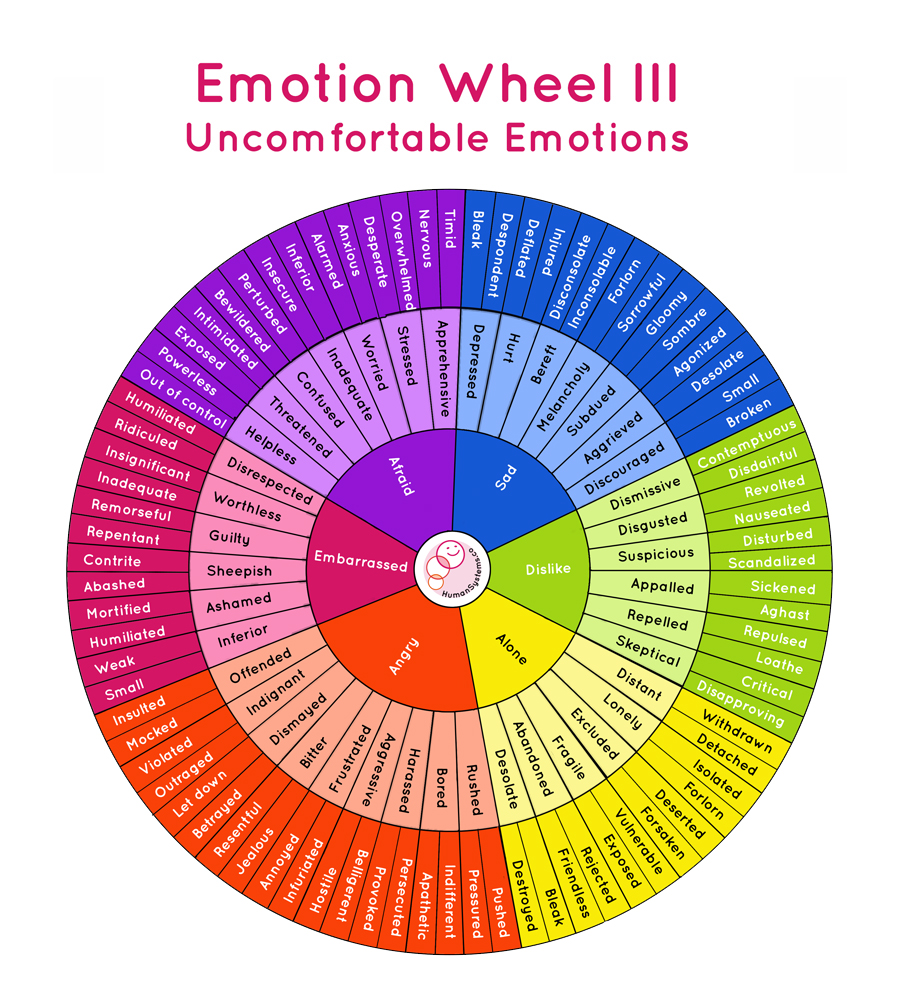
I Feel! A book of Emotions by Juana Medina showed a variety of emotions with facial expressions and colors. I thought the order of emotions was interesting. It was fascinating to see that there are several emotion wheels. I have certain emotions that I connect to specific colors, and I really like the shades used in the following wheel. Are there certain colors that you associate with emotions? Is anger only red? Is joy only yellow? 

The work of Mo Willems was musical and lyrical. I can imagine how much fun it would be to read with a child. Friends was a concept in both Let's Say Hi to Friends Who Fly! and What's Your Sound, Hound the Hound?. It was neat to see how the characters moved on the page and interacted with each other.

Do you have a favorite Concept Book? And what colors do you associate with emotions? Comment below.

Tuesday, February 7, 2023

Children's Books Explorations: January (Board Books)

What is a Board Book?

These are usually made for newborn babies to around 2 years old. They have thick paperboard pages to combat wear and tear from baby hands and mouths. There may be more interactive elements to these books such as cloth, noise, or popups to engage a baby or allow the reader to make the story more exciting. Our Hello Genius books are favorites among toddlers because of their fun stories with familiar animals, repetitive text, and bright, energetic illustrations. Parents and caregivers love them because they are the perfect guides for a child’s first steps in social emotional learning, self-care, and manners. 

(Quote Source

The Board Books I read this month: 

  1. Jasper & Joop by Olivier Dunrea
  2. Peter Pan by Jennifer Adams, Alison Oliver
  3. Classic Lit A to Z by Jennifer Adams, Alison Oliver
  4. A Little Princess by Jennifer Adams, Alison Oliver
  5. My First Passover Board Book by Claire Lister
  6. Making Faces by Abrams Appleseed
  7. The Secret Garden by Jennifer Adams, Alison Oliver
  8. The Jungle Book by Alison Oliver, Jennifer Adams
Yes, I read more than five! I am shocked because I was behind in my other goals for January. 

What I learned: 

Of course there were illustrations, and thicker pages to withstand small fingers helping to turn pages. I learned that even subjects of Passover, emotions, and literary classics can be a board book. It broadens my scope of what I want to write when I create my own board book. Any story can be a board book.

Do you have a favorite Board Book?

Tuesday, January 17, 2023

The History of Children's Books


What is the first children's book? Who wrote it?

There is no clear answer on who wrote the very first children's book that we are familiar with today (board books, concept books, etc.) that I found in my research, but by the end of the 18th century, children's books publishing was definitely flourishing.

Prior to the children's books we know today, children, of course, learned to read with books of fables, fairy tales, and basic primers. Or by looking at a manuscript of letters and numbers. Much like we do today with teaching the next generation to read.


Early topics of the stories were about morals and manners, often told with riddles and rhymes. How to behave, to not lean against surfaces, to be seen and not heard. You know, not the fun stuff, but part of socializing and setting expectations of behavior in society. Then you get to the fun stories and characters that are more familiar today.

One of the earliest children's books cited is by Lydgate.
"Puer ad Mensam is ascribed to John Lydgate, about 1430, and is in the Lambeth Manuscripts. The Babees Book, in the Harleian Manuscripts, was written about 14th, for children of royal or noble blood then serving as pages in palace or castle. The English version is translated from the original Latin, but both author and translator are unknown."

    (Quote Source

The most common celebrated "father" of children's books is John Newbery, who wrote A Little Pretty Pocket-Book Intended for the Instruction and Amusement of Little Master Tommy and Pretty Miss Polly, published in 1744. It was accompanied by a pincushion for girls and a ball for boys. 

While there is no clear answer on who wrote the first children's book and what the first children's book was, it was fascinating to read some rhymes and themes that were common in the first "wave" of children's book publishing.

In the coming months, I'll be sharing what I learn about children's books. What burning questions do you have about children's books?


For more in depth information about the history of children's books, check out the Atlantic and British Library.

Tuesday, January 10, 2023

Why Children's Books?


There is just a certain magic children's stories. Some of my favorites are ones like Beauty and the Beast, Oh, the Places You'll Go, and The Giving Tree. I have many, many favorites, but why do I like them so much? Is it because I read them a zillion times growing up? Is it something about the characters or the story itself? Or the fact I can read it twenty times in a day?

Why are part of my 2023 goals focused on reading, and writing, children's books?

  1. Write at least one children's book in each category (board book, concept book, early reader, wordless, transition books, narrative nonfiction, etc.)  
     1. Read at least 10 children's books in each category (board book, concept book, early reader, wordless, transition books, narrative nonfiction, etc.).

It is something that I've been thinking about for a while. There is a mystery to how books so small and with so few words can be such a big part of why I read and write today. Maybe focusing on children's books will make my 50 K novel and graphic novel projects become more manageable.

Not that I want the mystery to be 100% solved, mind you. I want to explore children's books and see if I can write them. 


What are some of your favorite children's books?

Tuesday, January 3, 2023

Suzanna's Writing and Reading Goals for 2023

It is that time of year where I make some new goals. Hooray! I absolutely love making writing goals.

While I did not quite finish unpacking all of the boxes from my move, I did make significant progress. I am hopeful that in the next two-ish months, I will not have a single box in sight because they will comfortably reside in the closet or the recycling center. I found a lot of surprising things (two booklets of stamps!) and stuff that I am embarrassed to share on the internet. Cough. Needless to say, not everything survived and might be in the landfill or recycling center.

Here are my writing goals for 2023:

  1. Write 100,000 words in 30 days as part of a NaNo project (Camp in April, Camp in July, or NaNo in November)
  2. Write at least one children's book in each category (board book, concept book, early reader, wordless, transition books, narrative nonfiction, etc.)  
  3. Write at least one new short story.
  4. Edit at least one short story from my undergrad days.
  5. Write at least one new poem each week.
  6. Put together a poetry collection.
  7. Work on the draft for writing a nonfiction book about the day job.
  8. Work on the draft of the graphic novel.


Of course as a writer, I also need to read.
  1. Read at least 10 children's books in each category (board book, concept book, early reader, wordless, transition books, narrative nonfiction, etc.) and focus on one category each month and then rotate. 
  2. Read at least one book of short stories each month. 
  3. Read at least one book of poetry each month. 
  4. Read at least one literary magazine each month. 
  5. Read at least one nonfiction book regarding the day job each month.
  6. Read at least one graphic novel each month. 
  7. Read a total of 150 books in 2023. 
  8. Participate in every Kindle Reading Challenge this year and get at least 90% of the badges. (The hardest one for me is the perfect month where you read every day in the month.)
What are some of your writing and reading goals for 2023?

Monday, February 17, 2014

All Cons Great and Small


My last post, Conference Season Is Upon Us, mentioned some strategies for finding financial help to attend cons (conferences and conventions).

Today I'm going to list some cons, and I know for sure that I'm bound to miss some, so feel free to link to your overlooked favorite in the comments!

In no particular order, here are some venues you might want to check out:

Mysteries:

Bouchercon: Murder at the Beach, Nov. 13-16, Long Beach, CA 
Sisters in Crime have a number of regional and national events throughout the year
Crime Writers Association offers the same sort of events in the UK
Mystery Writers of America holds a full day MWA University

Romance:
Romance Writers of America has a national conference as well as regional chapter events
RT Booklovers Convention brings together romance writers and their fans

Children's, including YA:
Society of Children's Book Writers and Illustrators has national and regional events throughout the year
YA Fest, April 19, Easton, PA
UtopYA Con, June 20-22, Nashville, TN
Austin Teen Book Festival, 2014 date TBA (in Sept 2013), Austin, TX
YALLFest, 2014 date TBA (in Nov 2013),Charleston, SC

Horror:
World Horror Convention, May 8-11, Portland, OR

Science fiction/fantasy, including steampunk:
Hal-Con, Nov. 7-9, Halifax, Nova Scotia
Science Fiction & Fantasy Writers of America's events include the Nebula Awards weekend
Comic-Cons happen in virtually every big city now, but the biggest are in San Diego and NY
DragonCon, Aug. 29- Sept. 1, Atlanta, GA
CONvergence, July 3-6, Twin Cities, MN
Broad Universe promotes sff/horror writing by women and has an extensive calendar of cons*
FOGcon, March 7-9, Walnut Creek, CA
RavenCon, April 25-27, Richmond, VA
Megacon, March 21-23, Orlando, FL
Steamcon VI, Oct. 3-5, Bellevue, WA
Gaslight Gathering 4, May 2-4, San Diego, CA
The Steampunk World's Fair, May 16, Piscataway, NJ

*I seriously mean "extensive calendar of cons"--I should have just started here, and it would have saved me a lot of researching. A list of more steampunk cons can also be found here.

Online Cons:
IndieReCon, Feb. 25-27, with a focus on indie/self publishing
WriteOnCon, dates TBA (last year it was in Aug), with a wide range of genres & categories

Feel free to add your favorite con in the comments!

Sunday, March 3, 2013

Tuning Your Ear


I volunteer to coach young writers at my daughters school, and yesterday I helped teach a writing workshop at the local library. I did it to help the kids, but it has tuned my ear for what kids sound like.

There's a reason so many teachers write for kids -- they have so much source material! But for the rest of us, working with children is a great way to re-tune our ears and eyes to stories. Even for parents, meeting kids helps expand story ideas.

It's not like I don't spend time with kids -- I have my own daughters, and they have friends. I have nieces and nephews. But the wider world of kids sounds very different than just the one I know well. Real kids sound so much younger and naive than I expect sometimes. Other times they sound so much older and smarter than I think they will be. And most individual kids will fit in both categories at different times.

I read a lot in my genre. I love kids' books -- picture books, easy readers, middle grade, young adult. It's a great way to learn about how to structure a story for each age group. It's not a great way to learn how kids sound, feel, or act -- many books get it exactly right, but emulating other writers is a game of telephone. Eventually, what you get at the end doesn't sound like much like a real kid at all. And there are certainly a lot of books like that on the shelves too.

It's not like kids even want books that sound exactly like they talk -- the hesitancy, the silliness, the lack of continuity sometimes. There's a reason actors on Disney and Nick sound like they do, which would be nothing like kids at all if they weren't imitated so much.

So wittier and more articulate versions of themselves are fine, as long as they would be recognizable as the juvenile stage of human development and not a child-sized puppet mouthing adult words, feelings, or sitcom badinage.

No experience is universal, so the more we interact with young readers, the more we will find those particular experiences that resonant with many readers. I think all writers should do it -- all agents and editors too -- if we want to create the stories where kids recognize a version of themselves, if we write the stories they really want to read.