Wednesday, November 18, 2015

Wednesday Debut Interview: Grudging by Michelle Hauck

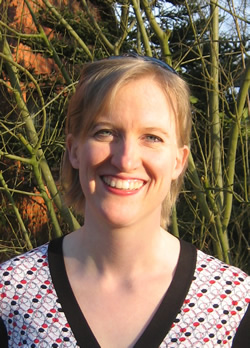
Our debut interview today is Michelle Hauck, talking about her debut adult fantasy novel, GRUDGING.


Thanks for agreeing to be interviewed at Operation Awesome and congratulations on your adult debut! Tell us a little bit about GRUDGING!
Let me try to avoid the blurb and put it in my own words. A city-state in the desert is under siege from an overwhelming army. Other city-states have already burned. Their only recourse is to seek assistance from their traditional enemy—the witches. It’s a tale of four characters: A young man, Ramiro, who hero worships his brother. The city Alcalde trying to keep his people alive. A girl, Claire, who wants to know more about her magic and life outside her swamp. A priest who lands in the middle of the enemy. Can they come together to beat back the flames and save a people?


Worldbuilding is often a huge part of what sets fantasy novels apart. Can you tell us some aspects of GRUDGING's world that makes it unique?
The world of GRUDGING is based on medieval Spain with Moorish aspects, which means a form of religion based on Catholicism, with a twist of course. It’s set in a desert and a swamp to make sure the terrain varies. And it includes three completely different cultures to keep the plot complex. You have witches who sing to bewilder the mind. An enemy religion of blood sacrifice to appease a dark god. And a weapon that can kill with just a touch.


You mention witches that can sing to bewilder the mind; that sounds similar to the ancient myths of sirens. What sort of research did you do and how much of your sirenas are based on the Greek sirens?
I did research on other things, such as armor, but did nothing on sirens. I wanted my sirens to be different. For one they live in a swamp and not the sea. They use their magic to repel men, not lure them. The Women of the Song just want to be left alone. They will use their magic to defend themselves if needed and have a variety of tricks up their sleeves.


Let's talk about your writing process. How long did it take you to draft this novel? How long from that first draft until publication?
Hmm. Let me think. I started GRUDGING in November of 2014 as a NaNoMoWri project (write a book in a month). I don’t usually try to write 50,000 words in a month because I know that’s not possible for me, but I needed the motivation to get started. I did manage ten thousand words. Then it took me eleven months to finish the draft and have my critique partners read and send feedback. My agent sent more feedback and some larger revisions. It went on submission in February 2015 and sold at the end of May. So it’s published just a year after I started it!


Can you tell us about how you got your book deal with Harper Voyager and what makes them a good fit for your book?
My agent sent GRUDGING out on submission to about eight editors. Harper Voyager was one of those who requested quickly, then we waited about two months before they offered for their Impulse line. I love that Harper Voyager is devoted to science fiction and fantasy, and they were specifically looking for more epic fantasy at the time. Fantasy is all I write and read, so I feel like I really fit in.


What about the title? Was GRUDGING the original title you had in mind? How did it come about?
GRUDGING is my original title when I started the manuscript during NaNoMoWri in 2014. I pictured two ancient enemies having to work together to throw off a larger and newer adversary. Claire and Ramiro wouldn’t work together happily. So much of the story is the progression of that relationship.

Operation Awesome posted on your cover reveal last month (LINK). How did your reveal day go?
We just had a big reveal on October 15th. Rockstar Book Tours hosted it and it included a giveaway of three e-books. I was amazed at how many people signed up to put GRUDGING’s cover on their blog! It was so exciting!


Tell us about your book launch! What, where, when, and how do you plan on celebrating?
Rockstar Book Tours is doing a virtual release tour for me also. They will arrange interviews, guest posts and reviews online. The print book comes out about six weeks after the e-book and I’ll do live events then. Other than that, I plan on going out to dinner, having a big dessert, and just having a lovely day on November 17th. Let’s see if I can resist checking Amazon sales numbers. Not sure if I can help but peek at them.


GRUDGING is book on in the "Birth of Saints" series. Can you give us any hints about what's to come? How much of the series is written at this point?
The second book is tentatively titled FAITHFUL. I’m about fifty percent done with the first draft. I can say that things will not be getting better for Ramiro and family, though he and Claire will get closer. There will also be a new point of view scenes from a familiar character, Teresa. And that reminds me, if you enjoy the GRUDGING and want to see what happens to Teresa in that book, I have a deleted chapter I’ll be giving away to anyone signed up for my newsletter.


Is there any other advice you'd like to pass on to others pursuing publication? Anything you would have done differently?
Research about agents and publishing first. Know how to write a query letter and what word count is desired for what genre. Many people don’t have any luck until their second, third, or fourth manuscripts, so persistence is key. And always get other writers to read and critique for you.

If I could do things differently, I would have followed that advice with my first manuscript. I knew nothing about writing, agents, or publishing. Learn and grow all the time.


And, just for fun:

If Ramiro could join forces which the hero of another fantasy story to help him on his quest, which partner would he choose and why?

Ramiro would have a case of hero worship on Aragorn from Lord of the Rings. They are both sword and horses type of guys. They could sit around with an ale and discuss honor and duty and what it means to them.


Thank you so much for your participation in this Wednesday Debut Interview!
You can follow Michelle here:
Twitter: @Michelle4Laughs
Goodreads: Grudging
Goodreads: Kindar’s Cure
Tumblr: Michelle4Laughs

Buy links for GRUDGING: |Amazon|Barnes and Noble|

Tuesday, November 17, 2015

Tuesday Museday in Love

Earlier this year I read an article on Facebook about a social experiment designed to see if there was a way to speed up falling in love. The experiment designer had a list of 36 questions that partners were supposed to ask each other, getting more personal the further down the list they went.
I saved the link because I thought it was fascinating, and I knew I'd want to use it in a book someday. Your prompt for today is to use these questions to either get to know one of your characters better, or to have your characters get a little closer. The complete list of questions can be found here.
With NaNoWriMo going on, I'm a little too busy to offer a query critique this week, but fellow Operative Samantha has agreed to provide a critique while I'm in the writing cave. If you're interested, speak up in the comments! Samantha will pick a winner for a critique.

Thursday, November 12, 2015

Why I do NaNoWriMo

When I was in college, I worked at an independent bookstore in Fort Collins (that sadly went out of business a few years ago). One chilly day, I was working in the cafe, making drinks for several people sharing a table with their laptops out. I asked them what they were doing, and they told me about National Novel Writing Month. I was in my last semester of my undergrad program, and pretty swamped with applying to graduate school, but I filed NaNoWriMo away under "Things I'd like to do someday."

And then I got married, and started grad school, and had a kid, all in a twelve month period. I was busier than I ever have been in my life. And I forgot about NaNoWriMo.

Then I finished grad school, and became a full-time stay-at-home mom. My husband decided to go for a second bachelor's degree and pursue an opportunity to work for our church's education system while working the 7pm-7am shift as an emergency department admitter three nights a week. I think that was probably the busiest he's ever been in his life.

I got pregnant again during that time, which for me means horrible nausea and vomiting. My husband was gone all the time, my one-year-old was running me ragged, I couldn't keep food down... it was a mess. And then at the beginning of October, we lost the baby. So while my poor husband tried to keep us afloat, I was mostly alone every night, suddenly not sick to death, and very, very sad.

On the 31st of October, a friend announced on Facebook that he was starting NaNoWriMo the next day. I remembered the people from the bookstore cafe, and how much I had wanted to join in at the time. My husband was at work, so I signed up for NaNo and spent the rest of the night jotting down some ideas for a novel. And on November 1st, I went for it.

Spending each night writing while my son slept and my husband worked was amazingly cathartic for me. Having something to look forward to every night helped ease me through my grief. There was also a great community of NaNo writers for me to talk to--I'd never had any friends interested in writing before. When I emerged victorious on November 30th, my husband threw a party for me with several of our friends where I got to read some of my book to them. I felt special again, not just an object of people's pity.

That sense of purpose and feeling of community is a huge part of why I keep coming back to NaNoWriMo every November. It's why I love the Twitter community of writers and other publishing professionals, and why I enjoy contributing to Operation Awesome.

Why do you NaNo?

Wednesday, November 11, 2015

Release Day: HYBRID by KT Hanna

HYBRID (The Domino Project #2) went out into the world yesterday.

We're celebrating with an excerpt reading, and a giveaway!
 

If you haven't read CHAMELEON - it's on sale until the end of 11/12/15 for $0.99

IMG_4057

K.T. Hanna reads an excerpt


Blurb

As Sai recovers from her life-threatening injuries, she struggles to piece together her damaged relationship with Dom. He fights the parasite within, suddenly freed from the interference of the other Dominos in his head.

Inside Central, Bastian’s Shine dosing has become a dangerous dance. Enhanced security protocols and endless meetings have him on a tightrope, with little room to move without revealing himself.
When the GNW release the Damascus to begin their systemic hunt of the Exiled, the noose closes around the rebels and their allies. If they can’t disable the threat, the Exiled won’t be the Damascus’ only agenda.


Praise for Chameleon - The Domino Project #1

“Wow! A fast-paced, science fiction delight with fabulous action, a seamless world, and the most unique characters I’ve read in a long time.” Elana Johnson, Author of the Possession Series.
“Nikita-like post-apocolyptic novel with a heroine that would give Katniss a run for her money.” Alina @ Unfazeable.com

Psionics is wicked cool and I wish a meteor would give me some super-secret powers. The logistics of the abilities are many, and normally would have been a nightmare to follow. Hanna handles it with enough subtle description laced through the opening chapters that you’re able to grasp their powers naturally. Heather @ Aussie Owned and Read

A seriously great sci-fi. Dark, edgy and complex. I thoroughly enjoyed this book. It’s a gripping read because of the author’s tense voice; the characters are well defined, believable and likeable, despite all of their flaws; the story flows well; and the ending leaves you on edge to read more. If you like sci-fi, you will love this book. Kate Foster – Author of Winell Road
HYBRID is available at the following retailers

AMAZON | INDIEBOUND

Celebrate HYBRID's release with us!
Enter the Rafflecopter Giveaway!

Tuesday, November 10, 2015

Release Day: SIDEKICK, by Natalie Whipple

I love Tuesdays! I don't know why so many books come out on Tuesdays, but it sure makes for an exciting day!
Today is the release day for Natalie Whipple's latest book, SIDEKICK. I got to meet Natalie at a writing conference last year, and let me just say that she is so friendly and willing to talk to fans. And she signed my copy of HOUSE OF IVY & SORROW, which I read overnight at the conference! I love the premise of SIDEKICK, and I'm excited to share an excerpt from the book with the readers of Operation Awesome. Be sure to add it to your Goodreads list and enter the giveaway at the end of the post!


Russ is a high school football player who feels like he always comes in second to his best friend, Garret. In sports. In school. With girls. Well, he's tired of it, and he gets the rather foolish idea that if he can win the heart of the new girl in town before Garret he can prove he's not just sloppy seconds.

His plan? Use his anime-obsessed sister's group, who has befriended the new girl, to get closer to her. He'd never tell the team, but he's been going to Anime Night for years and might even enjoy it. That would ruin his reputation, just like his secret love for cooking and James Taylor.

But pretending to be something you aren't catches up to you eventually, and Russ can only get away with living two lives for so long. As more than one person reveals they have something to hide, Russ must figure out what and who he really wants in his life. And more than that, he needs the courage to make it happen.


Purchase links: Amazon | B&N | The Book Depository


Excerpt:

He shrugs. “You hungry?”

“Always.”

“Parker’s?”

“Of course.” Parker’s Drive-In is our place, and I mean that in the manliest way possible. Old Man Parker puts bacon grease in the burger meat, so the whole place smells like a giant slab of pig fat. There’s nothing better in the world than this homage to bacon.

Parker’s is always open, so when we pull up at midnight there are still a couple of people sitting in the bright red booths. When Garret opens the door, the cashier, Buck Parker, smiles wide. He’s the oldest of the four Parker boys. The whole family works there, and most of them are proud of it. I guess I would be too if I’d won awards for Best Drive-in Food. This place is one of the few reasons anyone comes to Clovis. The other two are family and farmers markets.

I’d never tell a soul, but sometimes I wish I could work here, even for one day, just to see how they create their burger masterpieces.

“Awesome catch, Garr!” Buck says. “If you don’t make the news, I’ll be shocked.”

Garret shakes his head, using that oh-I’m-not-so-great smile all the girls fall for. “It was just a lucky catch. Russ did all the legwork.”

I shove my hands in my pockets, trying not to be annoyed at Buck for overlooking me and my eighty-nine yards running tonight. But yards run don’t matter when you aren’t the one with the ball in the end zone. At least Garret acknowledges me. I do appreciate that.

“Way to go, Russ.” Buck glances at me with an overcompensating grin. Praise means nothing when it’s forced, so I can’t bring myself to answer. “What’ll you guys have?”

We both get two bacon burgers with a side of chili fries. Garret gets Coke, but I go for Sprite because Coke tastes maybe one degree better than beer.

We dig in, and I try not to moan over the crunchy bacon goodness. At Parker’s they chop up the bacon and make a full-on patty to go on top of the hamburger. So every single bite is full of bacon, bacon-flavored hamburger, and sharp cheddar. I have no choice but to forgive Buck for overlooking me. I bow to their burger genius.


Natalie Whipple grew up in the Bay Area and relocated to Utah for high school, which was quite the culture shock for her anime-loving teen self. But the Rocky Mountains eventually won her over, and she stuck around to earn her degree in English linguistics at BYU, with a minor in editing. Natalie still lives in Utah with her husband and three kids, and keeps the local Asian market in business with all her attempts to cook.

She is the author of the TRANSPARENT series, HOUSE OF IVY & SORROW, the I'M A NINJA series, FISH OUT OF WATER, and MY LITTLE BRONY (under K.M. Hayes). In addition to that, she is on the writing team for the cRPG Torment: Tides of Numenera that should be out sometime in 2015.


Enter the giveaway!
a Rafflecopter giveaway


Monday, November 9, 2015

Writing Series: Querying, Four Great Query Resources

Writing a successful query letter is an art form. It's a skill that requires instruction as well as practice to hone those skills.

I could fill this post with advice on query letter writing, but I won't. Better, more experienced people than me have already written volumes on this subject, so my job today is to point you in the right direction.

I've been querying for years and have come across a few resources that have been helpful to me. When I first started, I couldn't get an agent's attention to save my life, but by honing my query writing craft, I've been successful in garnering requests for full manuscripts. So, here are some of my favourite resources.

1.  Nathan Bransford's blog. An author and former literary agent, Bransford shares a treasure trove of
query writing advice. The thing I liked most about this site is his upbeat attitude. He doesn't try to discourage writers with the dismal odds that are against them, but conveys information with a you-can-do-it attitude.

2. Query Shark. Literary agent, Janet Reid, runs this no-nonsense blog that walks writers through examples of lackluster queries and how to fix them. There are hundreds of examples available, and I encourage you to read through as many as possible.

3. Agent Query. Again, tons of information and advice about query letters and literary agents. This website has a database of agents, what they represent and if they're open for submissions. There is also a sister site called Agent Query Connect, a forum where writers can network and post queries for critique. My warning with receiving critique at AQ Connect is that it's often the blind leading the blind. Many have yet to write a successful query themselves.

4.  Writer's Digest New Agent Alerts. This site shares information about new agents or agents who have transitioned to new firms and are actively building their client lists.

Once you have a stellar query letter and a list of agents who represent your type of work and who you would like to work alongside, you're ready to start querying.

If you have any questions, please post them below.


********
Melinda Friesen writes novels for teens and short stories for all ages. Her first novel, Enslavement, was released in November of 2014 by Rebelight Publishing Inc. She lives in Winnipeg,Manitoba Canada with her husband and four children.

Friday, November 6, 2015

Flash Fiction Contest #4

Well, hello there, and welcome to our #OAFlash fiction contest for this weekend. Have you read The Rules?

One small tweak this week: I'm extending the deadline to noon ET on Sundays. I had a fanciful notion that I would arise early Sunday morning, read all the fabulous entries, and render a decision at first light. And then I remembered I had a toddler. Enjoy your extension!

Flash Fiction Prompt For Friday, November 6, 2015


You don't need to include the prompt in your entry, but you can if you want. Don't forget to include your name and your Twitter handle!

And, bonus, invite your friends:
Tweet: This week's #OAFlash prompt is

Wednesday, November 4, 2015

Wednesday Debut Interview: The Daring Prince Dashing by Marilou Reeder

Please welcome Marilou T Reeder to our Wednesday Debut Interview, in which she'll tell us all about her debut picture book, THE DARING PRINCE DASHING!


Thanks for agreeing to be interviewed at Operation Awesome, and congratulations on your debut! Tell us a little bit about THE DARING PRINCE DASHING! Thank you so much for having me! THE DARING PRINCE DASHING is about a prince who can’t do anything the easy way. He bathes in the moat with crocodiles and toasts s’mores by dragon’s breath.Then, at the royal ice cream social, he meets a girl as adventurous as he is. But at the stroke of bedtime, she hurries off, leaving only her pogo stick behind. Prince Dashing declares that he will search for his new friend, and of course he must do it while blindfolded, which leads to lots of humorous mishaps! It is a very silly, fractured fairy tale.

Can you tell us a bit about how this story came about? What was your inspiration?
At a time when I was brainstorming for characters, my kids and I were watching America’s Got Talent. Every year they have performers who do crazy, death-defying acts, like balancing on one finger on the top of a flagpole, or juggling chainsaws or something. I cannot stand to watch performances like that, because I’m possibly the biggest chicken on Earth. Walking down a flight of stairs without holding onto a railing is about as daring as I get. But AGT sparked an idea: What if I wrote about a daring character? Prince Dashing came to mind, and because of the royal setting, I began to weave in some fairy tale elements.

Can you tell us about how you got your book deal with Sky Pony Press and what makes them a good fit for your book?
My super agent, Kathleen Rushall, submitted Prince Dashing to Julie Matysik, the Editorial Director at Sky Pony Press. A couple months later, Julie emailed to say that she loved the manuscript and wanted to bring it to the publisher. After the publisher gave the thumbs-up, my agent called me to let me know we had an offer.

Julie has been wonderful to work with. This book has a lot going on in the illustrations that is not conveyed in the text, and it required an editor who could imagine how each spread might flow into the next--and Julie really understood it from the beginning. I think it is a rare talent to be able to envision all the pieces of the puzzle coming together. Another great thing about Sky Pony was they asked for my input and feedback, and Julie implemented my suggestions to make sure we were all happy with the final product. It’s been a gratifying experience to feel like I’m part of a team.

Is there any other advice you'd like to pass on to others pursuing publication? Anything you would have done differently?
When I’m writing, it helps to remember Pixar’s in-house motto: Be wrong as fast as you can. Basically, you’re going to make mistakes, and you will have to revise and tweak and revise and tweak until you get something worth publishing. You can expedite the process by making changes and moving forward quickly. Now, even though I try to keep this in mind, this is something I struggle with. I have one PB I’ve revised probably 20 times, over many months, and I’ve finally let go of the ending that once seemed so perfect. I wish I could have abandoned that ending months ago! It’s easier said than done, but my advice to others is to not get too attached to your writing, and to generate new ideas fast.

And, just for fun: Which animated movie would Prince Dashing most enjoy being a part of?
I think Prince Dashing would love to be in an action-packed movie like Big Hero 6. His acrobatic skills would come in handy.

Thanks for joining us and congrats again on your book!!

Tuesday, November 3, 2015

Tuesday Museday during NaNoWriMo!

Hello! I'm busy NaNoWriMo-ing, so unfortunately this episode of Tuesday Museday does not come with a query critique. I'll pick them back up in December.
Your writing prompt for today, should you choose to accept it, is your very favorite smell. Whatever it is, find a way to work it into your writing today.
Good luck!

Monday, November 2, 2015

Writing Series: Querying

So what do you do after you finish all that writing and editing we've been talking about the past several months? If you decide you want to pursue traditional publishing, it's time to start querying.
When I began my query journey, after figuring out what the heck a query letter was and who you sent it to, I began researching agents. And something I quickly realized was that a lot of agents were on Twitter.
So I joined Twitter. I followed a handful of agents, and some other people based off of who was using  #query or #querytip in their tweets. From there I found #tenqueries, and from there I found people running query contests and it all just spiraled out of control from there.
My point is, social media can be a helpful tool in the query process because it's a way to see what an agent may be looking for outside of what's on their official bio. For example, if I saw an agent retweeting a Star Trek joke, I'd put them on the list of "people who might like my Star Trek-themed novel." Or during a #tenqueries an agent might say "This is the 5th novel set in WW2 I've gotten this week. I am so tired of this setting." And you would decide not to send them your World War II historical novel because you know it would probably be a rejection.
It's also a good way to learn about people hosting query contests, because those can be excellent feedback opportunities. And Twitter has pitch contests, which is yet another way to get your work out there! My point is, there is an amazing querying community out there, and getting on social media and checking it out can enrich your querying experience. Give it a try!

Friday, October 30, 2015

Guest Post: On Rejection, by Paul Genesse

Rejection.

How do I deal with my novels when they are rejected by agents and publishers? Overall, not very well. Every rejection takes the wind out of my sails for a while and I have to spend some time recovering to bounce back.

I find nothing redeeming about it, though sometimes I think I may have dodged a bullet when I didn’t sign with a certain agent who offered to represent me and has since left the business. Be careful what you wish for, as what you thought you wanted might turn out to be the worst decision you ever made.

Rejection might actually be the best alternative in most situations, as getting into a relationship with a publisher or agent might be a terrible venture that will only end in even worse misery than you think you’re in now.

I’ve gotten better at dealing with rejection of my novels over the years, but it still hurts a lot and leaves me frustrated.


I remember being crushed in my early years of writing, 2001 to 2006, when my first novel, The Golden Cord kept getting rejected by agents and publishers. It was almost always a form letter. For years all I ever heard was “No.”

Closer to 2006, which was the year I finally sold The Golden Cord to a publisher, Five Star Books, and editor John Helfers, I started getting personal rejections with notes about my novel. They were all very encouraging and some of them actually helped me become a better writer. I was still green, a work in progress, but I was close to that professional level.

I used to save my rejection letters, just to keep track of who and where I’d sent things, but I eventually recycled all of them. I found a couple of them recently, and immediately put them in the recycle bin. They just bum me out and make me feel bad. I need lots of positivity in my life. Now I do save the rejections in my “Agent” folder in my email. I never look at them. I’m glad things have moved to email, as they don’t seem as bad as the paper rejections I used to get in the early 2000’s.

The best rejection I ever received was from an older agent who had been in the business a long time. She took the time to make notes in the first 25 pages of The Golden Cord . She provided a lot of advice and sent me a pamphlet with lots of tips on how to improve writing in general. It had the famous joke I’ve used many times since then:

“There are three rules in writing. But no one knows what they are.”

She gave me very encouraging advice, writing it on the last page of the partial manuscript I sent: “Keep at it.”


Those words meant a lot. I’ve never forgotten them. We’re all a work in progress.

The Golden Cord came out in 2008 and became the bestselling fantasy novel my publisher had ever had and went through six printings. I was feeling great, and then the second book came out, The Dragon Hunters . This happened right during the economic downturn in 2009, and my publisher folded up their fantasy line leaving me orphaned. That was the worst “rejection” I ever had. The publisher wanted to keep me, but one author, even with good sales, could not keep an entire line open. Recovering from that took about two years, and found out that no major publisher will touch an orphaned series. I had to self-publish the third book myself.

During all this time of not knowing what would happen to my series, I kept writing short stories and novellas. I had a lot of success, and have sold 17 shorter works (as of June 2015) but not everything sold.


A recent rejection I received was entirely my fault. I was invited to submit for a steampunk anthology, but I did not follow the guidelines. I wrote a story (a novelette actually) that was nearly 15,000 words. The word count limit was 7,000. The editor liked the story, though he wanted more steampunk elements in it, which I could have done, but the deciding factor was the length. That one hurt, but it was self-inflicted damage. The story, “The Lightning Men,” will come out someday, but it really needs to be a lot longer, and keeping it at 15K was not an ideal solution. I need to expand it to become a novella, way over 20K someday. I think it needs to be at least 35K to do the huge story justice. It’s a super bad idea to blow the word count like I did, especially when the anthology is going to be printed up and published. Trying to do too much in a short work is a terrible idea. Better to trim it down.

That rejection of my steampunk novella was the first rejection of one of my “short” stories. I’ve had novels rejected many times, but never short stories. I don’t intend to repeat that experience.

I thought recently that I was finally going to sell a novel in a new series I’m writing. Things were looking good, and the publisher was into me, but the editor chosen to work on it said “No.” That sucked. I got my hopes up and shouldn’t have.


The novel I’m shopping now, and that has been getting rejected by agents and publishers over the past three years is, Medusa’s Daughter, a gritty and dark fantasy set in ancient Greece. It’s a love story with a supernatural element, and I think it’s the best thing I’ve ever written, but I can’t seem to sell it. The process has been very disheartening. The time it takes is also a killer. Waiting for six months to hear back from someone, and then another someone, really adds up.

I see that email in my inbox now and freak out a little. Could this be the one? Could this be the time when an agent says “yes”? Then I read a rejection, often with a few kind words, but in the end, it’s a “No.” Anger. Disappointment. Obligatory binge TV watching and feeling sorry for myself. I snap out of it, and get back to writing, but it’s never easy.

Being resilient and determined are probably the best qualities a writer can have. Oh, and writing well doesn’t hurt either, though it won’t get you through the tough moments.

Learning coping skills to deal with rejection is key. I think the best thing we can do as writers is support each other. Encouragement is priceless. Don’t forget to give your writer friends a kind word when you review their manuscript. Getting rejected by strangers (agents and editors you’ve never met) is hard enough, but getting rejected by your friends is often much worse.

Look for something good about the draft of their novel or story you just read, and let the writer know what they did well. Start with the good stuff, and provide advice that can be acted upon to make the work better. When/if it gets rejected by an agent or editor, be there for your friend and let them vent.

We are all going to have our work rejected, but that’s not the most important thing. The most important thing is moving on. No matter how long it takes.
 
***********   


Paul Genesse spends endless hours in his basement writing fantasy novels, adding to his list of published short stories available from DAW Books and various other publishers, and editing the demon themed Crimson Pact anthology series. His first novel, The Golden Cord, book one of his Iron Dragon Series became the bestselling fantasy his publisher has ever had. Book two, The Dragon Hunters, and book three, The Secret Empire, all set in the treacherous plateau world of Ae'leron, are out now and available as trade paperbacks and eBooks.

Connections:


Author of The Iron Dragon Series The Golden Cord: Book One The Dragon Hunters: Book Two The Secret Empire: Book Three
A Walk in the Abyss "Of the Earth, of the Sky, of the Sea" in Kaiju Rising: Age of Monsters
Editor of:
The Crimson Pact Volume 1 The Crimson Pact Volume 2 The Crimson Pact Volume 3 The Crimson Pact Volume 4 The Crimson Pact Volume 5
Author Website:
http://www.paulgenesse.com/ Author Blog: http://paulgenesse.blogspot.com/ 
Join me on Facebook Follow me on Twitter @Paul_Genesse


Wednesday, October 28, 2015

Guest Post: The Nitty Gritty on Children's Books by Nancy Fulda

Let’s get one thing straight. I’m not really a children’s book author. I usually write science fiction, generally involving space ships, often with obsessive attention to scientific accuracy. I’ve written stories about accelerated evolution, artificial intelligence, cloning, orbital habitats, extraterrestrial cultures and glasses that let you see dead people. This is not the stuff of children’s literature.

So what business do I have talking about children’s books?

Well, I sort of wrote one.


  It happened more or less by accident, and I’m not here to claim I’m an expert at it. I am here to share what I’ve learned, and what I’m still learning, and what seems to be working. I’m also going to leverage my twelve or so years of experience as a mother, which, for anyone who’s unfamiliar with the job description, involves a lot of hours spent reading to children.

The first thing I noticed (as I started writing this chapter book that was not on my schedule, that I really was not supposed to be writing) was the intriguing juxtaposition between children’s writing and fiction meant for adults. All those years I’ve spent studying the art of wordcrafting, searching for just the right image to bring a scene to life, finding the narrative beats in a conversation… It all applies in children’s literature. All of it.

I was surprised, as my project began to come together, at how easily the scenes flowed into one another. The story evolved quickly. The characters sprang to life. (Yes, even the cat. Perhaps especially the cat.) And I didn’t have to stop, not even once, to look up the specifications for a space elevator or research the nucleotide sequences of a protovirus.

In short, it went fast. And I was able to use almost every writerly tool I’ve been introduced to thus far.

Even so, the discovery left me vaguely unsettled. If the distinctive aspects of a children’s chapter book did not lie in the craft and nature of storytelling, then where were the differences? Because I think most everybody would agree there’s a clear and tangible difference between a chapter book for early readers and a 400 page fantasy novel intended for adults.

After mulling it over, I came up with four concrete differences.

Length
Generally speaking, a book for children is shorter than a comparable book for adults. For example, the next book in my children’s series is called The Cat who Ruined Thanksgiving. The cover is rather indeterminate. It could be a children’s book, but it could also be a cozy novel aimed at adults. If I were to write the same book in both styles (which I’m not! That would be insane), the adult novel would be at least twice as long as the children’s version.

This is partially related to attention span, but it has even more to do with story structure. A children’s book tends not to have subplots or secondary conflicts. There’s a very direct progression from points A-Z, with a tight focus on the thoughts and needs of the primary character.

Subject matter
Aside from the obvious – certain types of conflicts are distressing to and/or inappropriate for children – there are powerful thematic differences between an adult novel and a children’s book. The best children’s books I’ve read focus on concrete problems that are easy to identify. Challenges that will resonate with a child.

Going back to our (hypothetical) two versions of The Cat Who Ruined Thanksgiving, the variation for adults would probably focus on the cat’s mysterious behavior and rising conflicts between the various adults in the household. The children’s version will focus exclusively on the cat’s frustration with the way events begin to unfold.

In An Owl goes Trick-or-Treating, the primary conflict is one that nearly every child raised on continental America will understand: Arthur wants to ring doorbells and collect candy, but no one will let him.

Vocabulary
I’m a big believer in the power of complex words, so I don’t shy from the polysyllabic, even in a children’s manuscript. Even so, I try to keep the general tone and presentation simple. Straightforward vocabulary. Direct sentences with few or no subordinate clauses.

I was about to say that I also “tell” a bit more often than in works written for adults, especially when it comes to the character’s internal landscape – but I just flipped back through the book and that’s not actually true. I simply “show” in more concrete ways. Interesting…

Artwork
Most chapter books for early readers include interior art. For a long time, I tried to ignore this fact. How important could it be?

When the third person in a row asked whether I was planning to include interior sketches, I finally caved to peer pressure. I figured the book was fine as it was, but I might as well include pictures if everybody expected me to. So I did some pencil drawings, scanned and reworked them in Adobe Fireworks, and added them to the book.

And the book got better because of it. I hadn’t expected that. My art is not spectacular on a technical level. But having a concrete depiction of Arthur, and especially an emotional context for some of the challenges he faces, brought a vivacity to the story that hadn’t been there before. Further books in the series will definitely be including interior art.


* * *

So there I was with a children’s book. But was it any good?

I decided to put my finished project to the ultimate test. I read it to my children. Children, you see, are the ultimate arbiters of quality. They like a story, or they don’t. They don’t hedge comments, and they don’t stick around to hear the end unless the actually care how things turn out. I knew my children would not lie to me. But I did not know if they’d connect with the story.

The first few chapters had me on pins and needles. The kids listened attentively (that was good) but they didn’t laugh in the places I thought they should have (that was bad). They jostled each other to look at the pictures (good), and objected loudly when I suggested stopping for the night (good), but were they really connecting with the characters?

Then the magic happened.

“Poor Arthur,” My six-year-old said, turning towards me at the end of chapter four. Her big blue eyes sparkled with empathy. She cuddled close for the final chapter while my older children leaned in from either side.


********************************
Bio:
Nancy Fulda is a Phobos Award winner, a Jim Baen Memorial Award recipient, and a 2012 Hugo and Nebula nominee. During her graduate work at Brigham Young University she studied artificial intelligence, machine learning, and quantum computing. In the years since, she has grappled with the far more complex process of raising three small children. All these experiences sometimes infiltrate her writing.

Purchase links:

Tuesday, October 27, 2015

NaNoWriMo Prep: You CAN do it!

So here we are, the last Tuesday before NaNoWriMo begins. I can only speak for myself, but MAN. I am dying to write. I usually take a writing break in October, saving my free time for plotting and whatnot (for more on the whatnot, see the previous prep posts). So come November 1st, it feels like the words are dying to come out.
However you've chosen to prepare for NaNoWriMo '15, I want to leave you with one last piece of advice: Tell yourself you can do it. We've already established that yes, it is hard to write 50,000 words in a month. Now let's establish that yes, YOU, of all people, can do it. I believe in you. I hope you believe in you, too.
Be sure to sign up at nanowrimo.org if you haven't yet. If you'd like to add me as a writing buddy, my user name is karareynolds.
I typically post excerpts of my work every 10,000 words or so on my personal blog. If you do the same, and you'd like to be featured on Operation Awesome, send me an e-mail during November and I'll schedule you in. If you'd like to blog about your experience as a first-time NaNo-er, we'd love to hear that, too! Perhaps you have a great story about how NaNoWriMo changed your life? Send it along. All e-mails should be addressed to me (Kara), at operationawesome6@gmail.com and include "NaNoWriMo" in the subject line.
Good luck!

Monday, October 26, 2015

Bizarro Twilight by Stephenie Meyer: an Analysis


Remember Bizarro from the Superman legends? He's that guy from Htrae, instead of Earth. Htrae is a cube-shaped planet, where Earth is a sphere. The S on Bizarro's chest is backwards, and he even thinks backwards. 

Buy it


Well, that's the first feeling you get when you open up Stephenie Meyer's 10th anniversary edition of Twilight upside-down and backwards. The title becomes Life and Death. The apple is green, not red. The hand is a man's, because the forbidden fruit isn't Bella anymore, it's Beau Swan. 


But it gets even better. Turn the page and you get to read a letter from the authoress herself, apologizing that you're not reading Midnight Sun, the much-hoped-for, unpublished volume of The Twilight Saga that tells the story from Edward's point of view. This is not that. But it's the second-best thing. I loved two things about Stephenie Meyer's foreword:

1) Her publisher contacted her with the idea in mind of having her write an exciting letter for the 10th anniversary edition of Twilight, but Stephenie thought that might be difficult. How could she make a simple letter exciting? It sounded boring to her. So... 
2) She decided to answer the critics of Bella "Damsel in Distress" Swan by doing what she often suggested one could easily do: switching Bella out for a human boy, who would be just as distressed when surrounded by superhumans. 

I have to confess that I have been a Twilight fan from the beginning, and I survived all the comparisons between Katniss and Bella, as if they were anything close to comparable (I think it's more honest to compare Katniss to Scarlett O'Hara, that self-preserving socialite from the Civil War era). I have pretty strong feelings about Bella's personal strength, a strength evident on every single page of The Twilight Saga. 

For example, the first page of Twilight has Bella explaining how dying in place of someone she loves is a pretty good way to go. But try to figure out which someone she's talking about, and you realize she isn't saving just one person; she's saving, in her mind, at least nine. Possibly all of Forks. Everything she does is calculated to save someone else. That's not damsel-in-distress behavior. Last I checked, that's hero behavior. 

Don't get me wrong, Katniss has her selfless moments, but she really has to milk them for all they're worth for the screens, doesn't she? In contrast, Bella spends every waking minute thinking about others. Now, we could argue about the psychological health of someone so martyred, so thoroughly invested in the idea of her own ordinary-ness. But her status as a hero is unquestionable. It's her mission in life. It's who she is. 

And it's who Beau is, too. :)  

First thought as I started reading: This is weird. I had to focus to keep all the names and genders straight. Okay, so this is a girl name, which means it represents a boy name from Twilight, so who had blond, straight hair and a round, cute face? Oh, right. McKayla is Mike. Got it. You may not suffer as I did if you aren't quite as OCD. In fact, I think the best way to read Life and Death is to pretend you never read Twilight. And if you never did read Twilight, you'll really love Life and Death. 

Now for ten observations about Life and Death:

  1. Beau makes a better Bella that Bella does. I think this feeling comes from my initial disconnect with Bella as a fellow girl. I'm a girly girl and she's not. She doesn't like to wear pink, paint her nails, go shopping, nada. Hence, when she became a boy, it just worked for me. If you read Life and Death first, you'd think Beau was possibly sexist, insisting on opening doors for Edythe, even after he knows she could crush him with a pinky. He refuses to lie down after almost being slammed into his truck by a sliding van on an icy day. He tries to be tough even when he faints at the sight of other people's blood during Biology. Everything tough Bella tried to do in Twilight looks stereotypical male when Beau does it.   
  2. Edythe makes more sense than Edward does. She writes in pretty calligraphy, just like Edward does. She listens to classical music, just like Edward does. She laughs at everything Beau says and does, like Edward did to Bella. The graceful way she moves--a vampire thing, I know--matches a female more than a stereotypical male. 
  3. The spider-monkey scene is awkward. So awkward I couldn't even picture it right. Beau is super tall, even taller than Carine (the female counterpart to Carlyle) and Edythe is short. Wearing Beau like a backpack just isn't feasible. My brain hurt a little trying to see it.
  4. Traditional stereotypes of the cultures represented in the book become glaringly obvious. For instance, I hadn't noticed that all the teachers at Forks High School were men until they all became women. The office receptionist became a balding guy, which reminded me that all office receptionists are actually women. The alpha male system for the werewolves is now matriarchal. Carine becomes the father of the family, er... mother. There is a definite power shift from men to women that I think has less to do with Stephenie Meyer's prejudices and more to do with the standing cultures she is writing about. I could sense the author was having fun with this shift.
  5. Royal is less forgivable than Rosalie. I recognized this may be my personal bias, and likely is. Even after hearing his backstory, I felt less sympathy for him than I had for Rosalie. It's sad, really, that I could recognize he had been a victim and yet still want to blame him when I wouldn't dream of blaming Rosalie for her victimization, no matter how shallow she had been prior to her death. Something for me to think about.
  6. Jules is more pitiable than Jacob. For some reason I didn't feel bad for Jacob during Twilight. Not really. But I felt really bad for Jules. I attribute this to two things: 1) I already know how Breaking Dawn ends and it could never end that way with Beau being unable to create life with Edythe. 2) Again, my natural bias and sympathy goes to women and girls because of what I am. 
  7. Beau is funnier than Bella, and Charlie gets along with him better. (Only Beau's parents remained the same gender for reasons Stephenie Meyer explains in her foreword.) The relationship between Charlie and Beau lacks the over-protectiveness Charlie endearingly feels toward his only daughter in Twilight. While Charlie still does protective things, like ask about Beau's social life and put snow chains on his truck's tires, it feels less--for lack of a better word--patriarchal. When Charlie says, "Beau, you're easy to live with," it's easier to believe. This is probably due to the simple difference between dads and daughters and the slight anxiety which is healthy to any relationship in which one does not naturally understand the other. It's that anxiety of not understanding, after all, that impels us to try to understand. Just as Bella relates more to Charlie than to her mom, Beau is basically a miniature Charlie. This makes it all the more heartbreaking when Beau lies to Charlie to protect him, and tells him his worst fear is ending up like him, trapped in small-town Forks. 
  8. Beau's voice is easier on the ears. Despite Bella's tomboy-ness, there were still times her voice came across as a bit whiny. Beau's voice is literally different. His character is almost exactly the same as Bella, but the way he talks to people and to himself is different. 
  9. The teasing at school feels different. When the guys tease Beau about his aversion to blood, it feels more mean-spirited. Jessica's envy and passive-aggressive behavior toward Bella was easy to write-off as harmless. Beau seems to have a higher bar to clear.
  10. The ending. That's all I have to say about that. Read it. You'll see. *wink*
In closing, read Life and Death. You'll get a kick out of it, and maybe have an opportunity to analyze your own gender-based assumptions, always a good thing. In fact, I can see this being a great English class project or Gender Studies essay prompt. 

I can't resist a book that gives me this much to think about.


Thursday, October 22, 2015

Guest Post: The Attraction of Dark Forests by Alexa Piper

Update 10/23: Alexa Piper is not a pseudonym of A. E. Decker. See Alexa's updated bio at the end. Apologies for the confusion.

Today we have with us Alexa Piper. She is author of Luminous Dreams, a short story collection of paranormal erotic romance, published by World Weaver Press:

Dear Reader, allow me to begin this little post by explaining to you one of the (many) idiosyncrasies of the common writer. Sometimes we write stuff. We finish writing stuff and then we write more stuff. This process may repeat a couple more times depending on the individual writer's aptitude in procrastination, but eventually, we will come back to read what we wrote, and sometimes we notice that there is an overarching theme there, something that connects the thing we wrote three months ago to the piece we just finished the other day.

For me, I found that one of these themes was the attraction of forests dark and brooding, so it seems only fitting to collect my thoughts on the matter in a post.

First, let us ask what it is about the woods that makes you want to go there and get lost? Personally, I think that there are two aspects to this attraction.

One, and probably most obviously, is the need to get away from everything, escapism pure and simple. This is the very beast on whose back you rode to Middle Earth and Hogwarts, it's the trickster that seduced you into daydreams and comforted you more times than you can count. I explore this (among other things) in my short story The Acorn Princess (from my collection Luminous Dreams). The main character of the story, Alice, drives out to the woods because she has to get away from all the rest of the world. And of course she does, more so than she ever dared hope.

The other aspect that I think drives our longing for the woods is that--while we might get lost--we also hope to bring something back from among the loneliness of the trees. There are aspects of the quest in this for sure, but the woods are older, wilder, they follow their own ancient rules. It is perhaps not an accident that a story that plays with this aspect can also be found in Luminous Dreams. Candy and the Witch introduces Gretel, a rather competent witch. She heads for the woods, already searching for something. What--or rather who--she finds is not what she was looking for...or is it?

Is the enthralling power of the woods strong enough to make us misremember why we came there to begin with? If so, then what about the things and people we do find and take back home with us?

In romance (and it is something I love about the genre) the writer can take you right along for the ride of figuring that last part out, and it's a lot of fun, hopeful also for you, dear Reader.

Basically, if a reader has their her story-sized bite of escapism combined with the joy of discovering something she didn't know she wanted before, then all's well, as Shakespeare says. And of course it always ends well too; in your dreams, dear Reader, you can always go back to the woods after all, the place the writer introduced you to, but ultimately a place you created in your own mind, a place you own. And whenever you choose to re-read a tale, a story, these woods will always feel like your own place of discovery, something to hold very dear indeed, something to take home with you.


Alexa Piper enjoys writing, romance, and the paranormal. This said, becoming a paranormal romance writer seemed perfectly reasonable, but for Alexa, it is more than that; it's fun. Alexa’s work has appeared in the Red Moon Romance anthology Demons, Imps, and Incubi and The Naughty List. Luminous Dreams is Alexa's first collection, and she hopes her readers will have as much fun reading it as she had writing it. Check out Alexa’s online home (alexapiper.com) for all things related to her writing and be sure to follow her on Twitter @prowlingpiper.