Dear O'Abby,
I keep hearing about how important 'voice' is in novels, particularly YA, but I don't know what they mean by 'voice' or how to achieve it.
Can you help?
X Voiceless
Dear Voiceless,
'Voice' is your own unique writing style. It is something you develop as you write and when done well can make your writing immediately recognizable as being yours, and yours alone.
Voice is not just about the way you structure your sentences and the choice of words you use, although that is part of it. Voice is also about your distinctive view of the world, and the way you choose to communicate it through language.
There is also such thing as 'character voice' which is similar, but not entirely the same. Your characters should each have their own voice, derived from who they are - their background, their location, their socio-economic group, their own sense of self. Obviously you are writing the characters, so their voices will be coming from you and your voice, but each should be recognizable as being someone different.
For example, if you are writing a dual POV narrative, a reader should be able to pick up the book, flip to any page and be able to recognise right away which of the two characters' POV we are in on that page. Even people who have similar backgrounds speak differently is subtle ways. Maybe one swears a lot while another tries hard not to.
Even people in the same family speak differently to each other. Next time you are at a family event, listen while conversation flies across the table. Take note of how people talk. Is one person dominating the conversation? Does one constantly speak over everyone else, trying to push their stories and opinions ahead of anyone else's? Does someone apologise all the time? Does someone act dismissive of anything anyone else says? Does someone else have a favorite word or words they use in the wrong way all the time?
These are all things you can use to develop unique voices for your characters. They will also inform your own authorial voice because of course, any character you write is being filtered through you and your own personality and experiences will naturally run through into your characters.
Voice is something that can't be learned because it comes from inside you, but it can be nurtured and developed. Reading a lot will help you recognise the kind of voice you like and respond to. To begin with, you may find you try to emulate the voices you find the most compelling to read - sarcastic, snarky, whimsical etc - but eventually you will find your own voice and as you write more, this will develop further and become stronger. Ideally you want someone to be able to see a piece of your writing anywhere and be able to recognize that you are the author from just a few lines.
Hope that helps!
X O'Abby

Showing posts with label voice. Show all posts
Showing posts with label voice. Show all posts
Thursday, August 13, 2020


Thursday, July 13, 2017
Everything You Need to Know About... The First Chapter!
Contest season is coming around the bend, and whether you're planning to submit to Pitch Wars, Pitch Slam, Nightmare on Query Street, or another contest, there are some common requirements for every submission package. Over the next few weeks, Operation Awesome will be giving and rehashing tips, advice, and 'lessons learned' about each of these required pieces of the submission package.
Take a look at last week's post on QUERY LETTERS. Now, let's turn our attention to THE FIRST CHAPTER.
Top First Chapter Tips from the Operation Awesome Crew
KARA: I know I've talked about this before, but it bears repeating: If the inciting incident doesn't happen in your first chapter, then your book is starting in the wrong place. The inciting incident is the thing that happens, without which, there would be no book. It's the thing that changes the status quo for your main character and sets them on the course of events that form your novel. Give your first chapter to your CPs and ask them if they can identify what the inciting incident is. If they can't, you've got work to do.
MELINDA: Drop me into a scene. I get too many submissions where the first chapter is all inside protagonist's head, telling the reader how they met their best friend, about their relationship with their parents, about why their preferred type of cheese is Gouda. Something needs to happen in your first chapter and that something needs to be important to the overall story.
J: I should have a question in my mind driving me to read onward. Also, I should be able to figure out what genre your book is by now. (Something dramatic happened, something paranormal appeared, my heart jolted from a scary scene, I laughed, I lusted, there was a crime, I encountered something from days gone by, etc.) Finally, I shouldn't have too many characters to juggle in my mind yet. One to four is ideal. Five to seven is gray area. Over seven characters in Chapter One is a red flag.
LEANDRA: For me, I like to see something unusual in the first chapter. If it's the character getting out of bed, thinking about their day, eating breakfast--for me, nothing will have me closing a book faster. Give me something besides the norm.
JAIME: To me, the most important factors in deciding whether to read a book are the concept and the voice. Now, if I'm thinking about buying a book, I already know the concept (from the back cover, Amazon description, etc.). So the first chapter's job is to hook me with the main character's voice. I will follow a great main character almost anywhere, but I won't necessarily keep up with a great concept if I don't care about the main character. In other words, your first chapter needs to establish your main character's voice, first and foremost.
Operation Awesome's Library of Posts About The First Chapter
Weaving a Colorful Tapestry of Page-Turning Story
What First Impression is Your Character Giving?
Activate Your Story
Take a look at last week's post on QUERY LETTERS. Now, let's turn our attention to THE FIRST CHAPTER.
Top First Chapter Tips from the Operation Awesome Crew
KARA: I know I've talked about this before, but it bears repeating: If the inciting incident doesn't happen in your first chapter, then your book is starting in the wrong place. The inciting incident is the thing that happens, without which, there would be no book. It's the thing that changes the status quo for your main character and sets them on the course of events that form your novel. Give your first chapter to your CPs and ask them if they can identify what the inciting incident is. If they can't, you've got work to do.
MELINDA: Drop me into a scene. I get too many submissions where the first chapter is all inside protagonist's head, telling the reader how they met their best friend, about their relationship with their parents, about why their preferred type of cheese is Gouda. Something needs to happen in your first chapter and that something needs to be important to the overall story.
J: I should have a question in my mind driving me to read onward. Also, I should be able to figure out what genre your book is by now. (Something dramatic happened, something paranormal appeared, my heart jolted from a scary scene, I laughed, I lusted, there was a crime, I encountered something from days gone by, etc.) Finally, I shouldn't have too many characters to juggle in my mind yet. One to four is ideal. Five to seven is gray area. Over seven characters in Chapter One is a red flag.
LEANDRA: For me, I like to see something unusual in the first chapter. If it's the character getting out of bed, thinking about their day, eating breakfast--for me, nothing will have me closing a book faster. Give me something besides the norm.
JAIME: To me, the most important factors in deciding whether to read a book are the concept and the voice. Now, if I'm thinking about buying a book, I already know the concept (from the back cover, Amazon description, etc.). So the first chapter's job is to hook me with the main character's voice. I will follow a great main character almost anywhere, but I won't necessarily keep up with a great concept if I don't care about the main character. In other words, your first chapter needs to establish your main character's voice, first and foremost.
Operation Awesome's Library of Posts About The First Chapter
Weaving a Colorful Tapestry of Page-Turning Story
What First Impression is Your Character Giving?
Activate Your Story
Sunday, May 18, 2014
Reason for Requesting: Voice
My past two posts have been about reasons for rejection. But today, lets take a more positive approach and look at something else. Reasons why I request submissions, because I request a fair amount. I'd say that, on average, I request about 1/4 submissions I read. What makes that one submission stand out from the other three? What grabs hold of me and keeps me wanting more?
There are a lot of factors of course, but the number one reason is: Strong voice.
This is a hard answer to hear, I find. Mostly because 'voice' is so gosh darn hard to define. Every writer has a different voice and every character as well. Its hard to get voice just right. Try too hard and it sounds manufactured and contrived. Don't try hard enough and your pages will read as dull.
I define voice as this: when everything just reads 'right'. That's it. Voice is that magic element that helps all the others, including character, plot and setting, click into place. Its the super glue of writing. And yet its the hardest thing, in my opinion, to learn how to perfect.
So how do you improve your voice? In two steps:
1. Read books that you think have 'a good voice'. What do they do right? Why is the voice memorable? Is it because of the sense of humor? Is it the visceral imagery? What about the first page of your favorite novel sucks you in. Try to figure out what 'strong voice' means to you and that will help you to find your own writer's voice.
2. Practice. There's no better way to improve your writer's voice than practice, practice, practice. Write a few short stories and see what they have in common. What are some tropes that you like to use? What stuff sounds natural and what doesn't? Keep on writing until you hit your sweet spot.
These tips aren't exactly the end-all-be-all key to a good voice. But that's because no one else can find your writer's voice for you. Its something you have to find yourself. But once you hit it, trust me, the requests will start pouring in.
There are a lot of factors of course, but the number one reason is: Strong voice.
This is a hard answer to hear, I find. Mostly because 'voice' is so gosh darn hard to define. Every writer has a different voice and every character as well. Its hard to get voice just right. Try too hard and it sounds manufactured and contrived. Don't try hard enough and your pages will read as dull.
I define voice as this: when everything just reads 'right'. That's it. Voice is that magic element that helps all the others, including character, plot and setting, click into place. Its the super glue of writing. And yet its the hardest thing, in my opinion, to learn how to perfect.
So how do you improve your voice? In two steps:
1. Read books that you think have 'a good voice'. What do they do right? Why is the voice memorable? Is it because of the sense of humor? Is it the visceral imagery? What about the first page of your favorite novel sucks you in. Try to figure out what 'strong voice' means to you and that will help you to find your own writer's voice.
2. Practice. There's no better way to improve your writer's voice than practice, practice, practice. Write a few short stories and see what they have in common. What are some tropes that you like to use? What stuff sounds natural and what doesn't? Keep on writing until you hit your sweet spot.
These tips aren't exactly the end-all-be-all key to a good voice. But that's because no one else can find your writer's voice for you. Its something you have to find yourself. But once you hit it, trust me, the requests will start pouring in.
Sunday, May 4, 2014
Reasons for Rejection: Stereotypes
One of the quickest ways for a submission to earn a rejection (from me at least) is stereotypes in the first pages. And not just of people either. Stereotypical situations, settings and plots can turn me off as well. This should come as no surprise and yet it can be very difficult for writers not to rely on stereotypes.
You have to establish a lot in your opening pages. Characters, setting, relationships, the inciting incident and, if you're writing fantasy, another world. So, sometimes, it feels necessary to take short cuts. You need people to feel sympathy for your outcast character? Boom! Stereotypical bullies donning football or cheerleader uniforms. You need your character to look like they have a life and friends outside of the plot? Boom! Stereotypical funny, out-there, but supportive best friend who is mostly there to be your character's best friend.
I think its hard not to fall into stereotypes like these, especially in YA. Parents that don't understand, bullies, cool best friends. These are tropes that have been done to death. So if I start reading a scene the features one or more of these, the story starts to feel tired. I feel like I've read it before. And you don't ever want an agent to feel like they've read your work a million times before.
There are a lot of ways to solve this problem. You can spend a lot of time developing your side characters. You can pull the reader through with a gripping voice. You can try starting your story in a different place to see if it cuts out the stereotypes. Experiment and you'll find a way.
Unique openings are difficult but they can start with unique, fully developed characters that don't take shortcuts and draw in your reader from page one.
Sunday, October 28, 2012
Dionna L. Mann on POV in Description
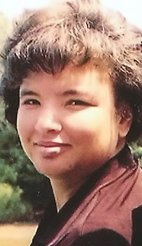
This week I asked middle-grade writer Dionna L. Mann to write a guest post. Dionna is the author of FREEDOM PEN (Pugalicious Press, also the publisher of DEADWOOD!), a new gem of a children's novel with a pitch-perfect rural Virginia voice.
Here's the blurb:
The sky is an opened parasol hovering above … or is it Velcro stretching taut across the horizon, better yet, is it mashed potatoes filling a blue expanse…?
Truth be told, if the penned stylist doesn’t know who is looking at the sky, then the whole manuscript-troposphere is a muddled mess!
So…what’s the sky made of? Is it a Parasol Or Velcro? It all depends on whose eyes are gazing upward—the POV—doesn’t it?
Who’s gawking up?
If the eyes gawking up are of a teenage girl from Harlem, New York, then the stars filling the firmament sure better not look like the shining scales of a freshly caught herring. And if the eyes are of a ten-year-old boy from the hollers of an Appalachian Mountain range, then the bejeweled night canopy sure better not look like an aluminum garbage can stretched from North Street to South Street with headlights bouncing on it.
Talk about whipping up some unsettling wind conditions for anyone attempting to hang glide in the sky of your created world! The poor reader piloting such a confused story will probably feel lightheaded due to POV-oxygen deprivation! (Look out below! She’s coming in hard!) And that’s your manuscript hitting the reject pile.
Be kind to your reader, will you? Let the POV-air blow gently, steadily, consistently.
Eye know what eye am seeing!
No matter if your narration, the point of view, of your story is in the first person: “I looked at the sky…”, and I’m Jimmy and—Get back writer!—I know how I see the sky!
Or if it is in the limited third person: “Jimmy looked at the sky….”, and I’m the narrator seeing everything through Jimmy’s eyes, so, don’t question me, I know how Jimmy sees the sky.
Or if it’s in an omniscient voice: “That whippersnapper Jim looked at the sky…”, and I’m a wise, old man from Kentucky, so I know how Jim and everyone else sees the sky. What’s more, I’ll describe it in my own crotchety way!
No matter any of that. The bottom line is that the sky must be seen through the eyes of whom the story speaks. That’s POV, plain and simple.
Right Shade of Blue
If you really want to get the hue of blue right for the arch above, consider this: How does my character feel when he’s outside staring heavenward? Is he a downhearted charcoal-gray? Then surely he won’t describe the sunset as an ice cream sundae with rainbow sprinkles.
Is he feeling a jubilant baby blue? Then his eyes must not wander aimlessly toward dusky clouds that seem to be oozing black ink. Heavens, no! Do that and your reader will be yelling, “The sky is falling! The sky is falling!”
The mood of each scene and the character’s state of mind at any given time during the narration of the story must influence the POV.
Is Columbus breathing this air, too?
Think about this, too. When was Jimmy born? If the kid came into the world in the 1800s, he’ll not describe the sky the exact same way as if he was born in the year 2012, or 2504. Research (for historical fiction), imagination (for a futuristic envisioning), and at all times, observing the world as Jimmy would, will bring your POV clearly into focus.
So next time your character gazes into the sky, how will he or she describe it? Like a parasol or Velcro? Spend time getting into the head of your character or narrator, and then you’ll know just what to make of the blue bowl above us!
Suggested reading: Description by Monica Wood, published by Writer’s Digest Books.
Related Links
More about Dionna L. Mann
Buy Freedom Pen
Interview with Dionna L. Mann by Kathy Erskine
 |
| FREEDOM PEN by Dionna L. Mann, Pugalicous Press, 2012, on sale now! |
Being mean ain’t in nobody’s blood.So how does she capture that POV in every line? She sent over this guest post and I used it immediately in revising picture book manuscript -- it really helped me think about choice of word and image.
Reckon folks will argue that one until there’s no more moonshine on the mountains. But in Freedom Pen that’s what Sarah the Twerp believes. And soon she and her brother, Billy, are setting out on a courageous summertime adventure to free two pit bull pups from a violent future. Will the pup’s heroes succeed in their quest, though they’ve been penned in by a violent past themselves?
POV: Parasol or Velcro?
By Dionna L. MannThe sky is an opened parasol hovering above … or is it Velcro stretching taut across the horizon, better yet, is it mashed potatoes filling a blue expanse…?
Truth be told, if the penned stylist doesn’t know who is looking at the sky, then the whole manuscript-troposphere is a muddled mess!
So…what’s the sky made of? Is it a Parasol Or Velcro? It all depends on whose eyes are gazing upward—the POV—doesn’t it?
Who’s gawking up?
If the eyes gawking up are of a teenage girl from Harlem, New York, then the stars filling the firmament sure better not look like the shining scales of a freshly caught herring. And if the eyes are of a ten-year-old boy from the hollers of an Appalachian Mountain range, then the bejeweled night canopy sure better not look like an aluminum garbage can stretched from North Street to South Street with headlights bouncing on it.
Talk about whipping up some unsettling wind conditions for anyone attempting to hang glide in the sky of your created world! The poor reader piloting such a confused story will probably feel lightheaded due to POV-oxygen deprivation! (Look out below! She’s coming in hard!) And that’s your manuscript hitting the reject pile.
Be kind to your reader, will you? Let the POV-air blow gently, steadily, consistently.
Eye know what eye am seeing!
No matter if your narration, the point of view, of your story is in the first person: “I looked at the sky…”, and I’m Jimmy and—Get back writer!—I know how I see the sky!
Or if it is in the limited third person: “Jimmy looked at the sky….”, and I’m the narrator seeing everything through Jimmy’s eyes, so, don’t question me, I know how Jimmy sees the sky.
Or if it’s in an omniscient voice: “That whippersnapper Jim looked at the sky…”, and I’m a wise, old man from Kentucky, so I know how Jim and everyone else sees the sky. What’s more, I’ll describe it in my own crotchety way!
 |
| Author Dionna L. Mann |
Right Shade of Blue
If you really want to get the hue of blue right for the arch above, consider this: How does my character feel when he’s outside staring heavenward? Is he a downhearted charcoal-gray? Then surely he won’t describe the sunset as an ice cream sundae with rainbow sprinkles.
Is he feeling a jubilant baby blue? Then his eyes must not wander aimlessly toward dusky clouds that seem to be oozing black ink. Heavens, no! Do that and your reader will be yelling, “The sky is falling! The sky is falling!”
The mood of each scene and the character’s state of mind at any given time during the narration of the story must influence the POV.
Is Columbus breathing this air, too?
Think about this, too. When was Jimmy born? If the kid came into the world in the 1800s, he’ll not describe the sky the exact same way as if he was born in the year 2012, or 2504. Research (for historical fiction), imagination (for a futuristic envisioning), and at all times, observing the world as Jimmy would, will bring your POV clearly into focus.
So next time your character gazes into the sky, how will he or she describe it? Like a parasol or Velcro? Spend time getting into the head of your character or narrator, and then you’ll know just what to make of the blue bowl above us!
Suggested reading: Description by Monica Wood, published by Writer’s Digest Books.
Related Links
More about Dionna L. Mann
Buy Freedom Pen
Interview with Dionna L. Mann by Kathy Erskine
Friday, January 6, 2012
Sing your own song
It's a brand spanking new year!!

I LOVED reading Lindsay's post, The Year to Believe! I've been thinking about this a lot lately. Not just about believing in the process of writing, querying, and finally making it, but also believing in your own voice as a writer.
I've written about this before. It's something I struggle with that, despite my six manuscripts, continues to make me feel like a beginning writer. I obsess over 'getting my voice right' rather than going with my gut. A few members of my family have read my rougher drafts and then later drafts and been disappointed. "Why did you take this out? Why did you add in all these mucky details?" They liked the way it came out at first, raw and flowing. My little sister tells me repeatedly, "Write for yourself."
Write for yourself.
But I'm writing for publication. But I'm writing for a specific market. But I'm trying to get published here!
Write for yourself.
Some of the fun goes out of writing when we try to bend too much to the world. I think of the rule-breakers that have made a mark on the literary world: C.S. Lewis' Chronicles of Narnia sure aren't written the way you'd expect middle grade to be written. Nor is Where the Red Fern Grows, which starts out with an old man reminiscing on his childhood. Sure, the rules were different in other decades, but how different really?
Today, the rule-breakers are trend-setters, especially in YA. Twilight didn't follow any rules of plot that I'm familiar with, and yet it reached me on an emotional level from the beginning. I wouldn't call The Hunger Games a rule-follower, either. It set the bar for dystopian societies very high by being its own kind of book.
Agents say, "Write the best story you can."
That is the only rule.
Sometimes when they say that, I hear: "Write a better story than you possibly can," and I get a little depressed. Past rejection has a way of lingering way past its expiration date like little silver ghosts that float around my head and remind me, "not right for my list," "too similar to something else," "no place for this in the market."
It's so hard some days to write with those horrible little poltergeists swarming me from all sides. I wish I had a Patronus spell to cast them back a mile or two, just so I can...
Write for myself.
Expecto Patronum!
Did it work?

Ah, it did work.
The Year to Believe requires that we put our past failures in the past and not allow them to muck up the future we have planned for ourselves and our characters.
Write for yourself.
Believe in your voice.
Happy 2012!

I LOVED reading Lindsay's post, The Year to Believe! I've been thinking about this a lot lately. Not just about believing in the process of writing, querying, and finally making it, but also believing in your own voice as a writer.
I've written about this before. It's something I struggle with that, despite my six manuscripts, continues to make me feel like a beginning writer. I obsess over 'getting my voice right' rather than going with my gut. A few members of my family have read my rougher drafts and then later drafts and been disappointed. "Why did you take this out? Why did you add in all these mucky details?" They liked the way it came out at first, raw and flowing. My little sister tells me repeatedly, "Write for yourself."
Write for yourself.
But I'm writing for publication. But I'm writing for a specific market. But I'm trying to get published here!
Write for yourself.
Some of the fun goes out of writing when we try to bend too much to the world. I think of the rule-breakers that have made a mark on the literary world: C.S. Lewis' Chronicles of Narnia sure aren't written the way you'd expect middle grade to be written. Nor is Where the Red Fern Grows, which starts out with an old man reminiscing on his childhood. Sure, the rules were different in other decades, but how different really?
Today, the rule-breakers are trend-setters, especially in YA. Twilight didn't follow any rules of plot that I'm familiar with, and yet it reached me on an emotional level from the beginning. I wouldn't call The Hunger Games a rule-follower, either. It set the bar for dystopian societies very high by being its own kind of book.
Agents say, "Write the best story you can."
That is the only rule.
Sometimes when they say that, I hear: "Write a better story than you possibly can," and I get a little depressed. Past rejection has a way of lingering way past its expiration date like little silver ghosts that float around my head and remind me, "not right for my list," "too similar to something else," "no place for this in the market."
It's so hard some days to write with those horrible little poltergeists swarming me from all sides. I wish I had a Patronus spell to cast them back a mile or two, just so I can...
Write for myself.
Expecto Patronum!
Did it work?

Ah, it did work.
The Year to Believe requires that we put our past failures in the past and not allow them to muck up the future we have planned for ourselves and our characters.
Write for yourself.
Believe in your voice.
Happy 2012!
Friday, December 3, 2010
Finding Your Voice
 |
| Hi! |
Sorry, was that too exuberant a greeting? I'm a little nervous. This is my first official post on the group blog, the first post written entirely by me and not about a contest or interview. Today, you finally get to hear my voice. Well, by hear I mean read, but you get that, right? Right. Okay, no more stalling, then.
When I first started devoting serious time to becoming (my romantic notion of) a writer, my biggest worry was that I had no voice.
Yeah, you read that right.
I'd read something online about Finding Your Voice and I worried I needed to develop my voice. It's actually kind of silly if you think about it, because just about everybody is born with a voice. You don't question it or think about it. You just speak and words come out in your own unique voice. Sure, you have to coo or babble when you're a baby (not to mention all that bawling). You have to listen to your parents and siblings speak, and you mimic them to some extent. But in the end, the only way to develop your voice is to practice speaking.
Writing is the same way, but I didn't know that. I thought I needed a special guide to teach me how to be myself. This stems from a fear that's haunted me my whole life, and I'm probably not alone.
Is being myself good enough?
It turns out that the only way NOT to have a personal writing voice is to try too hard to be like somebody else. Don't do that.
While the guide I linked above has good ideas, like reading a lot of different books or practicing writing like your favorite authors, or writing to prompts--all this is effectively the baby listening to conversation before she tries to make words on her own, and then awkwardly copying words like "No" and "Don't" and "Stop that" (this might just be my babies).
Writing in someone else's style is fine, but don't try to be Meg Cabot. Yes, she is awesome. Yes, she is witty. Be awesome and witty in your own way.
How do I propose you do that?
Blog.
For writers, blogging is like a warm bubble bath. It's the fun and relaxation of writing without the cold shower of pass-or-fail judgment. Especially when you're first starting out. For a long time, I had 33 followers on my personal writing blog, and only about 8 hits a day from different viewers. Reaching more people is awesome, but starting small is good, too. I got into my own writing groove whenever I blogged, and even though I never turned my internal editor off (is that even possible?!), I did allow myself some indulgences you simply can't do in printed fiction...
:) SQUEE!! LOL. ;) ROFL b/c That is made of awesome. OMGoodness! :p
...and the result in my novels has been palpable: I actually have a personality. Letting my hair down on my blog has freed up that personality more than copying Shakespeare or Mark Twain ever could. Not that I SQUEE in my books (though a character might at some point). They are definitely different formats, unless you're writing one of those MG books in chat format, which I think has been done to death, people.
The greatest key to finding your writing voice is to be yourself.
Let that snark, incurable optimism, or witty cynicism seep into your novel. That's what people will relate to. Learn from others, try out new ways of expressing your themes and your characters. But don't bend over backward trying to achieve the oh-so-marketable and ever-elusive VOICE agents are always talking about. When they say that, they're really saying THAT BOOK connected with them on a personal level. Across the publishing universe, voice is as subjective as romantic chemistry. You can't fake it.
Be yourself, let your voice shine through the printed page, and trust that someone, somewhere will like you.
p.s. If you're having trouble getting into the Christmas spirit, visit Lindsay's blog for some snowy goodness or Michelle's for Friday Funnies.
Monday, October 4, 2010
Writing Tip: Be The Cheater
Don't forget to enter OA's latest contest for a chance to win special edition Twilight books! Trust me. Those suckers are g-o-r-g-e-o-u-s.

Okay. Now for my writing tip.
I know I say this on my personal blog a lot, but I'm a huge TV fan. Obsessed, some would say (don't listen to them...). I like to think I've learned a ton about writing through the screen. And today I'm going to give you an example.
Ladies and gents, I give you The Boreanaz:

That, my friends, is actor David Boreanaz. He starred in Buffy the Vampire Slayer, and is currently on Fox's hit, Bones. His character on the Fox show is an FBI agent who was once a Marine. He is related to John Wilkes Booth (not a great reputation...), and is the father of an adorable boy who asks a lot of questions.
In real life, David Boreanaz is a cheater.
Yep. He cheated on his wife. Multiple times. And I stopped liking him.
Until I sat down to watch an episode of Bones, like I do every Thursday at 8pm. The man on screen wasn't David Boreanaz, folks. He was Agent Booth, the ex Marine who falls for a forensic anthropologist and keeps quiet about it. The man who has a ton of insecurities, but hides them with a smile. The man who fights the bad guys every day and doesn't wince when a gun is pointed at him.
Suddenly, it dawned on me. I love Agent Booth.
But I hate The Boreanaz.
That's why this week I'm telling you to be The Boreanaz--be the cheater. Whether you're writing in first person or third, you must get into your character's mind. You are not you when you're writing. You are someone else. You leave you at the door and get to work.
You need to make your readers believe that someone else is real (in The Boreanaz's case, he needs his viewers to forget about the cheating scandal and focus on Agent Booth, who would never cheat. Not even on a Calculus quiz). How do you do that? Think about how that someone else would feel if X or Y happened to him/her. How does he/she see the world? What's their biggest fear? Do they want justice? World peace? To slap Lindsay Lohan?
This process, what I like to call channeling your character's voice, is tough. But it can be done. Maybe not on the first try, or the second, or third. But someday, you'll get it right... just like The Boreanaz.
Now tell me: what do you do when your characters aren't speaking to you?
Subscribe to:
Posts (Atom)