Tuesday, July 22, 2014

Settings that Pop - by PK Hrezo (guest post)


A ginormous thank you to the Operation Awesome team for having me here today. Just so you know a little about me, I’ve been writing fiction for six years and recently debuted last November, and have a sequel due out next month. I wanted to take this opportunity to share a little about creating believable settings through research, and how to make your scenes POP!

My last two novels have relied heavily on research. Both of them being YA/NA time travel stories, my main characters travel back to actual historical events. It wasn’t like I could fudge the settings there. These events have been filmed, documented, and are widely known across the globe. Accuracy was vital to making these scenes pop.

Whether you use real life settings or create your own, our job as the author is to make the reader believe these places are real. We can do this through sensory techniques.

·       How does it look?
·       How does it sound?
·       How does it smell?
·       What does it feel like?

All are important questions to answer in each new setting. Mind you, overkill in any of these areas will have the opposite effect. So go with the general rule of “less is more.”

Okay, so right about now you’re saying, “Yeah, yeah I know this already.”

But the trick is not remembering to use these senses, it’s in describing them. And how do you describe somewhere you’ve never been?

Most of us have overactive imaginations, which is why we’re writers, but when it comes to writing real places, we need a bit of research as well.

Photo Credit: Fanpop
In my novel, Butterman (Time) Travel, Inc., I had to recreate the original Woodstock from 1969. I’m not old enough to have been there, and I didn’t know anyone who’d been there either, but I wanted to write my scenes like I had been there. I watched the Woodstock film documentary with a notepad and pen in hand, and opened my mind. (no drugs required btw ;))

I jotted down anything and everything that stood out to me. From clothes to hair to nature. Then I got more specific: heaviness of eyes, color of skin, pitch of voice. Any little detail. Mainly, the unique way I perceived and responded to these details, and I jotted all of it down.

I also described what I felt and saw while the artists performed. I experienced it like I was there and tapped into that writerly toolbox of creative expressions to give my descriptions an artistic flair—one only I can give because it’s unique only to me. Same as your perceptions are unique only to you. When I was finished with the film, I had a list of amazing images, similes, metaphors, etc.

Remember, the key is to jot these ideas like no one is watching or will ever read them, and that will help open your mind and creative side to be free, as well as chase off that pesky left-side of your brain that wants order and logic. That comes later, and left-side will get its chance when you’re structuring your novel and editing for grammar.

When it came time to write the actual Woodstock scenes, I had my notes handy and could feather in these unique details in order to bring the scenes to life. In turn, readers really connected with this part of the book. They experienced it too, and what a great feeling it is to know they felt what I felt. I still get more compliments on the Woodstock scenes than anything else.

Photo Credit: Titanic Recounts
In the sequel, Induction Day, I did the same with the Titanic scenes. For days I watched nothing but documentaries on Titanic, and of course, the actual James Cameron movie. I had my notepad handy and I noted everything I could that stood out to me, down to the embellishment on a hat, or jewel on a brooch, or brass gadgets on the ship’s bridge.

What brings a setting to life is not the general description, it’s the tiny details sprinkled throughout the scenes that stirs an image. Spoonfeeding the reader a laundry list of how something looks is just plain boring to read, and it separates the amateur novelist from the experienced one. If we bog down our scenes with too many details it becomes laborious reading, but just the right amount here and there is an artistic technique that conjures an image easily in the reader’s head, and they begin to notice things as if they ARE the main character.

Likewise, when an author has taken their setting for granted in the story it always shows. It feels generic and stiff. But when they take the time to flesh out a small detail now and then, using the “less is more mentality,” it makes all the difference.

You may not be writing about historical events or places, but every writer needs to experience their setting in a unique way that will allow them to bring it to life on the page. I’ve written fantasy worlds as well, so I know there are some imaginative places we just can’t see or get to, but we can experience them by closing our eyes and letting the world unfold before our mind’s eye, then jotting details down on paper in that artistic, writerly way that makes us an author. Or, spend the day watching fantasy films with a notebook and jot down little worldbuilding details that perk your senses. These can be tweaked later to your own style so they’re unique to your story.

I hope you’ve  found some of this helpful. I’d love to know your own tricks and tips for making settings pop. Please share in the comments, and thanks so much for stopping by! Thanks again to Operation Awesome for having me here today. It’s been a pleasure!

I’d love for you to join my email list for more tricks of the trade, special announcements, giveaways and sneak peeks.  http://eepurl.com/O0s5b


PK Hrezo is the author of the sassy sci-fi romance series, Butterman Travel, Inc. as well as a self-proclaimed chocoholic, guacoholic, and rockoholic. You can find her and her books on her website at http://down-the-rabbithole.com

Monday, July 21, 2014

Guest Post with Wendy Nikel

Today we have a guest post with Wendy Nikel!

WHAT AN 8-ARMED, 2-BRAINED CYBORG (AND OTHER ROBOTS) CAN TEACH WRITERS ABOUT PRODUCTIVITY
I'm a mom of two preschoolers, so often when I get up the courage to tell people that I also write speculative fiction short stories and novels, the reaction I get is usually something along these lines:
"Wow, when do you find time for that?"
or
"I have come to the conclusion that Wendy is a cyborg. She only needs a half hour to recharge and has eight arms and two brains."*
Maybe you've had that reaction as well. Oh. Maybe not? Most writers don't have the luxury of being able to sit around and write for 8+ hours a day. We're moms and dads, teachers and students, part- and full- and over-time workers. So how do we make the best use of the little time we do have? Well, some of us are 8-armed cyborgs with two brains, and that helps. For everyone else, here are a few tips and tricks to boost your productivity.

1. SET CLEAR DIRECTIVES The past few Novembers, I've taken part in National Novel Writing Month (NaNoWriMo), which forces me to set a steep goal: one month, one first draft of a novel. It helps also that NaNoWriMo breaks this goal down into bite-sized daily word counts so I can track my progress. For the other eleven months of the year, I set my own goals, whether it's finishing a revision or writing some short stories or giving my critique partners feedback on their novels, or a combination. Clear, accomplishable goals can really help with making the best use of your time.
1bender
Or you might end up like this guy

2. FIND AND SECURE YOUR WRITING TIME You've probably heard it said that people find time for the things that are important to them, and it's true. When I first decided I wanted to seriously pursue writing, I knew I had little "free time" to work with and that writing was going to eat up any time I'd previously spent keeping up on all of my reality TV shows. For me, writing won out over The Bachelor and ANTM and yes, even Project Runway and Cupcake Wars. If I could afford it, I'd totally hire a maid and personal chef to take care of my housework so I could spend that time writing. Maybe someday. But for now, my most effective chunks of writing time come mostly in the evenings, after the kids are in bed.
2gir credit mukeni0.deviantart.com


Writing is more fun than watching TV anyway

3. MULTITASK Disclaimer: Not everything can be multitasked. The trick is to figure out which things you can multitask on and which things are going to require your full attention. You might find it useful to create a list of your common writing tasks and then determine how much of your undivided attention they require (full, high, medium, low). For instance, my "full attention" tasks are writing first drafts, doing revisions, and writing out feedback for my critique partners' work, and those have to wait for my designating writing time (see #2). But I have plenty of "medium" and "low-attention" tasks that I can do while going about my day: sending out short story submissions while I watch my kids play in the backyard, copyediting while I eat breakfast, thinking my way out of plot holes before I fall asleep at night (just make sure to have a pad of paper by the bed), and answering emails while waiting for my soy chai. ]
3pacificrim credit jasperdeguzman.tumblr.com


Multitasking FTW

4. DON'T LIMIT YOURSELF TO ONE FORMAT It also can help to have your work in multiple formats. I use my laptop for most of my writing and editing, but I'll often answer emails on my phone or read and make notes on my work on my Nook. I recently discovered that editing on a printed copy of my manuscript works well for road trips (no outlet or batteries needed!). Use dropbox or some other online file storage to ensure that you can access your work from wherever you are, so that the next time you end up with a delayed flight or a long line at the DMV you won't be stuck twiddling your thumbs. Plus, it's always good to have backup copies of your work anyway, in case the unthinkable happens and your computer crashes. 
4shortcircuit credit shortcircuitgifs.tumblr.com
I wouldn't wish this on any writer

5. DON'T MULTITASK Though it may seem like a contradiction to #3, it's not. As discussed above, some things can be multitasked, but when the time comes to do those things that need your full attention (writing first drafts, doing major revisions, etc), GIVE THEM your full attention. For me, that means waiting until the kids are in bed and then turning off the WiFi so I'm not tempted to go check twitter (@wendynikel) or get distracted by emails or Facebook or BuzzFeed or the Absolute Write Water Cooler. This time is precious — use it wisely! Try this: The next time you get an uninterrupted writing time, turn off the WiFi. Seriously. Do it. You'll have plenty of time for social media after completing your goals.
5terminator credit butlercat.tumblr.com
... after I finish this revision

6. GET ORGANIZED I have what may be an unhealthy obsession with spreadsheets. But they help keep my life orderly and they're especially helpful when querying or submitting short stories. My short story spreadsheet outlines markets with their word counts, genres, pay rates, and submission info, so that when I write something new, it's easy for me to pull up my spreadsheet, see where I already have stories out and where my current work would fit best. Other great writing tools to check out:
Just sending out another short story...
Just sending out another story...

7. RECHARGE YOUR BATTERIES Everyone needs some downtime, including writers and 8-armed cyborgs. If writing is stressing you out, try recharge your creative batteries by spending time reading, taking a walk, observing nature, talking with others, or, you know, dancing or something.  
7dalek 

8. ACCEPT THAT YOU'RE NOT GOING TO BE ABLE TO DO EVERYTHING Even 8-armed cyborgs sometimes wish they had 14 arms instead of just seven. Sometimes you're not going to be able to reach your goals. Real life may interfere and throw you off track. The important thing is to not let it discourage you. The best thing to do is pick yourself up and try again tomorrow! 8r2d2

*thanks, krash!

Friday, July 18, 2014

The August Mystery Agent Lottery IS NOW CLOSED!


It's time for another Mystery Agent contest! Woo hoo!  Entries are now closed.

Our Mystery Agent will accept 50 pitches, with a maximum of 50 words each. Starting now, you can enter the Mystery Agent Lottery for one of those 50 slots.

Our Mystery Agent is actively seeking YA and MG novels of all genres.

If you have a completed YA or MG manuscript, please enter your name and contact information into the Rafflecopter below. Please enter only once, and only if your manuscript is finished and query-ready.

The lottery closed July 25th--thanks to all who entered! Not only will our agent be able to read the entries, but so will all of you! All 50 of those lucky entries will be posted here on the blog on our Mystery Agent days, for your cheerleading and constructive feedback. And last but certainly not least, the reveal, along with the fabulous to-be-announced prizes, will be posted here sometime in the month of August.

a Rafflecopter giveaway

If I left anything out, or if you have questions, feel free to comment below. Good luck, everyone!

Thursday, July 17, 2014

Evolution of a Writer

As a reader/fangirl of many newish authors, I have really enjoyed watching the way each author evolves in his or her work. It's customary to see variances in tone and genre in the same author's work, but sometimes it truly is a brand evolution.

For instance, Mandy Hubbard started out with Prada and Prejudice, a time-traveling romantic comedy, but now frequently writes as Amanda Grace with concepts a bit darker, like But I Love Him, a story of an abusive relationship and "love gone horribly wrong."


The evolution of a writer can even happen within the same series, like the transformative and epic Harry Potter series, which began with the magic and delight of Diagon Alley and ended with a war.


One of my very favorite YA authors, Kiersten White, started out with the Paranormalcy trilogy, a fun, riotous romp through the land of the paranormal with a girl obsessed with pink and teen sit coms.


But her work took on a more mature darkness, as well:


Then there are those whose evolution brings them back from adult writing to children's books, like Stephen King and Weird Al Yankovic.


As for my own writing, I find I'm still evolving, too. My tastes are evolving, my style is evolving, and by the time I get published who knows what that first book will be. I've already written NA science fiction, YA paranormal, YA romance, and YA spy mystery. 

Advice I've received from published writers is often to enjoy the process of writing for no one in particular, not having deadlines and industry expectations that are imposed rather than chosen. I gotta say, I am enjoying the process. It's great being able to write whatever I want, whether it's poetry or paranormal fiction. 

How have you changed over the course of your writer journey?


SHIFTING PUBLISHING POWER STRUCTURES: Guest Post by Melinda Friesen

Writers have to make huge decisions about the future of their creations and without a solid analysis of their options they may end up with regrets.

This blog post is meant as a conversation starter. I hope to get writers asking themselves and the publishing industry some tough questions so they can better understand the industry and their place within it.

Technology is dramatically changing power structures in traditional publishing that have existed for centuries. This upheaval has resulted in a lot of uneasiness for publishers and authors.

As power structures shifts those in power seek to stay in power. This is not meant to vilify the publishing industry. No one enjoys losing their power. If you have a toddler or teenager you’re familiar with power struggles in your own home. Child seeks to gain power, while parent seeks to maintain theirs. This same struggle goes on in politics and in business. Let us never forget that while writing is an art, publishing is a business.

Michael Foucalt, prominent sociologist and author of The Archaeology of Knowledge, urges his readers to ask, how do we know what we know and where does the knowledge come from? To frame this for writers: how has our knowledge of the publishing industry been constructed and by whom? Do the people who disseminate the information stand to benefit from that information and in what ways?

After I completed my third manuscript, I set out on this publishing quest. I read countless blogs, websites, and books on the subject. This research led me to believe that the most profitable, legitimate, respectable way for me to be published would be to acquire a literary agent who would then land me a publishing contract with a big six publisher. From my reading, I also concluded that if I wrote a quality manuscript and presented it in a professional manner that I would have a strong chance of accomplishing my publishing goals.

Over years of research, sending out queries, and talking to other writers, I realized a couple problems with this approach. First, the people sharing the information, largely agents and editors, stand to benefit from thousands of writers sending their materials. Second, the information I received led me to believe that there’s a sort of literary Darwinism—that the best will simply rise to the top. This might be valid if there were equal access to the publishing industry for all writers, however, that is not the case. We know that advantages exist for previously published authors and for those who know advantageous industry insiders.

As a new writer, statistically, my chances of landing a literary agent are low. The following stat is highly anecdotal, gleaned from following agents on various social media sites. My research has shown that new writers have a 1 in 10,000 chance of being signed by a literary agent. And being signed by an agent does not guarantee a publishing contract.

Last fall at a conference I attended, I sat in a session with a well-known Canadian literary agent. She spoke of how subjective her process is and how there is no rubric for choosing best-sellers. She said that what intrigues her today, she may hate tomorrow. If someone messes up her latte that morning, her foul mood may result in rejections for everyone who queries her that day. I appreciated her candor.

My most recent personalized rejection came from an agent, who had requested a full; she wrote, “I am currently taking on new clients quite selectively, focusing exclusively on work that really stirs my passions.” She went on to say she didn't have the requisite enthusiasm for my work in this “tough market.”

This all moves the publishing venture beyond quality of story and quality of writing and into the realm of luck.

But, here’s the thing. Many authors still stand by the get-an-agent, get-an-editor method of publishing. And I’m not saying that’s not the way to go, but in an era where writers have so many choices, we’d do well to ask the necessary questions. Are we just towing a line and helping those in power to maintain that power? Is that power structure benefiting me as a content creator?

My writer friends pushed me to tackle a tough question. Why was I continually submitting to literary agents? You see, in Canada, very few writers have agents. It’s just not the way things are done by mid-list authors here and they do just fine without them. That’s when I started asking more questions.

What exactly can an agent do for me?
What can a big six publisher do for me?
Are they going to funnel marketing time and dollars to me?
Will they be driven to make my book the best it can be?
Will an agent with bigger money clients be willing to spend their time and resources on me?

That’s when I started looking at small publishers.

In October 2014, my first novel will be published by Rebelight Publishing Inc., a small Canadian publisher, and so far I’ve had a fantastic experience. Sure I can’t brag about getting chosen by amazing agent X or having my manuscript picked up by big six editor Y, but I have a fantastic editor who cares about my work, a dedicated marketing team, and a designer that asked me, “What’s your vision for the book cover.”

Publishing is changing and as authors we are in an excellent position to benefit from these changing publishing power structures—if we keep an open mind and ask the right questions.

Have you had to re-examine your approach to publishing? Have you questioned the system? What tough questions have you asked yourself or the industry?

****


Melinda Friesen writes short stories and novels for MG, YA, and NA. She lives in Winnipeg, MB Canada with her husband and four children. She blogs at www.vastimaginations.com and at www.melindafriesen.com. Her first YA novel, The Enslavement of Rielle James, is due for release October 2014 from Rebelight Publishing Inc. www.rebelight.com 

Wednesday, July 16, 2014

Bread Crumbs & Tying Things Together

I'm currently in the beginning stages of sending Open Thy Heart to betas, and being as this is the second in a series, I've found that not only is there the usual plot/writing stuff to do, but there's also a whole lot of tying things together. Like...

Re-introducing the characters. Reminding the reader as to who feels this way about whom, and why. Pointing out the problems in the previous book and gently refreshing the reader's memory on how they were resolved, and more.

This time, I'm on a bit of a deadline, and have found that the usual, no-rush timeframe of, well, getting this done whenever I want, isn't working so well. (Sad face.) Which means... coffee! (Just kidding. Sort of. Okay, not really.) Which (actually) means... lists! There is nothing more assuring and satisfying than crossing items off a list, especially that very last one, and boy do I have a list to go over. My editor once referred to the little clues given throughout the book that lead to the big revelations later on as "bread crumbs", and I love this description. So, my list currently consists of the laying out of bread crumbs. More importantly, making sure they are

1) consistent throughout the story

2) consistent for the characters

3) leading to proper revelations

4) keeping with the overall plot

5) keeping with the overall plot not only of this book, but with the series

I probably forgot something, but these are the most applicable. How about you? Is there a certain way you look at your storyline to ensure everything's tied up by the end? I'd love to hear about it! :)

(For another good list to go over whilst editing, check out Abby's recent Gesture Clutches.)


Tuesday, July 15, 2014

Joining the Fun

Hi there! I'm Delancey Stewart, and I'm so excited to be here. I've followed Operation Awesome for a while, and I was very flattered to be asked to join. I will be honest...it was Awesome.

Anyway, I figured a brief introduction might be in order.

You've probably figured out that I'm a writer. And like most other people brave enough to call themselves "writer," I've been writing in one form or another for most of my life. I majored in English in college, and really believed that one day I'd sit down and write an amazing book that would take the world by storm and change my life. At 22, I really believed that was how it would happen. Some magical inspiration would strike, and everything would be different from that point forward.

If you've ever written a book, you probably know this isn't what happened at all.

Instead, I worked for a big publishing company for a year. Then I got a teaching credential, and then I had a chance to move to New York City, so I did that. In New York, I did marketing, working in the burgeoning Internet world, until the World Trade Center fell on 9/11. Pretty much everyone I knew was laid off either before or after that horrible day, and so we spent a few months wandering the city, day drinking and collecting unemployment. When I was fairly certain that no Internet marketing jobs were hidden beneath bar stools in the city, I packed up and returned to California.

I lived with my parents for three months. I was 28. It was a low point. My parents are lovely people. But...

Luckily, I found a job as a pharmaceutical rep and moved to San Diego. I met my husband, a Marine. We got married. He deployed and I decided to become a personal trainer. And then, when he got home, we started moving all over the place. At some point in that process, we had two boys and I took a job as a tech writer for a company that contracts to the government. I just celebrated my five year anniversary with that company.

The point of that long history is that at no point in those twentyish years did I write an astounding novel that changed the world. And about two years ago I was 39, facing a landmark birthday, and still holding on to the belief that I was meant to write books.

But at that point I had a bit more perspective. And I knew that the things I'd valued most in my life had been the things that I'd worked hard to achieve. So I put myself to work.

And I wrote a paranormal YA novel that was... pretty horrible. But it taught me a lot. I spent about six months on it, writing, revising, even querying. And then I set it aside and focused on craft. I took some more writing classes, read lots of books and began writing short stories. And I started editing manuscripts for two small publishers. And realized that genre fiction was lots more fun to write than literary, and perhaps easier in some ways because there were established formulas for some genres. I was editing romance, and learning a lot about tropes and structure, so that was the way I went.

At this point, I have two self-published romance series out -- The Wine Country Romances, and The Company. I also have two contracts for other romance series with publishers. One of those series is the Girlfriends of Gotham (based on the time I lived in NYC in the late 90s). The other is a historical new adult series that I'm really excited to have out in the world (early 2015).

I still work as a tech editor for the government contractor, I still take freelance editing work from other writers and some of my long-standing clients, and I still have two little boys. So writing, in my life, happens very early in the morning and sometimes on the weekends if the little guys are quiet long enough for me to put a sentence together. That said, it's the thing that I am about. It's the thing that I think about when other things aren't great, and it's the thing I'm most proud of. It's my passion, and I'm so glad I put in the work to pursue it.

My question to you is this -- when did you (or will you) define yourself as a writer? What kinds of shifts did you have to make to acquire that title? (Mental, physical, environmental...)

Monday, July 14, 2014

The Pens for Paws Auction Starts Today!

The Pens for Paws Auction, an online fundraising auction with items from the writer and artist communities to raise money for Fat Kitty City, a no-kill sanctuary for cats and dogs in El Dorado Hills, California, starts today!

There are all sorts of great items on offering: critiques from agents, editors, and authors; unique swag; signed books; jewelry, and more! Operation Awesome has a package in the mix, and here's a sneak peek at what it includes (but sorry, I can't tell you exactly when it will go up--you'll have to watch the blog or follow @PensforPaws on Twitter)

From Operative Michelle McLean:
Ebook bundle for the Blood Blade Sisters Series


From Operative Katrina Lantz:
20-Page Critique

From Operative Lindsay Scott:
Query or 1st Chapter (up to 20 pages) Critique

From Operative Abby Annis:
1st Chapter (up to 20 pages) Critique

From Operative Jessica L. Brooks:
E-copies of her books, Pity Isn't An Option and If I Speak True plus Bookmarks with cover art for the sequel to If I SPeak True, Open Thy Heart


From Operative Kristal Shaff:
Ebook of her forthcoming title from Month 9 Books, The Emissary (this item will be delivered in September when the book releases)


From Operative Karen McCoy:
A writer/librarian's book bonanza, including
Autographed ARC:
The Drowned Cities by Paolo Bacigalupi

Non-autographed ARCs:
Nightingale's Nest by Nikki Loftin
The Inquisitor's Apprentice by Chris Moriarty
Far from Here by Nicole Baart
Storm Makers by Jennifer E. Smith
Unhooking the Moon by Gregory Hughes
Brown Girl Dreaming by Jaqueline Woodson
Autographed books:
File Under: 13 Suspicious Incidents by Lemony Snicket
Zombie Baseball Beatdown by Paolo Bacigalupi

From Operative Angela J. Townsend:
Movie Poster for River of Bones plus swag from her book, Angus MacBain and the Island of Sleeping Kings 


From Operative Toni Kerr:
Ebooks of Descendant and Unleashed 


Toni also makes custom mini book charms with your art, and she's donating two charms like these:


Isn't all this stuff awesome???? I hope to see you at the auction!

Saturday, July 12, 2014

LDStorymakers Notes: Gesture Crutches

This class was taught by the very cool Jordan McCollum. I was late because I underestimated the amount of time it would take me to check out of the hotel and put my bags in the car in the rain. So not only did I have to walk to the only seat available at the very front of the room while everyone watched, but I missed the first part of the class. :(

Fortunately for you, the full presentation can be found here on her blog.

In the first part of the class (the part I missed), she talked about using macros to find your gesture crutches. If you don’t know what a macro is, you’re missing out on what I think is one of the most powerful tools MS Word has to offer. I use it all the time at work and it saves me hours. Hours, people. That’s not an exaggeration. It’s also a great tool for editing. Jordan blogged about it here, if you want more info on the awesomeness of macros.

And now for my notes. :)

What to look for:
·         Uses that fall too close together
·         Repetitive gestures
·         Patterns
·         Echoes
·         Uses that don’t make sense
·         Uses that aren’t necessary
·         Uses that are awkward
·         Uses that are bare – He nodded (could just be filler)
·         Uses that could be fresher or more powerful

Strategies to fix:
·         Delete
·         Move to dialogue
·         Change the narrative mode
·         Use synonyms (within reason)
·         Focus on underlying emotion/message – What are you trying to convey?
·         Use subtext
·         Cultivate a body language bank
·         Change the body part
·         Punch up
·         Use something old in a new and fresh way

Personalizing character gestures:
·         Describe in her POV
·         Give character a trademark gesture
·         Dig into character (see below)
·         Look at scene’s emotional set
·         Observe
·         Use real life patterns
·         Get up and act it out

Digging in:
·         Get to know character
·         What are they like physically? How does that impact their movement? How do they feel about that? Look at their past and present. Ex: Tall person—how does he carry himself? What does that say about him?
·         Basic details—specifics, personalized
·         Ask So what? to reach inner value/core truth
·         Value—Ex: feels not good enough/average
·         Trait—Ex: general attitude timid/cover with bravado
·         Mannerism—Ex: way that he walks, way he holds his head
·         Does he want to stand out?
·         Capturing a vision of character as an integrated whole

You don’t need to delete every smile and nod, but they start to lose meaning when overused.

And that’s all I have. I hope that was helpful to some of you. Be sure to check out Jordan’s website and her books.


In the comments, tell me your go-to gesture crutches and your methods for making them work for you.

Friday, July 11, 2014

A love letter to disappointments

One of these days, just for scientific purposes, I suggest you sit down and tally up some of those bumps in the road you've hit.

Not if it's just going to depress you, of course. But if you're having one of those days when you've seen a book deal perilously close to yours, or you see a former querying trench buddy in the bookstore, or you're staring at your perpetually empty inbox, hitting refresh every five seconds and thinking Please, just this once, let it be easy, this might be useful to you.

It might surprise you a little bit how many of those moments you'll find once you get going. Once you catalog all the crushing close-calls, the maybe-but-not-quites, and the sure things that you still can't believe didn't work out, you'll find other things. Smaller things. Form rejections that hit you at just the wrong moment. A promising start that fizzled out. All those little work-life balance misfires that made you think maybe you couldn't do this after all.

If you're feeling particularly tough, you can put yourself back there. Think about how you reacted in that moment: whether you sobbed into your pillow, dived for the takeout menus, laughed bitterly with your friends over drinks, or just sat in front of your computer and quietly scrubbed that particular happy ending from your mind.

But the most important thing to remember isn't that those moments didn't work out. It's that you kept going, even if you had to dig in with both hands. That passion, ambition, and drive is something that deserves to be recognized. The fire that's gotten me this far isn't always a pleasant thing to live with, but I'm a little in awe of it nonetheless.

There's a bit of a trap inherent in this exercise, though. It's tempting to think that, after all that hard work, the easy part has to be right around the corner. Even though logically we know there's no such thing as a guarantee in this business, we're writers. We love a good narrative.

But the point, at least for me, is to remind myself that if I didn't give up during any of that, I'm certainly not going to give up now. It might not be all the reassurance I was looking for. But it's a pretty powerful feeling all the same.

Have a great weekend, everyone, and happy writing!

Thursday, July 10, 2014

Practice Makes Publishable

I've always heard the expression "Practice Makes Perfect," and, being a borderline perfectionist, generally try (and fail) to apply that saying to many aspects of my life.

Over the years, I've had to learn to let that expectation of perfection go. I'm never going to be the perfect wife, or mother, or human being, though I will continue to try my best.

Now, I think I am finally ready to admit that I need to stop trying to apply this to my writing. It's never going to be perfect. Even if my next book hits the NYT Bestseller list and outsells the entire Harry Potter and Twilight series put together....I'm still going to open that book one day and find something I want to change. 

It will never be perfect. And that's okay. It doesn't need to be perfect. It needs to be publishable.

How do I make it publishable? Practice. Writing more and more. Taking my next WIP and the WIP after that and the WIP after that, and pouring my heart, soul, and sweat into them. Hard work, revisions, more hard work, more revisions, confidence, persistence, faith, more hard work, and more revisions.

Very few people sell the first thing they've ever written. A first novel, maybe. But I bet they've written short stories or poetry or essays or something else before. At the very least, they've rewritten that first novel within an inch of its life. I've known people who have let this idea of perfection paralyze them to the point that they refuse to query a wonderful book because they don't think it's ready. They let this unobtainable goal keep them from sharing their incredible stories.

There's no such thing as perfection - especially when it comes to our writing. What one person thinks is perfect, someone else is going to hate. And what we think is perfect now, we may cut without hesitation six months later.

So, should we give up altogether?

NEVAH!!!!! :D

Practice. Keep writing. Shelve it all if you need to, but keep writing. Practice may not make it perfect. But it will make it publishable.

What are your thoughts? Do you practice to make perfect? Do you still hold on to the dream that someday that book of yours will stand as a shining example of literary perfection? Or have you come to the conclusion that something may be excellent, but there's no such thing as perfect? Do you strive for perfection, or for publication? Or something else entirely?

Wednesday, July 9, 2014

Blast from the OA Past: Embrace the Suck!


There are certain things that are a given:

1) Day turns into night.

2) I like chocolate. And cookies. And cake.

3) First drafts can suck!

I know suck may be a harsh word, but they call them first drafts for a reason. They have a certain amount of suckage built into them.

Why?

The pacing may be off. You might introduce a secondary character but forget about them halfway through. Oops. Hasty addition time! Have you been calling your love interest Jensen for 20k, but then discover your MC making out with some dude called Jake? Hmmm. There could be scenes that don't advance the plot. Adverbs bleeding from the page. Purple prose. That brilliant plot twist doesn't quite fit. Darn it. Who says it needs to be logical? 

What to do?

Write on! Embrace that suck. Get the words out. 

There's a reason books get polished in revision. You can't revise an empty page, but you can revise through the roadblocks and errors to uncover the shiny prose beneath. 

Just remember:


Happy writing!

Tuesday, July 8, 2014

Pre-Writing and Family Time

By the time you read this, I’ll have been “off the grid” for almost a week, doing my best to forget about the digital world while we do family things in the great outdoors.

It’s always a tough transition to leave the internet access zone behind (we do it every summer), but I’ve given myself plenty of time to get my projects wrapped up (in writing and real life) and I feel more prepared than ever. (I confess we do have limited access at 2am...which is a tad early even for me)

I have books I need to read and review loaded on my (charged!) kindle, research materials downloaded for book 3, and a list of a plot issues that need to be fleshed out before I can do any serious writing....

My biggest goal? I want all the writing stars to align with perfectly clarity when the kids go back to school in September (which is completely reasonable!)

Whether I can wait that long or not will be the real question. :-)

Do your writing habits change during the summer months? I realize that some deadlines are just too dang tight to STOP writing for a week or two (or three or four)... but stepping away definitely helps reignite that burning desire to write write write if you happen to find yourself pondering whether you truly WANT to write or not. Maybe it's that "grass is always greener on the other side" theory. :-) But also, it's a great reminder that there are amazing things going on in the real world. Enjoy the seasonal opportunities while you can! The writing can wait. In fact, it might even track you down and apologize for being such an unhealthy obsession and re-negotiate better work conditions for a win-win. :-) (crossing my fingers!)

So my question for you is.... Who controls your time-- you or your writing?

See you in a few weeks!
~Toni


Monday, July 7, 2014

Mystery Agent Reveal and Winners!

Thank you so much to our brave entrants, and to our wonderful readers for their feedback! Our July Mystery Agent is...


Louise Fury of the Bent Agency!

Louise has chosen a winner and a runner-up from our fifteen entrants. Drumroll please!

Winner: #2, RACE CAR LULLABY
Prize: A phone call to discuss the work and the market as well as a full request of up to 2 more picture books as well as a request for 1 pitch letter (including log line) for any other manuscript the author has written. It can be PB, MG or YA. 

Runner up: #11, SHATTERED
Prize: A request for the next 5 pages of the manuscript.

We will be contacting the winners shortly with submission information. Congratulations!! 

Want to get to know our Mystery Agent better? We've asked her a couple questions!


1. Any tips for writers struggling with their pitches?
Share it with someone who has never read your manuscript and does not know what the book is about. This way you will get a response to the pitch itself. Remember, agents and editors don’t know what your book is about until they read your pitch, and the pitch needs to entice them to read the manuscript.

What are some common mistakes you see in them?
Too much info about the author, their family and their non-writing life. Not enough about the story, the characters, and the premise.

2. What books have you read lately that you've fallen in love with (manuscripts you’re currently working with or others')?Published books I have read and am loving right now are The Evolution of Calpurnia Tate by Jacqueline Kelly and I AM PILGRIM by Terry Hayes. I just started reading Love, Nina: A Nanny Writes Home by Nina Stibbe and next on my list is The Husband List by Janet Evanovich and Dorien Kelly. I always love to reread The Graveyard Book by Neil Gaiman and currently listening to FIRESTARTER by Steven King on audio book. Just discovered the picture book Calvin Can't Fly: The Story of a Bookworm Birdie by Jennifer Berne and Keith Bendis and I love it. It reminds me of the first book I sold, The Dandelion’s Tale by Kevin Sheehan. I want more picture books like this.

3. What would you like to see more of in your slush pile? 
Picture Books (See question 2) and I would love to find some literary middle grade that makes me feel deep emotion. Happy or sad. Sexy women’s fiction and romance, YA horror and thrillers that have a literary feel, and cookbooks by home cooks who have an interesting and successful Internet platform.
(Writers - please note that Ms. Fury is currently closed to unsolicited queries!)

4. You are actively seeking YA horror and thrillers.
YES!

To you, what makes a book scary?
That unseen threat. The silent terror. I want horror that is psychological and terrifying because it could be real.

5. When considering a romance manuscript, what are some tropes you're drawn to? What are some tropes that turn you off? I like all tropes. The more the merrier.

6. Any exciting news you can share?
Publishing is alive and well. In fact, I would say that this is the best time to be a writer. There are so many ways and places to be published!

7. And a few just for fun:

Coffee or Tea? Iced coffee all day long

Sea or mountains? Sea—I am from Cape Town!

Chocolate or bacon? Both. I once had a chocolate covered bacon and it was delish.

Ebook or print book? BOTH.

Favorite tv show? Shark Tank


To learn more about Ms. Fury and her list, check out her page at the Bent Agency Website. And stay tuned for more Mystery Agent news very soon!

Sunday, July 6, 2014

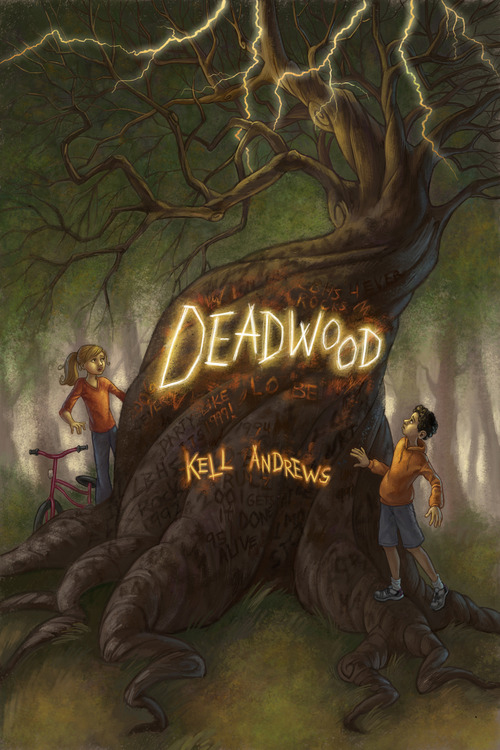
Celebrating Deadwood Release With an Operation Awesome Appreciation giveaway

Deadwood, my middle-grade mystery fantasy debut, is out from Spencer Hill Press at long last.

This is the second go-round for me, and believe me, I know how fragile the dream of writing is. My kids’ contemporary fantasy was first released by a small press which went out of business, and now it's out in a beautiful new edition from Spencer Hill Press. There have been a lot of twists, bumps, and flat tires on this road.

I've been telling my story here on the Operation Awesome blog for four years now, and I'm so grateful for the support this community has shown me. I might not still be writing if I hadn't been forced to have something to say by the bloggers, friends, and readers of OA. In my first blog post in 2010, I wrote, "It's hard to put myself out to the world as a writer, to suggest to others in the literary community that I have something worth saying. As an unpublished writer, the hardest part is to expose my dreams to family, friends, and not-so-friends before those dreams have been fulfilled."

That's still true as a published writer -- my dreams still feel exposed. But it's worth it, and I want to thank you for being here for me during the high and low points. Today is a high one -- thank you for celebrating.

I want to get Deadwood into your hands, and I'm giving away two copies. Just comment, and you're entered. If you win, you can choose paperback or ebook. Giveway winners picked July 13.

Deadwood by Kell Andrews

deadwood-cover
Martin gets a message from a tree saying that it’s cursed, and so is Martin. He teams up with know-it-all soccer star Hannah, and if they can't break the curse, their whole town will end up with a permanent case of bad luck. Ages 10–14. 
 
Deadwood blends supernatural elements with an ecological message and some pretty typical middle school issues that most readers will identify with, like not being totally sure of who you are and how you fit in with the world around you … A fun book with just enough creepiness to be exciting.” Amanda Valentine, Reads4Tweens
“A nice mix of heart and humor. … Give this one to middle grade readers who enjoy magical realism, or to anyone for whom the idea of talking with an ancient, enormous tree is irresistible.” Jen Robinson, Jen’s Book Page
“A fast-paced, enjoyable, contemporary fantasy that upper middle graders will truly enjoy … The perfect blend of relatable contemporary, supernatural elements, mystery and environmental awareness  an amazing middle grade book for all ages to read!” —Bumbles and Fairy Tales
Order  on  Amazon, Barnes and Noble, BAM, Powell’s, or from your favorite independent bookstore.  
 

Saturday, July 5, 2014

From Book to Screen

For the next few weeks I am going to be writing a series of blog posts about writing and breaking into the film industry. Please feel free to comment with any questions or topics you would like covered.

Writing books and breaking into publishing can be a brutal business. It is no different when trying to get your book made into a movie. It takes time, perseverance and an iron will. During my process of shopping my book for film, I had many people tell me that it was impossible--It seemed all the novels that were made into movies had one thing in common--they were all best sellers such as: The Twilight series, Harry Potter series, Hunger Games Trilogy, Divergent, The Road and many more. But I didn't let this stop me from trying--and neither should you!

First three steps.

Step one: Ask yourself these questions: Is my book commercial enough for film? Is there a certain genre it might appeal to? How can I make it stand out in a crowded film market? 

Step two: From a working copy, start highlighting key points in your novel. From those points you will start your screenplay. A screenplay serves as a blueprint or a map for the film. Films are visual, you must know what takes place, the cause of action rather than the telling a story.

Step three: If you intend to write the screenplay yourself you must adhere to industry standards. Purchase professional software if you are able. This will save you time and effort. Most screenplays are only 90 to 120 pages written in 12 point courier font. There are several elements to writing screenplays and fortunately there are many guidebooks online that can quickly teach you each of these.

Step four: Seek out people in the industry for guidance. Have someone critique your script. What are its strong and weak points?

Step five: Because producers have very limited time you will also need to formulate a treatment. This is a synopsis of your screenplay. Writing the treatment will also help you strengthen your script. This is a lot like pitching a novel with a synopsis.


Good luck with these first steps!  Be sure to comment with questions!


 River of Bones movie poster by James Teague. James Teague is one of my favorite film artists, his credits include posters for the movies, The Boondock Saints, Dead Noon and many other creations.


Friday, July 4, 2014

Happy Independence Day, America!


HAPPY FOURTH OF JULY!

Whether you're celebrating with a pancake breakfast, barbecue, parade, fireworks, or sofa, enjoy it!

Watch the story behind the writing of the National Anthem: 


Let freedom ring, and happy writing this weekend!


My America 
(a personal tribute to my country by Katrina Lantz)

Founded for freedom
Defended by blood
Torn and repaired, scorched
Then raised from the mud
Changed from her birth
Gone astray, and renewed
My dear, wandering country
Still shines on the dune
How long till she perish?
No country nor man
Can know his days' number
But this understand:
The best we can do
As one or as all
Is to fight for our faith
And cherish our call
Till every soul standing
Is offered the test
Of liberty precious
And unity blessed.

"Our greatest happiness does not depend on the condition of life in which chance has placed us, but is always the result of a good conscience, good health, occupation, and freedom in all just pursuits."
-Thomas Jefferson